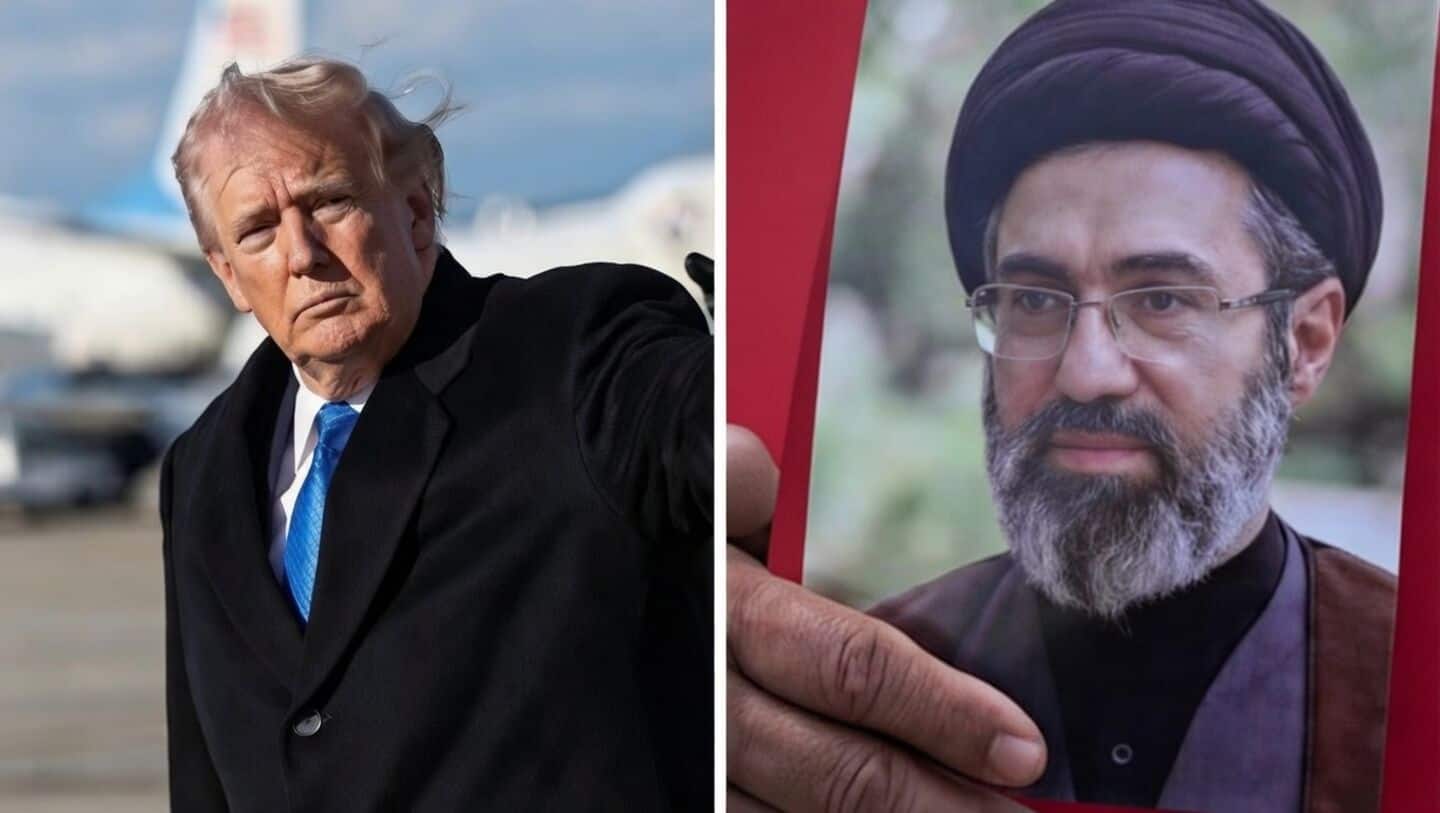
Trump says he and 'Ayatollah' might jointly control Hormuz
What's the story
United States President Donald Trump has hinted at the possibility of jointly controlling the Strait of Hormuz with Iran. Speaking to reporters in Florida, he said the vital waterway would be "open very soon" if talks with Tehran are successful. "It will be jointly controlled. Me and Ayatollah, whoever the Ayatollah is, whoever the next Ayatollah is," he added.
Strike delay
Trump orders 5-day delay on strikes against Iranian energy infrastructure
Trump also announced a five-day delay on strikes against Iranian energy infrastructure, calling the talks with Tehran productive.
He said he had ordered the US Department of War to postpone military actions during this period.
However, he warned that this decision was contingent upon the success of ongoing negotiations.
"Otherwise, we'll just keep bombing our little hearts out," he said.
Iran
Iran rejects Trump's claims
However, Iranian state media, citing an unnamed "senior security official" in a Telegram post, rejected Trump's description of conversations, claiming that no direct or indirect negotiations had occurred between Washington and Tehran.
"There has been no negotiation and there is no negotiation, and with this kind of psychological warfare, neither the Strait of Hormuz will return to its pre-war conditions nor will there be peace in the energy markets," state media reported the official as saying.
Economic impact
Positive reaction in markets following Trump's announcement
Trump's announcement of postponing strikes against Iran's energy infrastructure led to a positive reaction in the markets.
Brent crude oil futures fell sharply, the dollar weakened against other major currencies, stock markets rallied and government borrowing costs dropped.
The Strait of Hormuz is a key maritime corridor that connects the Persian Gulf and the Gulf of Oman. Around 20% of global oil and gas typically passes through it.