Tropical warming linked to increased Antarctic ice mass, study finds
What's the story
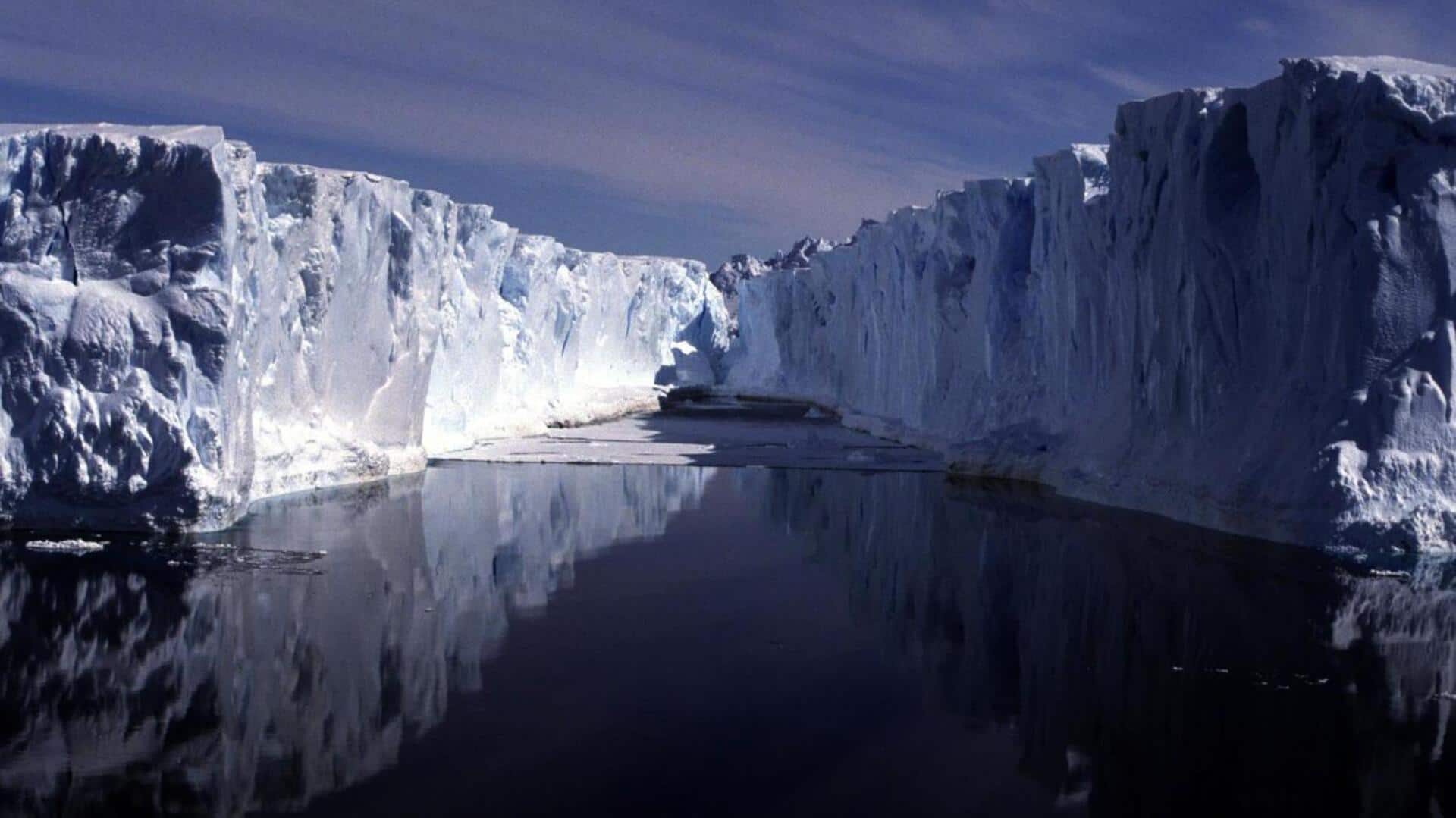
Between 2021 and 2023, the East Antarctic ice sheet gained a staggering 695 billion tons of ice due to extreme warming in the western Pacific and eastern Indian Ocean. This temporary gain was observed by GRACE satellites and is detailed in a study published in Nature. The research was led by the Institute of Oceanology of the Chinese Academy of Sciences (IOCAS).
Climate impact
Changes in atmospheric circulation due to tropical warming
The study found that warming in the tropical region changed atmospheric circulation, bringing more moisture to East Antarctica. This led to heavy snowfall across the Queen Mary Land-Wilkes Land region, adding mass to the ice sheet.
The research team used data from a gravity satellite, ice-core snow-accumulation records, water-vapor tracking, and atmospheric circulation simulations to understand this phenomenon.
Research findings
Unusually warm tropical region during the years
The study discovered that the tropical warm pool at the intersection of the western Pacific and eastern Indian Ocean was unusually warm during these years.
This triggered a Rossby wave train to high southern latitudes, changing atmospheric circulation over East Antarctica.
The change caused moisture from the midlatitude Indian Ocean to flow toward Antarctica, resulting in more atmospheric rivers reaching the continent.
Climate connection
Teleconnection pathway discovered
The research identified a north-south dipole circulation over East Antarctica as the link between tropical warming and increased ice mass.
"We found a previously underrecognized 'tropical warm pool-East Antarctic Ice Sheet' teleconnection pathway," said Yunhe Wang, first author of the study.
The findings underscore how warming events thousands of kilometers away can impact snowfall and ice sheets in Antarctica.