White House denies agreeing to unfreeze Iranian assets
What's the story
The United States has denied reports that it has agreed to unfreeze Iranian assets. The denial by White House comes as American and Iranian delegations are in Islamabad for ceasefire negotiations. According to Reuters, a senior Iranian official had claimed that the US agreed to release Iran's frozen assets held in Qatar and other foreign banks. The same source said the proposed unfreezing of assets was "directly linked to ensuring safe passage through the Strait of Hormuz."
Asset freeze history
$6 billion frozen under Trump-era sanctions
The funds in question are $6 billion, which were first frozen in 2018 after the US reimposed sanctions on Iran.
The sanctions were imposed during Donald Trump's presidency when he withdrew from the nuclear deal with Tehran.
The money was originally from Iranian oil sales to South Korea and was kept in South Korean banks.
In 2023, as part of a prisoner swap deal mediated by Doha, the funds were transferred to bank accounts in Qatar.
Asset freeze
Funds were part of a prisoner swap deal
Under the 2023 deal, five US citizens held in Iran were exchanged for five Iranians held in the United States, and the transfer of funds.
At that time, US officials had said that the money could only be used for humanitarian purposes with oversight from the US Treasury.
However, after Hamas's October 7 attacks on Israel, an ally of Iran, the Joe Biden administration froze these funds again.
Diplomatic talks
American delegation arrives in Islamabad
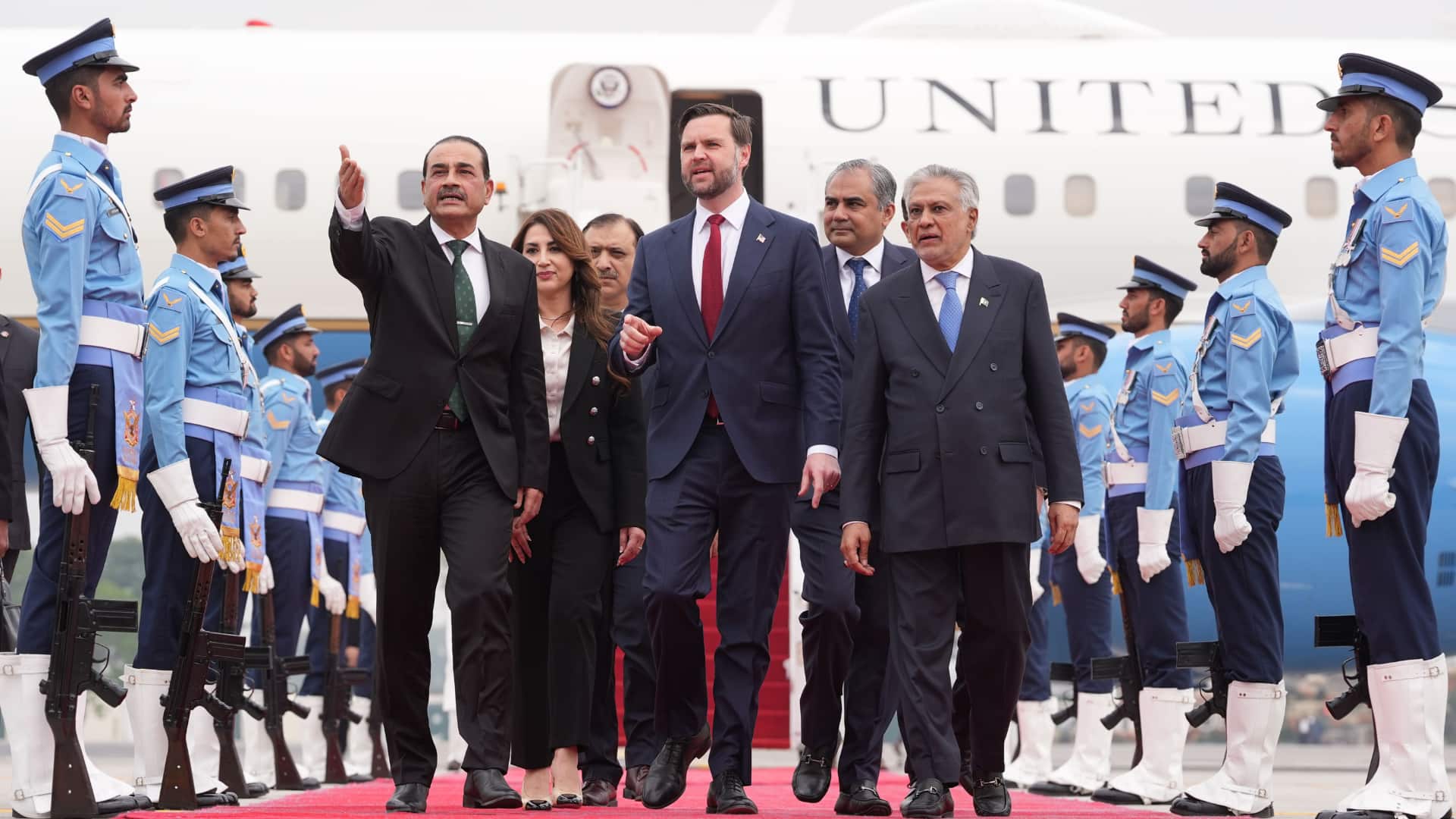
The American delegation, led by Vice President JD Vance, special envoy Steve Witkoff, and Jared Kushner, arrived in Islamabad on Saturday morning.
They were welcomed by Foreign Minister Ishaq Dar and Pakistan's army chief Field Marshal Asim Munir.
The Iranian team was led by Parliament Speaker Mohammad-Bagher Ghalibaf and Foreign Minister Abbas Araghchi.
Negotiation agenda
Iran demands ceasefire in Lebanon for talks to proceed
These talks are the highest-level diplomatic engagement between the two countries since the 1979 Islamic Revolution.
If they proceed as expected, it would be their first in-person meeting since the 2015 nuclear deal, which Trump withdrew from in 2018.
Iran has demanded a ceasefire in Lebanon, where Israeli operations against Hezbollah have killed nearly 2,000 since March.
Ghalibaf said on X that formal talks depend on these conditions being met.
Meeting logistics
Talks to follow if US responds to Iranian conditions
Another Iranian source told Reuters that Pakistan will convey Washington's initial response to Tehran's conditions, and direct talks will follow if accepted.
The Iranian delegation is currently in talks with Prime Minister Shehbaz Sharif over meeting logistics for this potential meeting.
A major sticking point that remains is Lebanon's status under the ceasefire agreement. Iran insists that attacks on Hezbollah are covered under the truce, while Washington and Israel disagree.