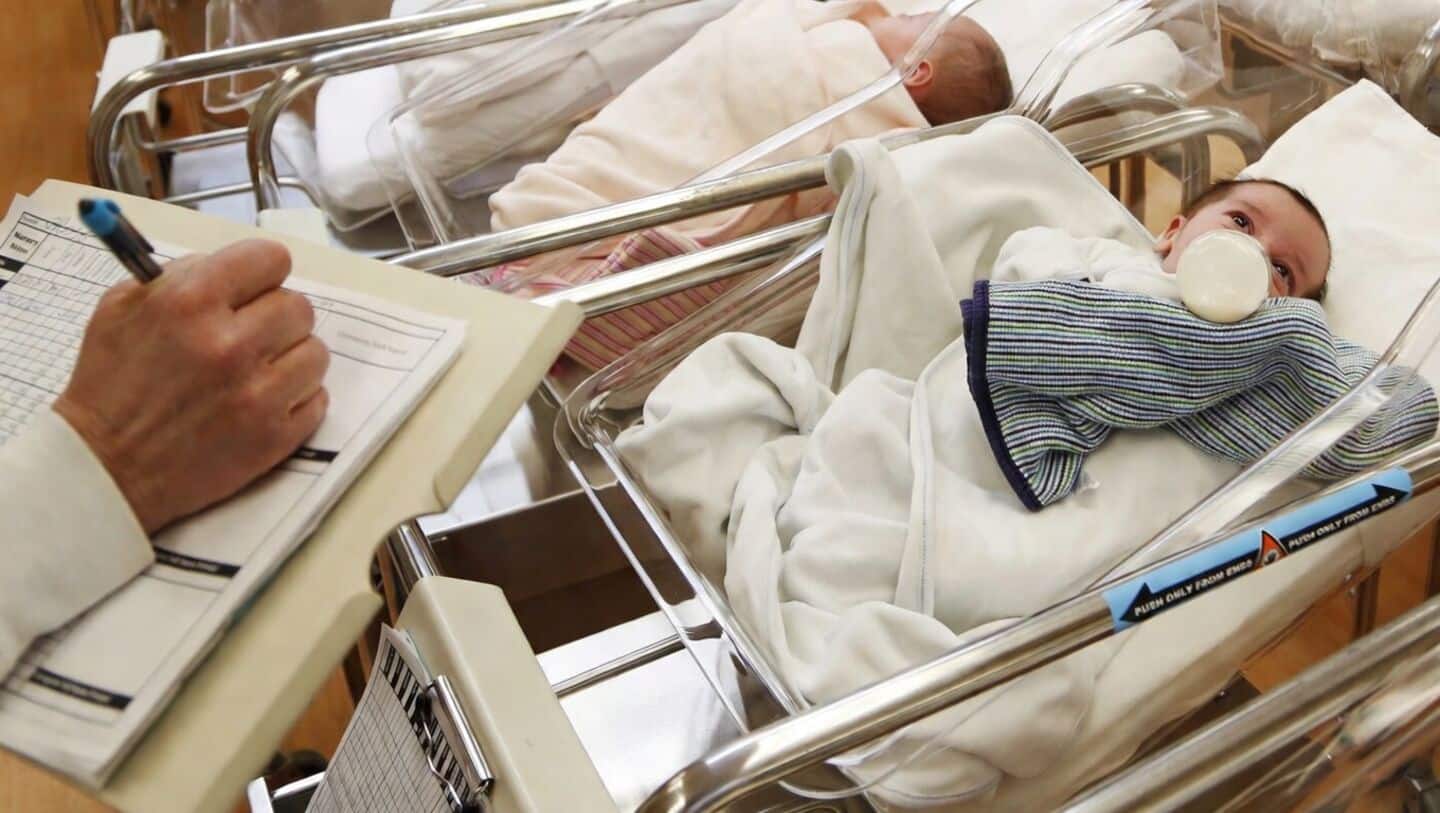
US birth rates have hit a record low
What's the story
The United States has witnessed a significant decline in birth rates over the past few decades. Preliminary data from the Centers for Disease Control and Prevention (CDC) shows that last year, around 710,000 fewer babies were born compared to the peak year of 2007. The general fertility rate has dropped by 23% since then, with only 3,606,400 newborns recorded last year as opposed to 4,316,233 in 2007.
Economic impact
Implications of declining birth rates
The decline in birth rates has raised concerns among demographers and economists.
The Congressional Budget Office (CBO) has projected that these trends could lead to an aging population and slower growth, with about eight million fewer people by 2055 than previously expected.
The CBO's authors noted that "the population [of people in the US] age 24 or younger is projected to decline in each of the next 30 years."
Worldwide trend
Global perspective on declining birth rates
The trend of declining birth rates is not limited to the United States. Many countries in East Asia, Europe, and South America have seen their total fertility rates drop below replacement levels.
This means that without immigration, these populations would shrink over time.
However, some economists believe this could be a temporary shift as US women may be delaying motherhood but still plan to have children later in life.
Positive trend
Decrease in teenage pregnancies
There has been a significant drop in teenage pregnancies. The rate of teenagers giving birth fell by 7% in 2025.
Public health officials have hailed this as major progress due to higher contraception use, lower sexual activity among youth, and continued access to abortion care.
Bianca Allison, a pediatrician at the University of North Carolina School of Medicine, said that lower rates of teen pregnancy overall are affecting birth rates positively.