US-Iran Islamabad talks extend to day two, Hormuz standoff deepens
What's the story
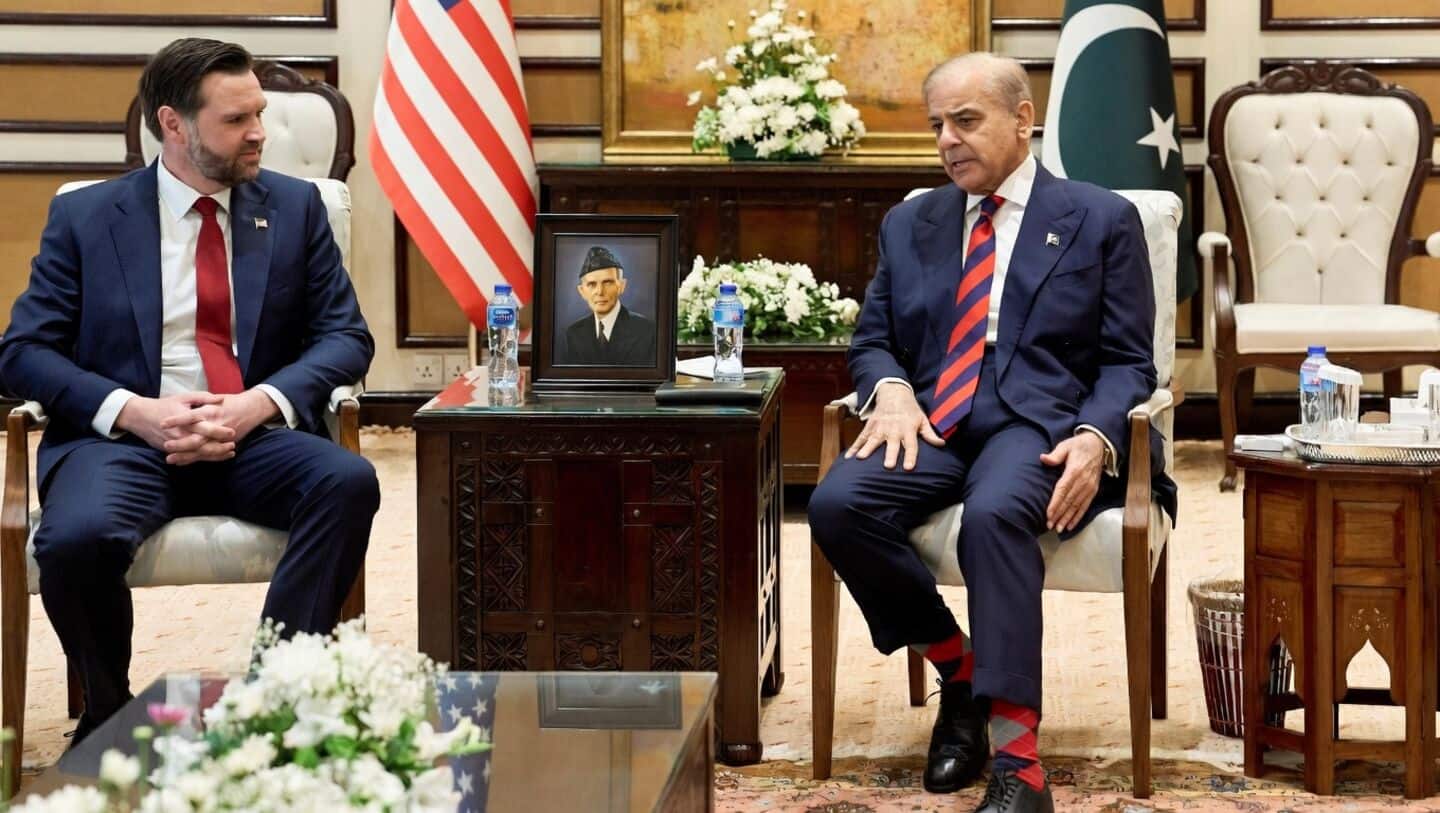
The United States and Iran are set to continue high-level peace talks in Pakistan on Sunday, Iranian media reported. This comes after a 15-hour marathon negotiation session that ended without a breakthrough, according to the Tasnim news agency. The talks are aimed at resolving the ongoing conflict in West Asia, with host Pakistan playing a key mediating role.
Ongoing negotiations
First direct talks between US and Iran
The ongoing negotiations are the first direct talks between the US and Iran on this issue, with both sides sitting together instead of using a mediator.
US Vice President JD Vance, Pakistani Prime Minister Shehbaz Sharif, and Iranian officials are part of these discussions.
US Special Envoy Steve Witkoff and President Donald Trump's son-in-law Jared Kushner are also taking part.
The talks come amid rising tensions over Lebanon and other areas affected by conflict.
Negotiation demands
Iran's preconditions for continuing negotiations
Iran has demanded a ceasefire in Lebanon and the unfreezing of its assets as preconditions for continuing negotiations.
Meanwhile, President Donald Trump has said that ensuring Iran cannot have a nuclear weapon is a top priority for him at these talks.
He also vowed to have the Strait of Hormuz open "with or without" Iran's cooperation
Maritime operation
US warships transit Strait of Hormuz amid conflict
In a related development, the US claimed that two of its navy warships have transited the strategic Strait of Hormuz to clear mines laid by Iran in the first such operation since the conflict began.
The move comes after President Trump announced efforts to establish a safe passage through this vital waterway for global trade.
Tehran has denied the US claim. Iran's Revolutionary Guards threatened to "severely" deal with any military vessels transiting the strait, state TV reported on Sunday.
Regional tensions
Israel vows to continue fight against Iran
The ongoing conflict has also drawn criticism from Israeli Prime Minister Benjamin Netanyahu, who slammed Turkish President Recep Tayyip Erdogan for his comments on the US-Iran ceasefire.
Netanyahu vowed that Israel would continue its fight against Iran and its regional proxies.
Erdogan had warned Trump of "possible provocations and sabotage" that could undermine the agreement, without specifying who might threaten the deal.