US Navy's $200 million drone goes missing over Hormuz
What's the story
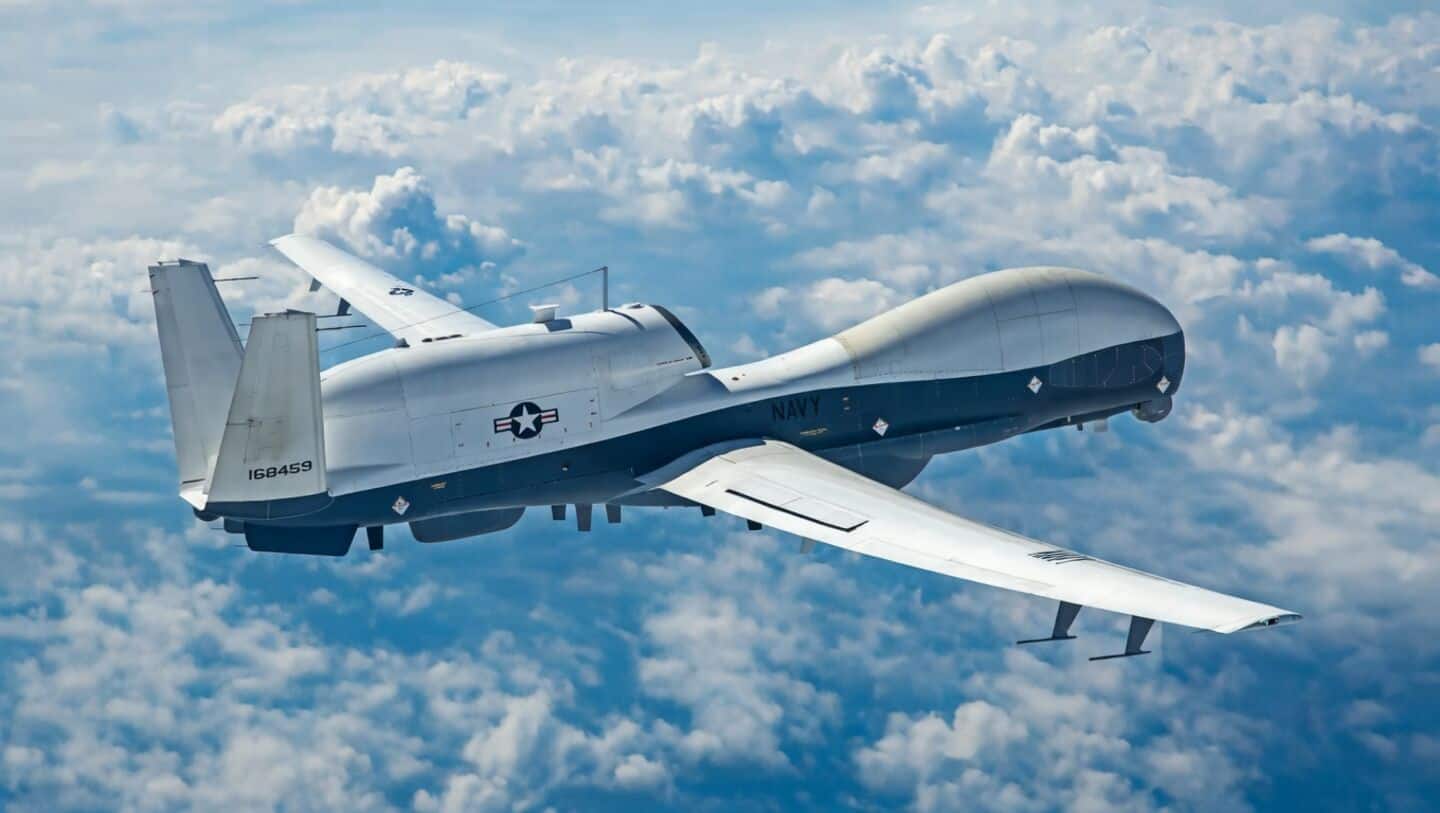
A United States Navy drone, an MQ-4C Triton, has reportedly gone missing over the Strait of Hormuz after declaring an in-flight emergency. The incident was observed on open-source flight tracking platforms such as Flightradar24, based on interpretations of tracking data. The aircraft, serial number 169804, had squawked a general emergency signal and rapidly lost altitude from around 52,000 feet to nearly 12,750 feet in minutes. It remains unclear if the drone crashed or was shot down.
Tracking gap
Drone on routine mission, US military yet to comment
The drone was on a routine high-altitude maritime surveillance mission when it suddenly descended and disappeared from tracking data over the Gulf. The US military has not confirmed this incident yet. Some interpretations of open-source tracking data suggest that the MQ-4C Triton may have briefly changed course toward Iranian airspace before declaring an emergency, but this claim remains unverified.
Drone details
What is an MQ-4C Triton?
The MQ-4C Triton is a high-altitude, long-endurance unmanned aerial vehicle developed by Northrop Grumman for the US Navy. It is designed for maritime intelligence, surveillance, and reconnaissance (ISR) operations and can fly above 50,000 feet for over 24 hours. The drone's primary function is to provide persistent monitoring over vast ocean regions and layer collected data over time to build a comprehensive operational picture of maritime activity.
Surveillance mission
Each drone costs over $200 million
The MQ-4C Triton is derived from the RQ-4 Global Hawk family and is usually deployed with P-8A Poseidon maritime patrol aircraft. It has been extensively used in the US Central Command area of responsibility, including the Persian Gulf, for long-range surveillance missions. Each aircraft is valued at over $200 million and plays a crucial role in maintaining situational awareness over critical sea lanes.