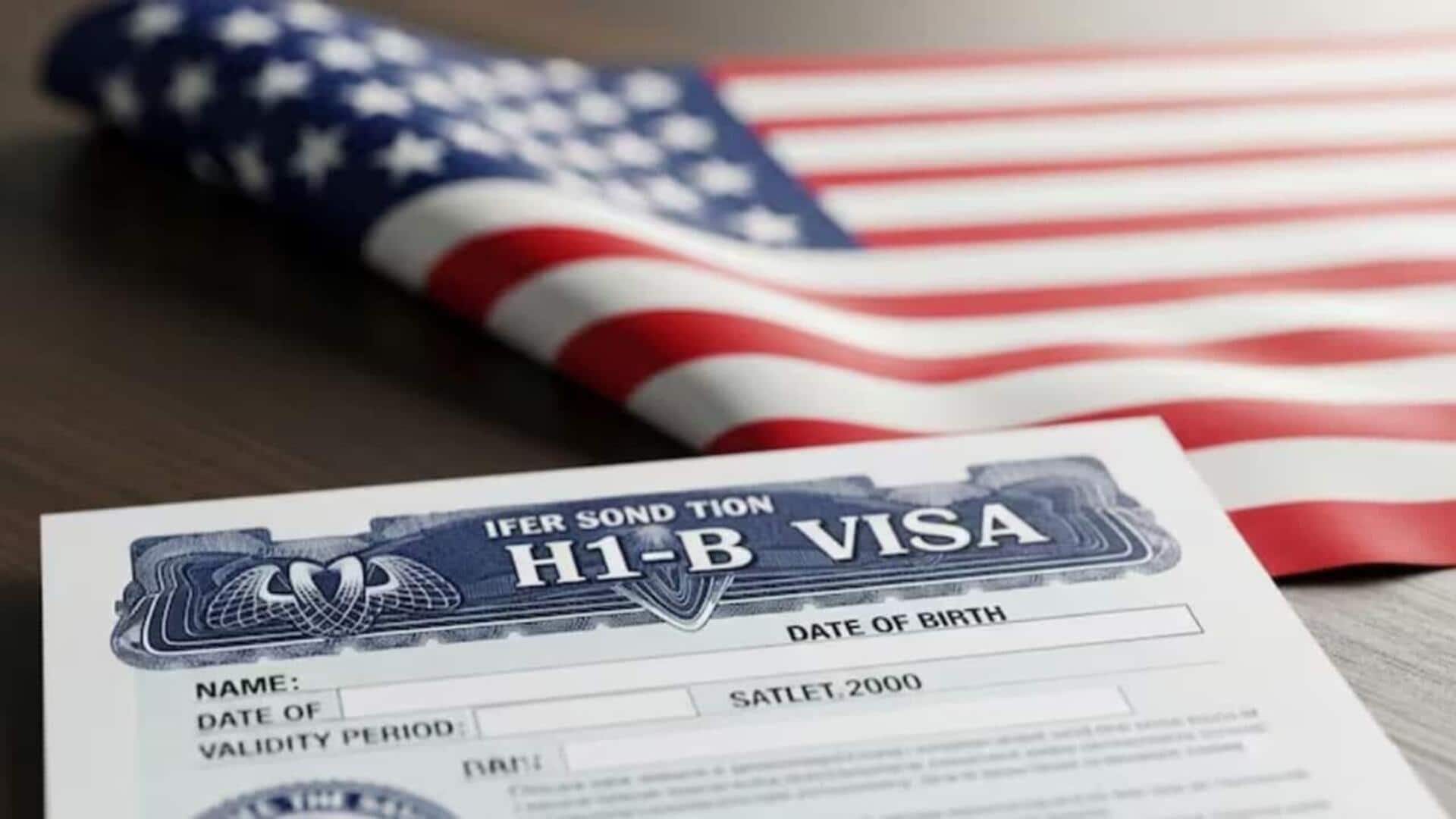
US overhauls H-1B visa lottery to favor high-skilled, high-paid workers
What's the story
The United States has announced a major overhaul of its H-1B visa lottery system. The new rule, which will come into effect from the fiscal year 2027, introduces a wage-weighted selection process while retaining some randomness. This change is aimed at giving preference to higher-skilled and higher-paid foreign workers while still allowing participation across all wage levels.
System details
New lottery system favors higher-skilled roles
Under the new system, H-1B registrations will be weighted according to occupational and wage statistics levels.
This is particularly important as the annual H-1B cap remains unchanged at 85,000 visas per year.
However, with this new system in place, registrations associated with wage level IV will be entered into the lottery four times while those linked to level I will only get one entry.
Intent alignment
Overhaul aims to align with congressional intent
The Department of Homeland Security (DHS) said that the change better aligns with congressional intent behind the H-1B program.
The program was originally designed to help US employers fill jobs requiring specialized skills, not lower-paid positions.
"Pure randomization does not serve the ends of the H-1B program," DHS said, adding that wage-based weighting better reflects skill and economic value.
Economic impact
New system expected to boost productivity and innovation
The DHS expects this new system to shift outcomes toward roles that are more likely to contribute to productivity, innovation, and competitiveness.
It also hopes the change will reduce wage suppression risks for US workers.
The department said demand for H-1B visas has exceeded supply for over a decade and a random lottery fails to distinguish between high-value roles and lower-paid positions.
Compliance measures
New compliance measures and system integrity
Along with the lottery changes, employers will now have to declare wage levels, job classification codes, and work locations at the registration stage.
They will also have to submit documentary evidence at the petition stage.
The United States Citizenship and Immigration Services (USCIS) will have wider authority to deny or revoke petitions if it finds attempts to manipulate wages or roles.