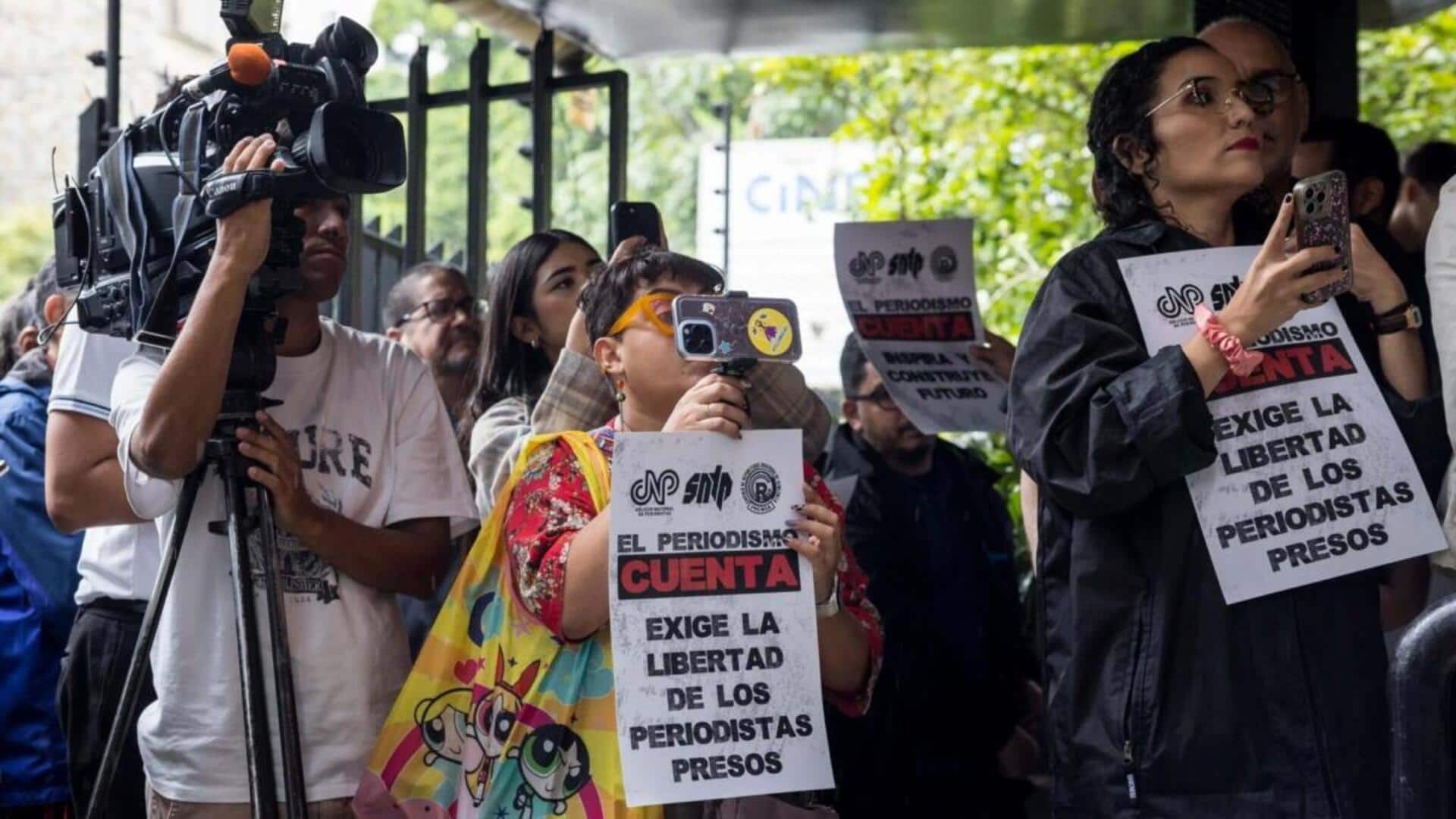
Venezuela detains journalists and seizes communication devices: Report
What's the story
According to a recent report by Venezuela's National Union of Press Workers (SNTP), at least 14 journalists and media workers were detained in Caracas, Venezuela. The union reported on X that the detainees included 13 members of international media organizations. While most were released soon after, one journalist was deported, and another remains in the custody of intelligence services.
Assembly crackdown
Detained journalists targeted during National Assembly session
The detentions came just days after a United States military operation in Caracas arrested Venezuelan leader Nicolás Maduro and his wife.
Five of the detained journalists were reportedly covering the opening session of the National Assembly, where they were prohibited from recording, transmitting the event live, or taking photos.
Others detained were held by military intelligence officers and taken to the National Guard command post in the Assembly building, the union claimed.
Privacy invasion
Journalists' devices seized, privacy compromised
At the command post, the journalists' phones were confiscated and searched for contacts, conversations, voice notes, Instagram accounts, emails, and documents.
The SNTP condemned this action as a threat to privacy and source security.
Daniel Alvarez of Televen was among those released, but Univision journalist Juan Carlos Velez was briefly detained at the Venezuela-Colombia border with his crew by the Venezuelan National Guard.
Twitter Post
SNTP's post regarding the detention of journalists
#BalanceSNTP #5Ene | Durante la jornada de instalación de la Asamblea Nacional, fueron detenidos en Caracas 14 periodistas y trabajadores de la prensa: 13 de ellos de agencias y medios internacionales y uno de medios nacionales.
— SNTP (@sntpvenezuela) January 6, 2026
A esta hora 13 fueron liberados, sin haber sido…
Press freedom
Increasing repression of independent journalism in Venezuela
The National Association of Journalists reported 21 arrests of Venezuelan reporters in 2025, mostly on charges of terrorism, conspiracy, incitement to hatred, and the dissemination of false information.
Reporters Without Borders, an international press freedom group, has noted that such charges are often used to suppress critical reporting.
The organization also highlighted that short-term and medium-term forced disappearances "have become an established tactic to facilitate the crackdown on Venezuela's free press," according to The Guardian.