Iran-US-Israel conflict enters 10th day: Here's what's happening
What's the story
The United States and Israel on Monday intensified their military operations against Iran as the conflict entered its 10th day. The conflict broke out after the assassination of Iranian Supreme Leader Ayatollah Ali Khamenei on February 28 in a joint US-Israeli strike. After nearly 10 days, Iran appointed Mojtaba Khamenei, his son, as the new supreme leader. State TV aired footage of supporters of the Islamic Republic celebrating in the streets after his election.
Escalating conflict
Iran's attacks on US military assets; crude oil prices soar
Under Mojtaba, Iran launched its first missile strike on Israel on Monday.
Iran also continued its attacks on US military assets in Kuwait, Qatar, Saudi Arabia and the United Arab Emirates.
In Bahrain, the strike hit the country's biggest refinery, Bapco Energies, located on Sitra island.
As the war intensifies, brent crude oil prices have surged to $119.50 per barrel before slightly dropping to $112.98 amid fears of supply disruptions due to the ongoing conflict.
Regional tensions
Qatar intercepts missiles targeting it; US orders evacuation
In Qatar, the government issued a threat alert early Monday morning after about a dozen explosions were heard. The Ministry of Defence confirmed that armed forces had intercepted missiles targeting the state.
In Saudi Arabia, air forces intercepted and destroyed a drone heading toward Shaybah oilfield.
The Department of State ordered nonemergency government employees and their family members to leave due to safety risks.
Security measures
Bahrain, UAE sound alerts; missiles land in Israel
Bahrain's Ministry of Interior also said it had activated sirens and urged residents to seek safety after an Iranian attack caused a fire in Maameer, while Türkiye has deployed six F-16 fighter aircraft to Northern Cyprus amid regional tensions.
In Israel, new missile strikes were announced by Iran, with debris falling in three areas.
Per Times of Israel, an Iranian missile with a cluster warhead was fired at central Israel, killing at least one person and injuring two others.
Israel
Israel begins 'wide-scale' strike on Tehran
Shortly after this attack, Israel announced that it has begun a "wide-scale" strike on Tehran, Isfahan and southern Iran.
"The IDF has just begun a wide-scale wave of strikes against infrastructure of the Iranian terror regime across Tehran, Isfahan, and southern Iran," said the Israeli Defence forces (IDF).
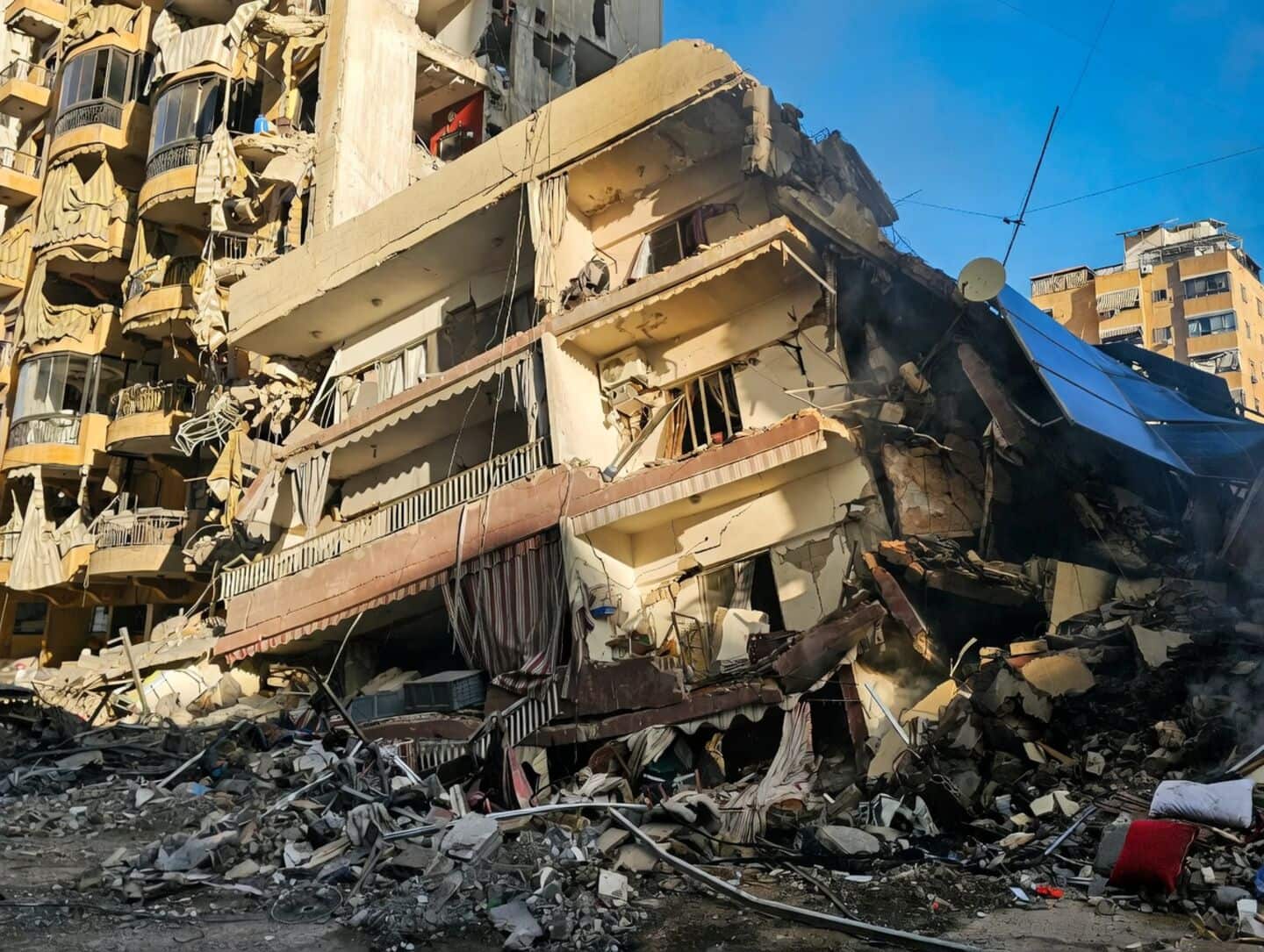
The Israeli military also said that it had begun targeting Al-Qard Al-Hassan, a US-sanctioned financial organization that Israel accused of financing Iran-backed Hezbollah, in the southern suburbs of Beirut, Lebanon.
HRW
Israel accused of using white phosphorus in Lebanon
Talking of Lebanon, the New York-based rights group Human Rights Watch (HRW) has accused Israel of using white phosphorus munitions in residential areas of southern Lebanon earlier this month.
The allegation is based on seven verified photographs showing the use of these incendiary weapons over Yohmor, a village in southern Lebanon. The unlawful use of white phosphorus over residential areas is "extremely alarming and will have dire consequences for civilians," said Ramzi Kaiss, Lebanon researcher at Human Rights Watch.
Global impact
Other developments in the ongoing conflict
US President Donald Trump has said a decision on when to end the war will be a "mutual" one he'll make with Israeli PM Benjamin Netanyahu, the Times of Israel reported.
"We've been talking. I'll make a decision at the right time, but everything's going to be taken into account," he said.
Since the war started, the US military has lost seven service members, including one who died from injuries sustained during an Iranian attack in Saudi Arabia.