Why has Trump deployed ICE agents to US airports?
What's the story
United States President Donald Trump has ordered the deployment of Immigration and Customs Enforcement (ICE) agents to major airports across the country. The move comes as the partial shutdown of the Department of Homeland Security (DHS) enters its fifth week, leaving many federal employees unpaid. The Transportation Security Administration (TSA), which is responsible for airport security and passenger screening, has been particularly affected by rising absenteeism among unpaid workers.
Security concerns
Over 9% of TSA employees absent last week
The DHS has reported a spike in absenteeism among TSA employees, with over 9% of its workforce absent in the past week alone.
At major airports like those in Houston, New York, and Atlanta, more than a third of TSA staff have called in sick or failed to report for duty.
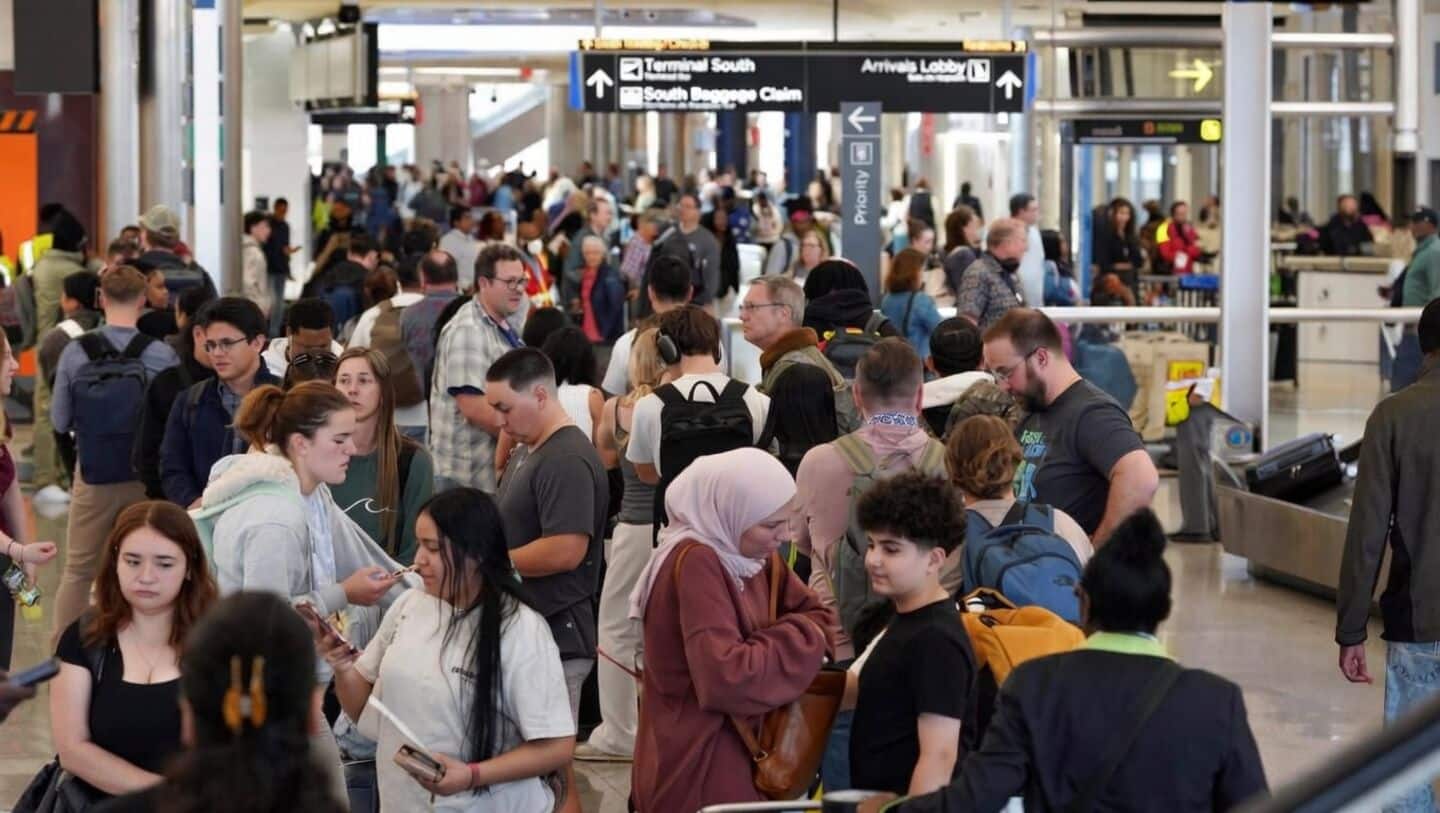
This has led to long queues and delays for passengers at these airports.
Deployment details
ICE agents to assist, not replace TSA personnel
The deployment of ICE agents is set to begin on Monday and will initially cover around 14 locations. However, this number may change as the plan evolves.
The roles assigned to ICE personnel are expected to be supportive rather than central to security screening. They will primarily assist with crowd control, managing queues, checking passenger identification, and monitoring exit lanes.
Training concerns
ICE agents won't operate x-ray machines, says border czar
Border czar Tom Homan, who is leading the initiative, clarified that ICE agents would not be responsible for operating X-ray machines or performing detailed screening tasks.
He said, "I don't see an ICE agent looking at an X-ray machine because we're not trained in that."
Atlanta Mayor Andre Dickens confirmed that ICE agents would report to TSA leadership and be assigned duties aimed at easing congestion in domestic terminals.
Political context
Shutdown details and potential compromise
The current shutdown is a result of disputes between Republicans and Democrats over budget allocations and immigration policy.
Democrats have blocked funding measures to secure changes to federal immigration enforcement practices, while Republicans want continued funding without proposed changes.
House Democratic leader Hakeem Jeffries has indicated his party's willingness to compromise on ensuring TSA workers are paid even if broader negotiations continue.
Mixed reactions
Union and political leaders' response to the plan
The American Federation of Government Employees (AFGE) has opposed the deployment, arguing that TSA officers deserve to be paid, not replaced by untrained agents.
Union president Everett Kelley emphasized TSA officers' dedication despite financial difficulties.
Republican Senator Lisa Murkowski called the plan a "bad idea," while Transportation Secretary Sean Duffy suggested ICE could help alleviate uncertainty for travelers.