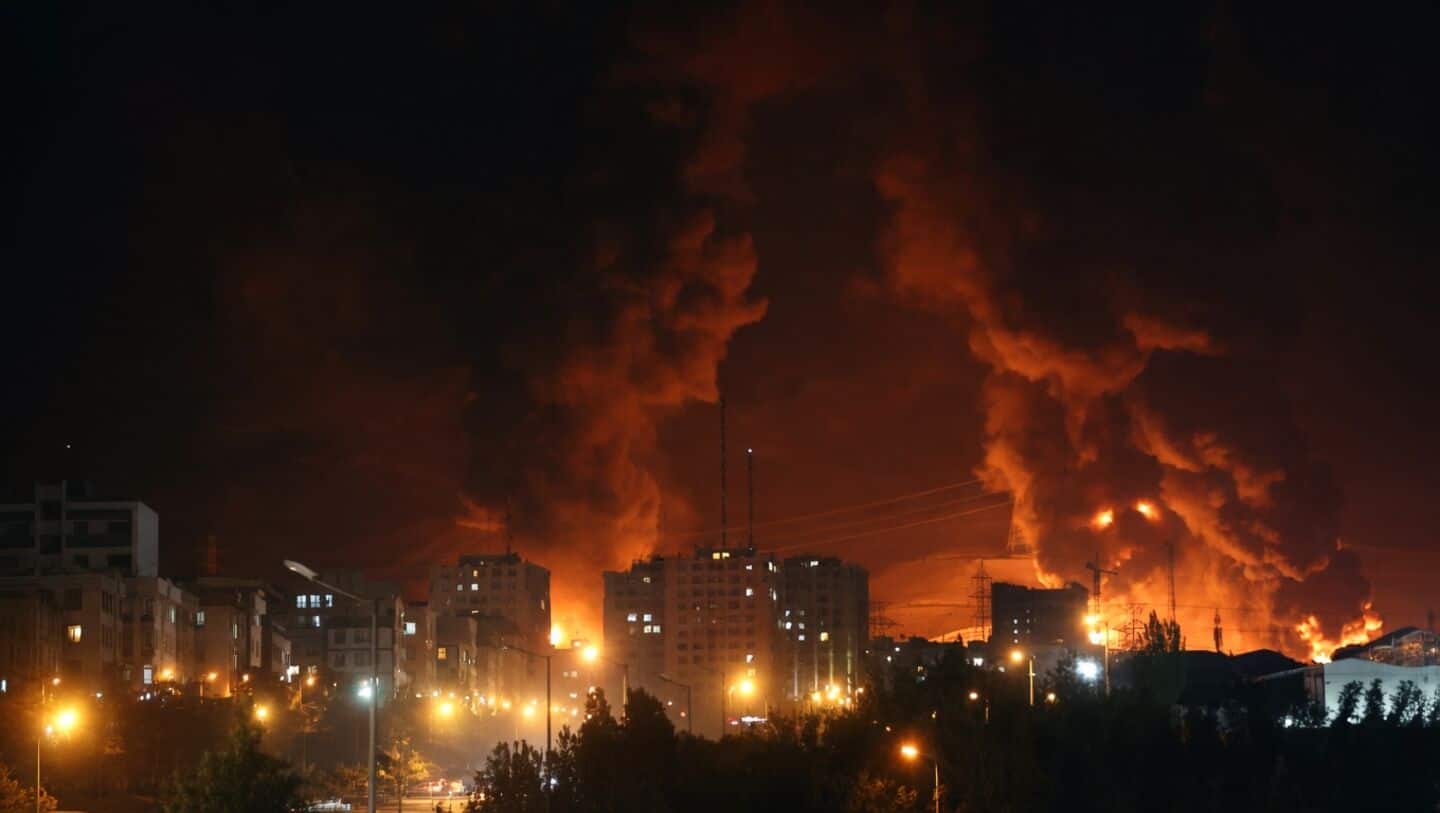
'WTF': US blindsided as Israel torches 30 Iranian oil depots
What's the story
The United States and Israel are reportedly at loggerheads over Israel's recent airstrikes on Iranian oil infrastructure. A senior US official termed the attacks "not a good idea," and Washington conveyed a blunt message of "WTF" after learning the scale of the operation, according to Axios. This is the first major disagreement between the two allies since hostilities broke out on February 28.
Attack details
IDF confirmed targeted fuel depots supplied Iran's military
The Israel Defense Forces (IDF) confirmed that the targeted fuel depots were used by Iran to supply fuel to its military units.
An Israeli military official said the strikes were also a warning to Tehran against targeting Israeli civilian infrastructure.
However, US officials are worried that such attacks could backfire and unite Iranians in support of their government, besides pushing global oil prices higher.
Surprise factor
US taken aback by scale of strikes
Despite being informed in advance about the strikes, Washington was taken aback by their scale.
A senior US official said, "We don't think it was a good idea."
Although fuel depots were targeted and not oil production facilities, US officials fear visuals of large storage sites burning could rattle energy markets.
Retaliation threat
Iran warns of regional retaliation, $200 oil prices
Iran has warned that continued attacks on its oil infrastructure could lead to retaliation across the region.
A spokesperson for Iran's Khatam al-Anbiya headquarters said Tehran could reconsider its stance on not targeting fuel and energy infrastructure in the wider region.
He warned that if Iran starts targeting such facilities, global oil prices could spike up to $200 per barrel.
Price rise
Oil prices cross $100 per barrel mark
Oil prices have crossed $100 per barrel, the highest in over three and a half years. The rising conflict in Iran threatens energy production and shipping routes across the Middle East.
However, President Donald Trump downplayed the spike, calling it "a very small price to pay for world peace."
He argued that short-term oil price increases would be temporary once the threat from Iran's nuclear program is eliminated.