Amazon's robotaxi gets a makeover
What's the story
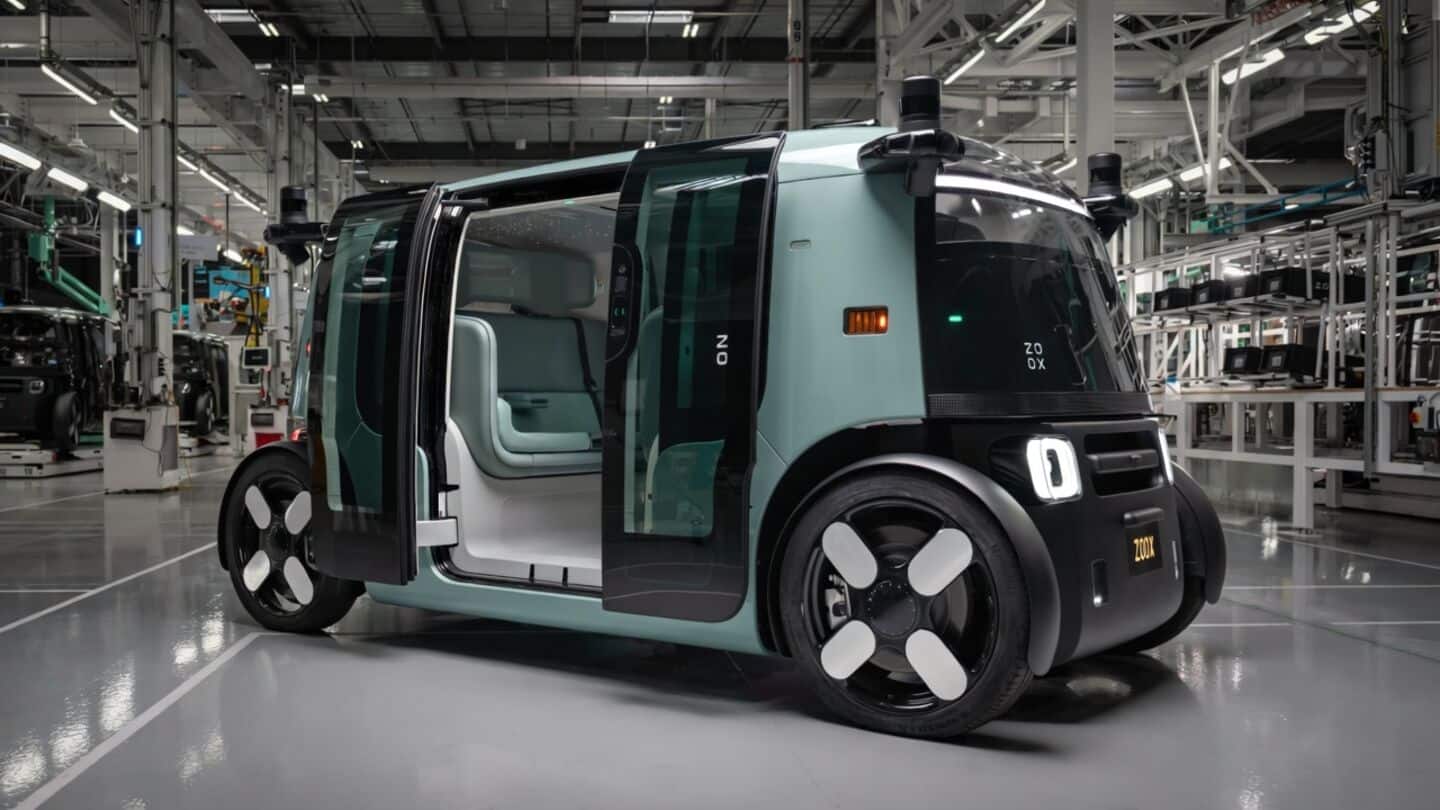
Amazon's self-driving car company, Zoox, has launched an upgraded version of its toaster-shaped robotaxi. The new design features more comfortable seats and headrests, as well as larger and repositioned "bidirectional reflectors." The revamped reflectors are aimed at making it easier for passengers and others to easily identify the front and rear of the vehicle. The company plans to expand into more markets later this year and start charging for rides.
Design features
New design focuses on passenger comfort
The latest iteration of Zoox's robotaxi comes with a boxy design that ditches steering wheels and pedals altogether.
The vehicle is built from scratch, not just modified from old cars, to provide maximum comfort.
It boasts aloe-green and stone-gray interiors, extra padding, ergonomic seats, larger cup holders, a bright touchscreen display, and even a charging pad for devices.
Market strategy
Plans to produce 100 vehicles per week
Zoox aims to produce 100 robotaxis per week in California and launch them in Las Vegas and San Francisco by the end of this year, pending safety approval.
The company also has plans for large-scale production at its manufacturing hub in the San Francisco Bay Area, which opened last June.
Once fully operational, this facility will help Zoox scale up its robotaxi fleet to 10,000 vehicles a year.
Strategic alliance
Partnership with Uber to expand reach
In March, Zoox partnered with Uber to make its robotaxis available through the ride-hailing app in Las Vegas. This move is expected to expand its potential customer base.
Currently, Zoox offers free rides in select areas of Las Vegas and San Francisco. It also lets select users hail its robotaxis in small parts of Miami and Austin.
The company is testing these vehicles in six other US cities as well.
Regulatory approval
Awaiting approval for commercial use
Zoox's biggest challenge remains launching a paid service.
The company is waiting for approval from the National Highway Traffic Safety Administration (NHTSA) to deploy up to 2,500 of its self-driving cars on public roads for commercial use.
The petition is currently under review by the NHTSA after public comments closed in early April.