BMW to deploy humanoid robots at its European factory
What's the story
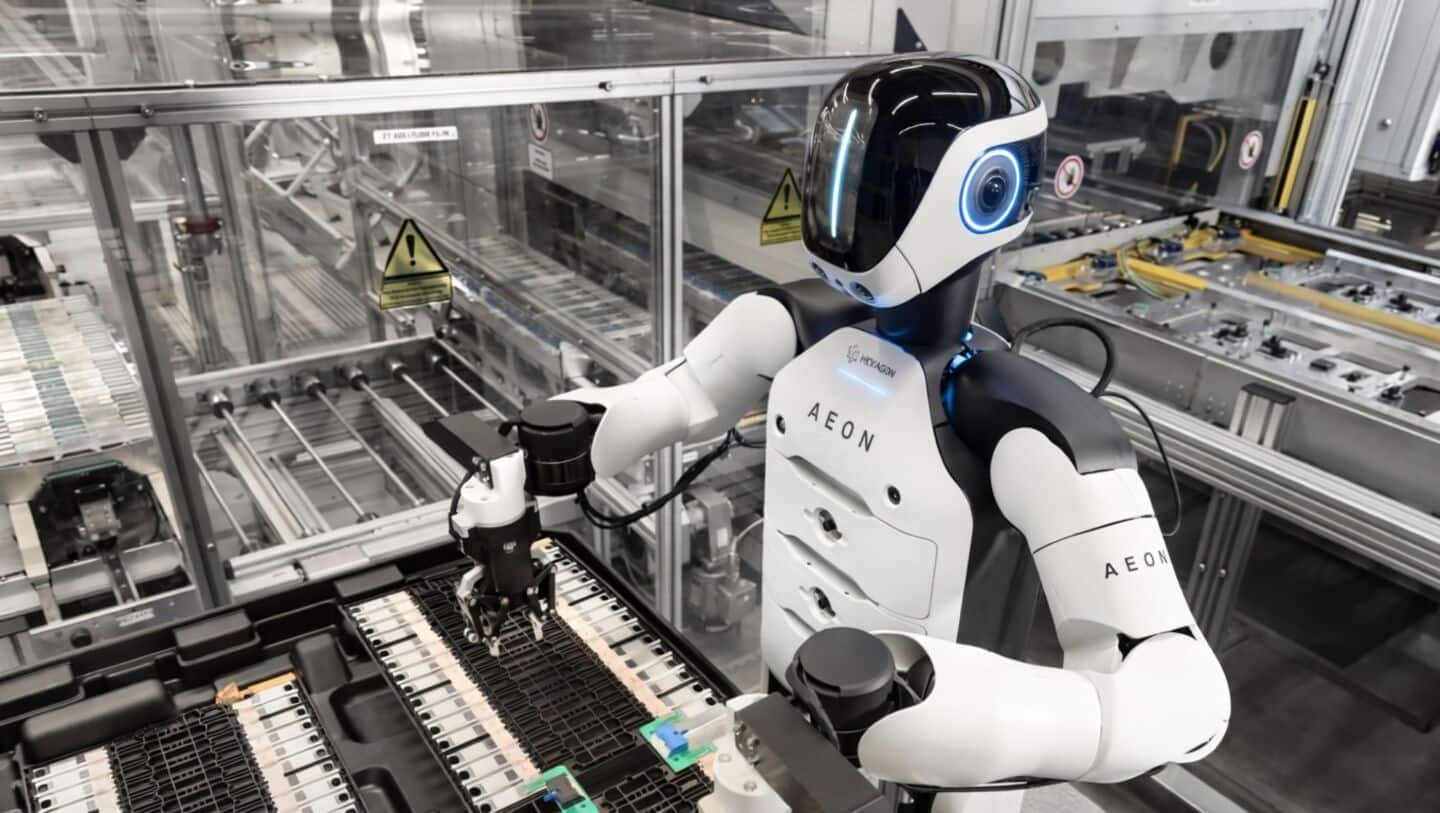
BMW is set to revolutionize its car manufacturing process by introducing humanoid robots into its production line. The move marks the first time BMW will employ human-shaped machines for vehicle assembly in Europe. The company plans to deploy two Hexagon Robotics-made humanoid bots, named Aeon, at its Leipzig factory from this summer.
Industry transformation
Advantages of humanoid robots
Michael Nikolaides, BMW's head of process management and digitalization, believes that humanoid robots are the future of automotive production.
He explained that these machines can be placed in any workplace where humans currently work, due to their similar size and capabilities.
This is a major advantage over traditional robotic arms and automation systems that have been used by the car industry for decades.
Economic advantage
Cost considerations for robot implementation
The cost of robots has decreased, making it more feasible to use machines that can fit into existing human processes.
This is especially true when considering the high costs associated with redesigning an entire assembly line.
Bill Ray, a distinguished VP analyst at Gartner, said that if a robot costs 17 million, companies would prefer to reorganize their factories around these machines rather than the other way around.
Robot features
Specifications of Aeon the robot
Aeon, the humanoid robot from Hexagon, is 1.65m tall and weighs 60kg.
It can move at a speed of up to 2.4m per second and carry loads of up to 15kg for short periods or continuously carry 8kg.
The robot is equipped with 21 sensors including cameras, radar, microphone, force/torque sensors for manipulation tasks in BMW's production line.
Learning curve
Training the robot for tasks
The training of Aeon was done using a mix of teleoperation and simulation in a digital twin of the factory with software from NVIDIA.
The robot was tasked in the simulation and repeatedly simulated it to find the best solutions, an approach known as reinforcement learning.
This method helped Aeon learn different ways to carry out tasks like picking up parts, mimicking human behavior.
Job description
Addressing labor shortages with robots
The humanoid robots will perform tasks such as feeding parts to manufacturing tools and pick-and-place tasks for battery assembly.
Even though the bots are multi-functional, they won't change their jobs as frequently as factory workers.
Nikolaides said these machines could take on repetitive or physically demanding work that humans find hard to do, thus addressing labor shortages in the industry.