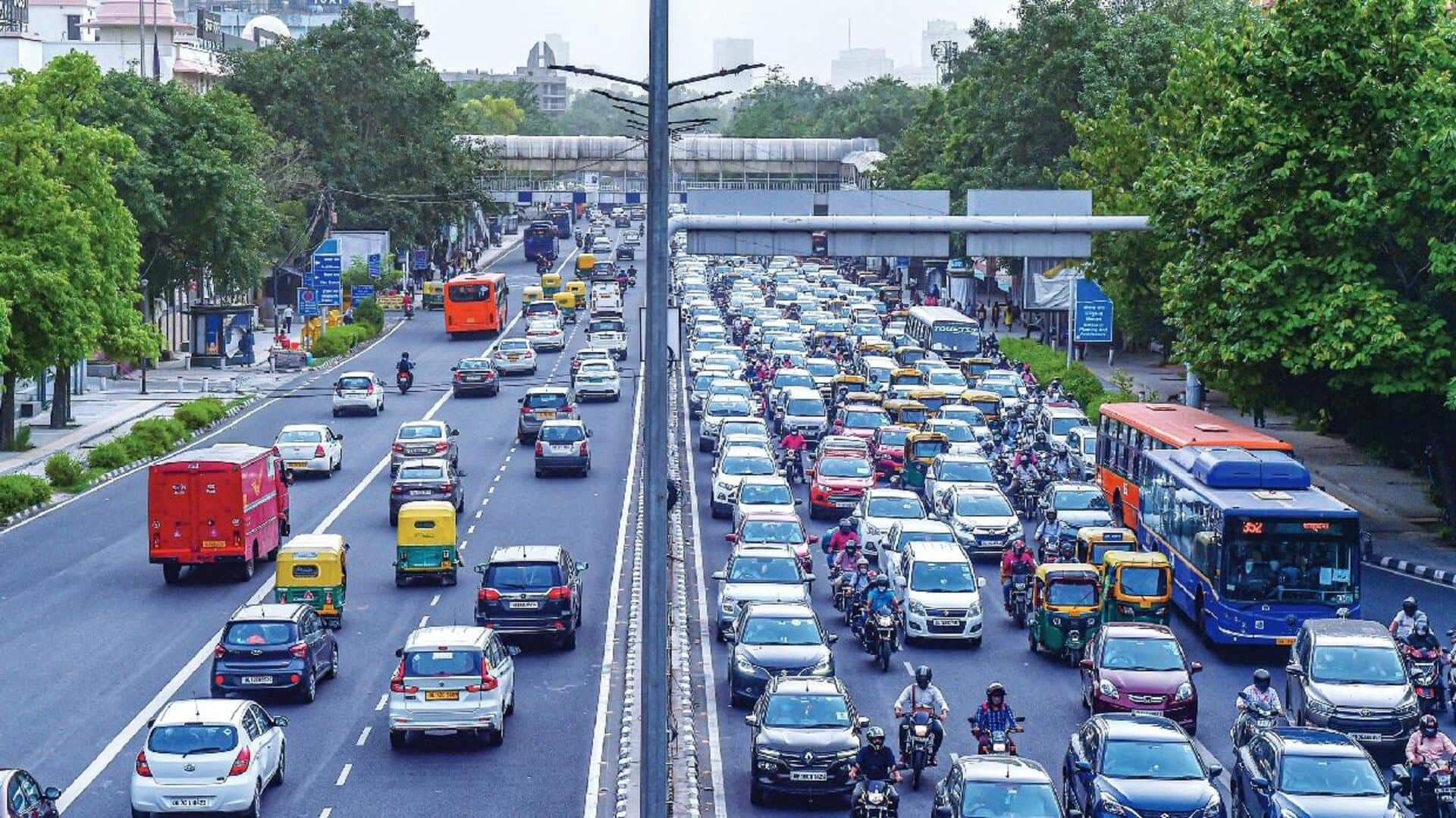
Delhi to revamp traffic challan system: How it affects you?
What's the story
The Delhi government is gearing up to introduce a fully digital and time-bound traffic challan system. The move comes as part of the amended Central Motor Vehicles Rules, 1989. The new framework will make it mandatory for all citizens to resolve their fines in a timely manner. Violators won't be able to directly approach courts against a challan without following the prescribed process first.
License implications
Serious offenders
Under the new rules, anyone who commits five or more traffic violations in a year will be classified as a "serious offender."
Such individuals could face suspension or disqualification of their driving license.
The Delhi government hopes that these measures will deter people from committing multiple traffic violations and enhance overall road safety in the capital city.
Digital delivery
How e-challans will be issued
The new system will also see a major modernization in the way challans are issued.
Police or authorized officers can issue challans manually or electronically, with violations detected through cameras and digital surveillance systems automatically generating e-challans.
These e-challans will be delivered to violators within three days on their mobile numbers, while a physical notice will reach them within 15 days.
Payment procedures
What happens after issuing challan?
Once a challan is issued, the violator will have 45 days to pay the fine or challenge it before a grievance redressal officer through an online portal.
If no action is taken within this period, the challan will be considered accepted and payment must be made within another 30 days.
If a challenge is rejected, one can either pay the fine within 30 days or approach court after depositing half of the challan amount.
Service restrictions
Consequences of not paying fine on time
If the deadlines are missed, daily electronic notices will be issued.
Continued non-compliance shall lead to restrictions on all vehicle-related services, including tax payments and processing of driving license or registration-related requests.
The vehicle will be flagged as 'not to be transacted' on the official portal, thus effectively blocking any further transactions until dues are cleared.
In some cases, police may also impound vehicles involved in violations.