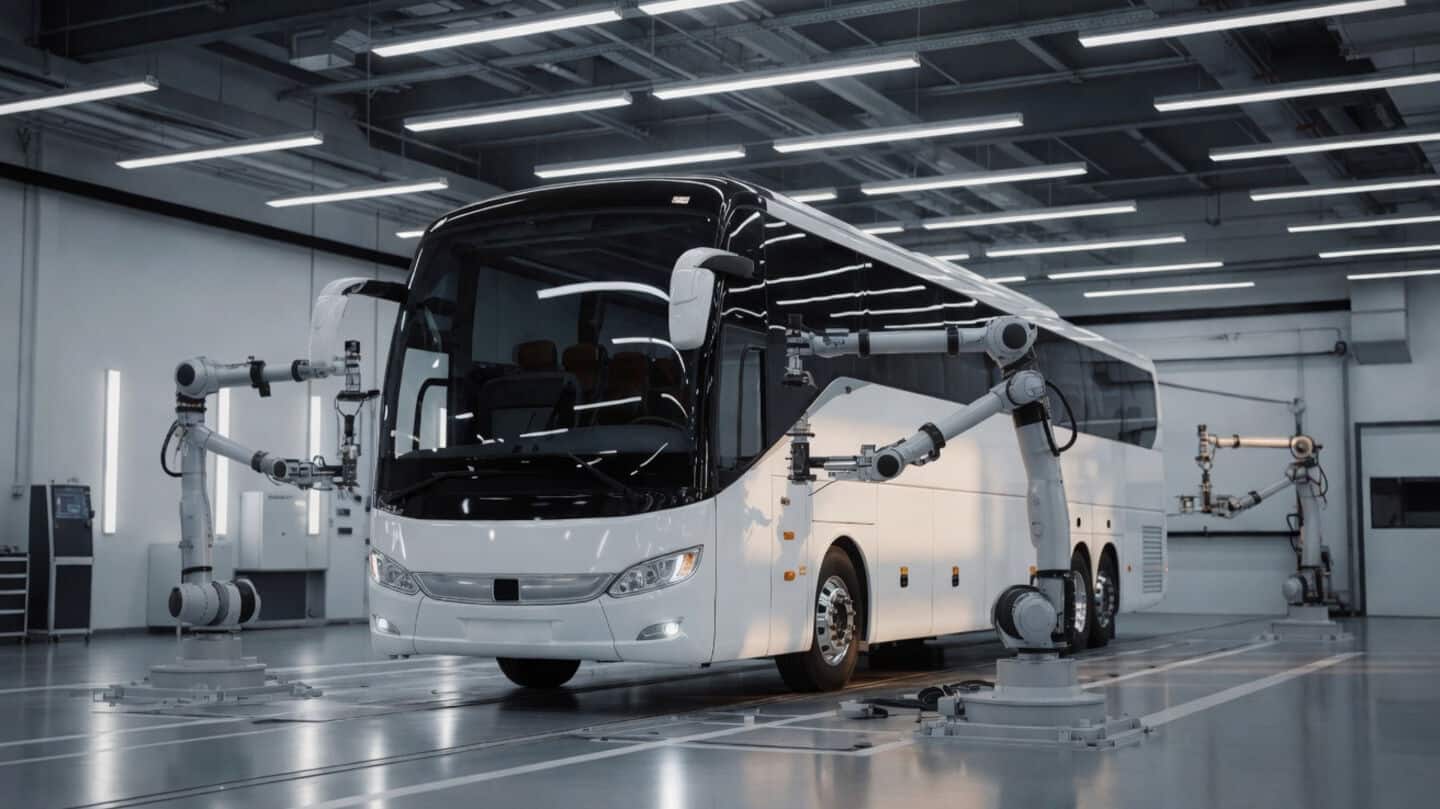
Buses in India are about to become safer for passengers
What's the story
The Indian government is planning to tighten bus registration norms. The move is aimed at improving passenger safety and ensuring compliance in bus manufacturing. According to CNBC-TV18, a notification amending the existing rules could be issued soon. The proposed changes are largely driven by safety concerns in the sleeper coach segment, which is increasingly seen as a high-risk category.
Regulatory changes
Proposed framework to enhance manufacturing oversight
The proposed framework is likely to bring in stricter supervision of how buses are manufactured, mounted, and certified before they hit the roads. The government plans to regulate both body-level and chassis-level fitment on a case-by-case basis. This will be done by leveraging technology at the Regional Transport Office (RTO) level for better scrutiny and standardization.
Safety measures
Accredited manufacturers for sleeper coaches
Under the new framework, authorities may impose stricter checks on how bus bodies are mounted on chassis and certified. The aim is to reduce structural vulnerabilities and improve passenger safety. A key proposal under consideration is to allow only accredited bus body builders to manufacture sleeper coaches. This comes amid concerns that sleeper buses pose elevated safety risks due to their design and passenger layout.
Industry impact
Impact on bus manufacturing landscape
The government's broader goal is to ensure consistent structural, fire, and passenger safety standards across buses. This is especially true for segments that have come under scrutiny after sleeper coach accidents. The move could greatly change the competitive landscape for bus manufacturers and body builders. Original Equipment Manufacturers (OEMs) are likely to benefit as larger automakers may be better positioned to secure accreditation due to their compliant manufacturing ecosystems, quality-control processes, and standardized production systems.
Compliance hurdles
Challenges for local body builders
Smaller local body builders may have to deal with higher compliance thresholds and stricter certification requirements under the proposed norms. This could increase operational costs and raise barriers to entry. The changes could also speed up formalization within the bus body-building ecosystem, an industry that has been known for its fragmented and localized manufacturing practices.