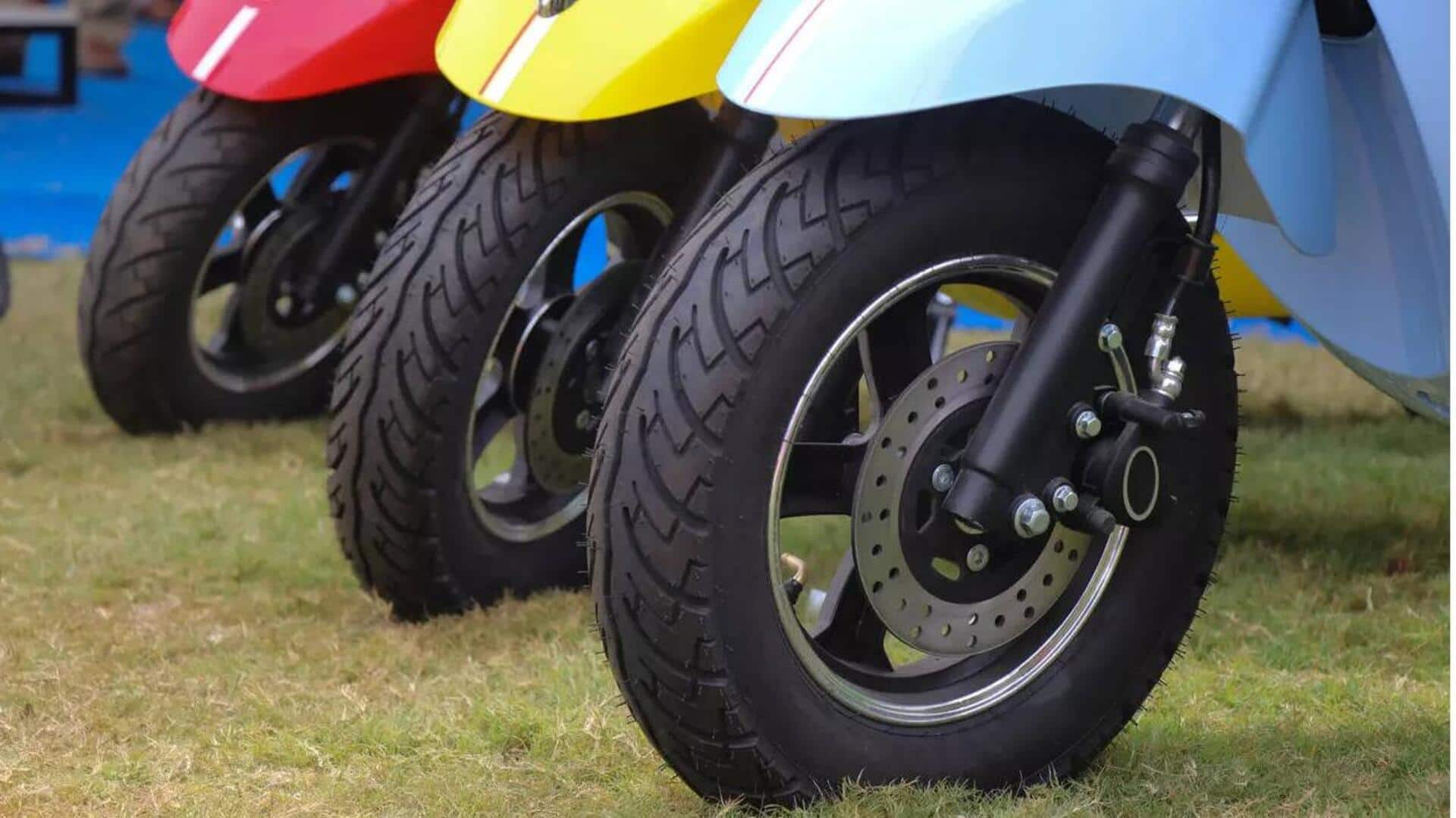
Start-ups don't dominate India's electric two-wheeler market anymore
What's the story
India's electric vehicle (EV) market is witnessing a major shift as legacy two-wheeler manufacturers such as TVS Motor Company, Bajaj Auto, and Hero MotoCorp are gaining dominance. As per automotive market research firm Jato Dynamics, these companies accounted for 60% of the electric two-wheeler segment by January 2026. In 2023, their share was just 34%. This marks a major change from the earlier trend where start-ups ruled this space.
Market transition
Transition from start-ups to legacy players
The shift from start-ups to established players in the electric two-wheeler market has been rapid over the past year.
This transition is indicative of a larger trend, moving from disruption to consolidation, driven by scale, reliability, and execution.
While start-ups initially attracted early adopters with their innovative offerings, legacy players are now winning over mainstream buyers with their extensive distribution networks and after-sales services.
Consumer shift
Shifting consumer priorities and OEM advantages
As electric scooters transition from being a novelty to an everyday commuting solution, consumers are prioritizing reliability, service access, as well as long-term ownership costs.
These are areas where traditional original equipment manufacturers (OEMs) have a structural advantage.
An industry executive noted that "being first mattered in the early phase," but now "consistency matters more."
This change highlights how legacy players have strategically built their supply chains and dealer readiness for this shift.
Market leaders
Intense competition and evolving strategies
By early this year, the electric two-wheeler market had clearly shifted from a startup-led disruption phase to one led by incumbents, especially TVS Motor and Bajaj Auto.
The competition has intensified but has also changed from price-led expansion to portfolio depth, manufacturing stability, and customer experience.
TVS's electric strategy combines steady capacity expansion with a widening product portfolio, addressing multiple customer segments.
Recovery story
Bajaj Auto's comeback and expansion efforts
Bajaj Auto has also made a strong comeback after overcoming battery pack supply constraints that had affected production earlier.
The company has expanded its Chetak range with an entry-level variant targeting younger buyers and women. This step broadens its appeal while reinforcing its positioning around reliability and value.
Bajaj has regained the number-two position in the electric scooter market in Q3 FY26.
Start-up challenges
Differentiated growth for start-ups
Start-ups like Ather Energy and Ola Electric are witnessing more differentiated growth trajectories in the evolving market.
Ather Energy's Rizta scooter is in high demand, with co-founder Tarun Mehta saying that expanding volumes had begun to unlock efficiencies and support margins as demand broadens.
On the other hand, Ola Electric's sharp loss of market share highlights growing execution challenges in a more competitive environment.