Centre to roll out Bharat NCAP 2.0 from October 2027
What's the story
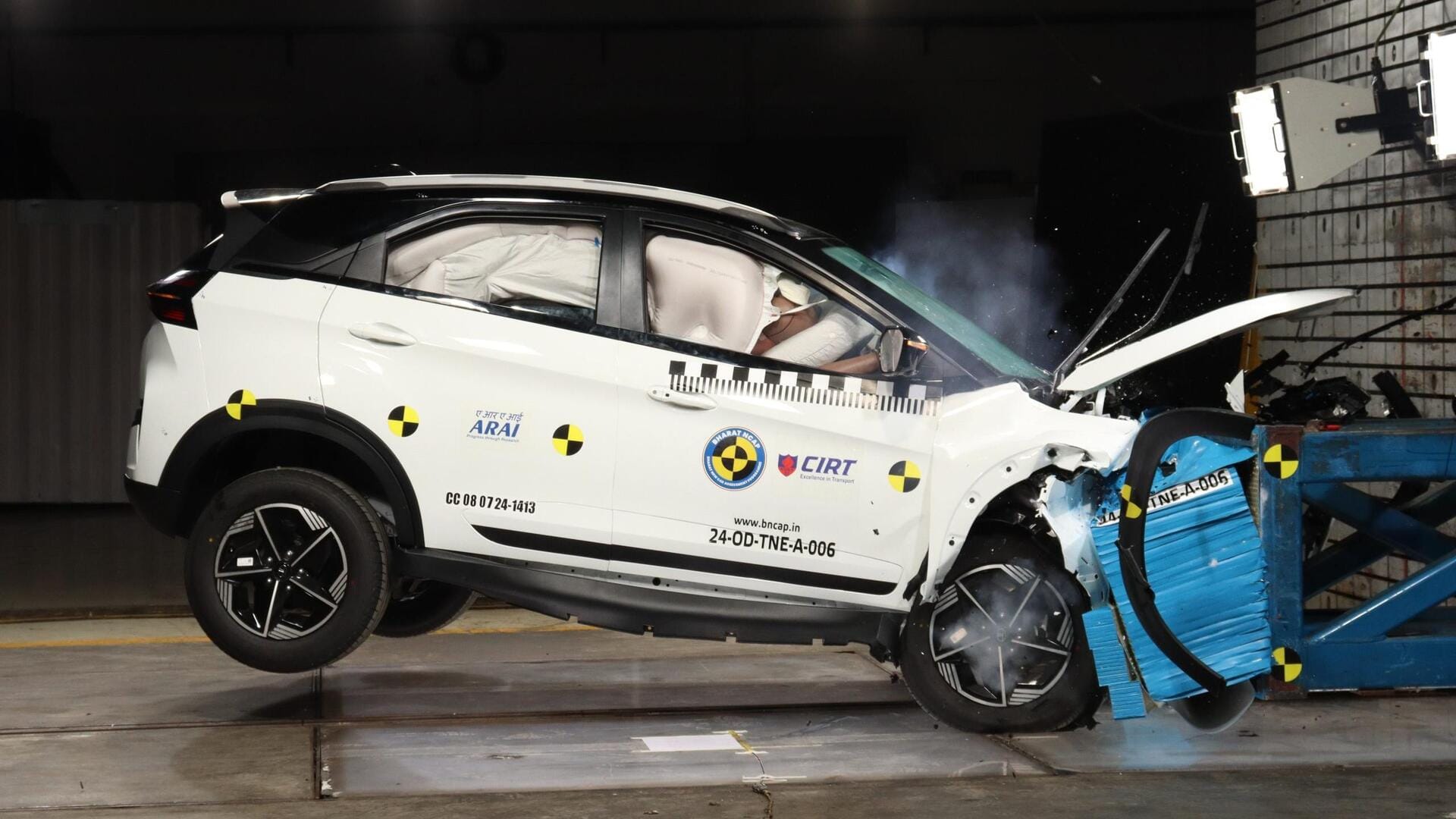
India is all set to expand its vehicle safety testing regime, the Bharat NCAP. The upgraded version of the program, Bharat NCAP 2.0, will be rolled out from October 2027, Union Minister Nitin Gadkari announced at the SIAM annual convention on Thursday. This next iteration will assess the "entire chain of crash," including passenger protection, crash avoidance, pedestrian safety, and post-crash evacuation and care.
Expanded evaluation
Expanded scope of Bharat NCAP 2.0
Gadkari said the expanded scope of vehicle safety assessments under Bharat NCAP 2.0 will cover all aspects of a crash scenario.
This includes not just how well passengers are protected during a collision, but also how crashes can be avoided in the first place, how pedestrians are safeguarded, and what happens after an accident in terms of evacuation and care for those involved.
Program success
Gadkari calls Bharat NCAP a success story
Gadkari hailed Bharat NCAP as a "very, very success story," attributing its progress to the cooperation between the government and the automobile industry.
He also revealed that over 30 models from 11 companies have already been certified under this program.
The minister further emphasized the cost-effectiveness of testing under Bharat NCAP compared to Global NCAP, with a model costing around ₹60 lakh here versus ₹2.5 crore elsewhere.
Driver accountability
Graded points system for driving licenses and vehicle registration certificates
The government is also planning a graded points system for driving licenses and vehicle registration certificates, Gadkari said.
Under this proposed framework, points would be deducted for traffic offenses. If a driver crosses a certain limit, their license could be suspended or canceled.
The system could also reward responsible drivers with incentives from insurance companies or other benefits to encourage safe driving practices while penalizing repeat offenders.
Industry collaboration
Need for CSR support in driver training
Gadkari has urged automakers to lend their support to driving training centers, vehicle fitness centers, and scrapping centers through CSR initiatives or economically viable models.
This is especially important in aspirational districts and backward blocks where there's a shortage of trained drivers.
He cited a Bengaluru bus operator who had 1,000 busses lying idle due to lack of drivers as an example of the scale of this problem.
Safety measures
Revised bus body code now in effect
The government has also tightened its approach toward bus safety. A revised bus body code came into effect from September 1, 2025.
Earlier, manual bus body builders could register through self-certification, but now busses can only be registered after type-approval certification from a testing agency.
A checklist for each individual bus has to be uploaded on a central portal and registration will not be allowed without physical or video inspection of this checklist.