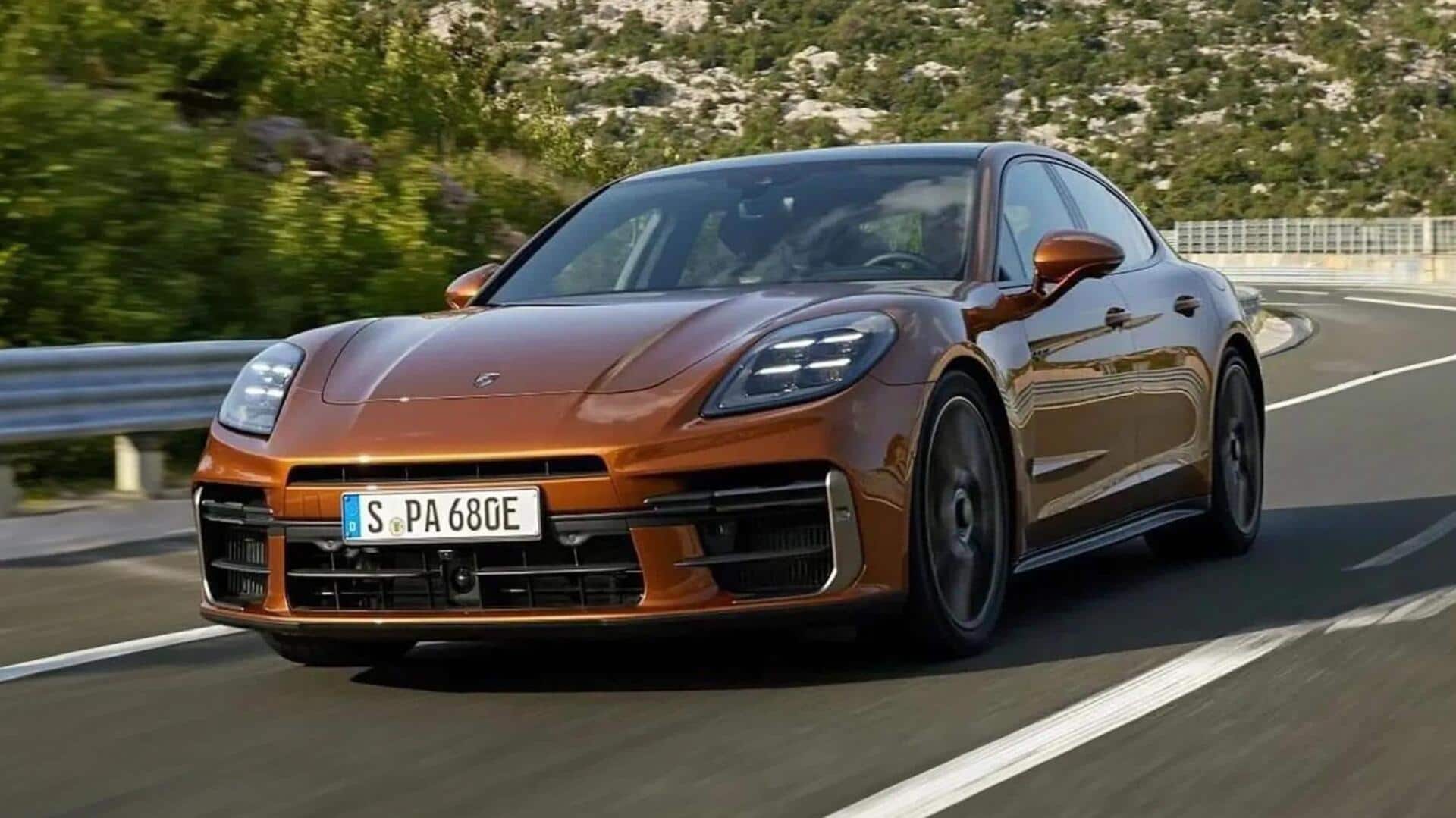
Porsche Panamera and Taycan might become a single car
What's the story
Porsche is considering merging its Panamera and Taycan models into a single nameplate, according to Autocar UK. The move, aimed at reducing expenses, comes as part of brand boss Michael Leiters's strategy to streamline operations. The German automaker already uses this method with its Macan and Cayenne SUVs, keeping the model names consistent regardless of their powertrain type.
Cost efficiency
Currently, both models use different platforms
The proposed merger of Panamera and Taycan could help Porsche optimize resource utilization.
The current-gen Panamera is built on Porsche's Modular Standard Drivetrain (MSB) platform, while the Taycan uses the 800V J1 platform.
However, since the new Porsche Premium Platform Combustion (PPC) architecture is only designed for combustion-powered cars, it can't be used for the fully electric Taycan.
Platform development
Porsche has already spent €1.8B on platform developments
Insiders suggest that Porsche could develop a new modular platform to accommodate both combustion-powered and fully electric models. This would ensure long-term relevance at an acceptable cost.
Alternatively, the automaker could also increase parts sharing as a means to achieve this goal.
So far, Porsche has already spent €1.8 billion on platform developments without seeing profitability in its EV sales while also re-evaluating its entire electrification strategy across models.
Production
Which nameplate will Porsche choose?
Operating separate production lines for the Panamera and Taycan, with their respective tooling and workforce would inevitably push up costs.
If Porsche merges these two models under a single nameplate, it could benefit from the singularizing costs and resources related to engineering and development attached to each car as it goes through the lifecycle updates.
However, which nameplate the company ends up retaining going forward remains to be seen.