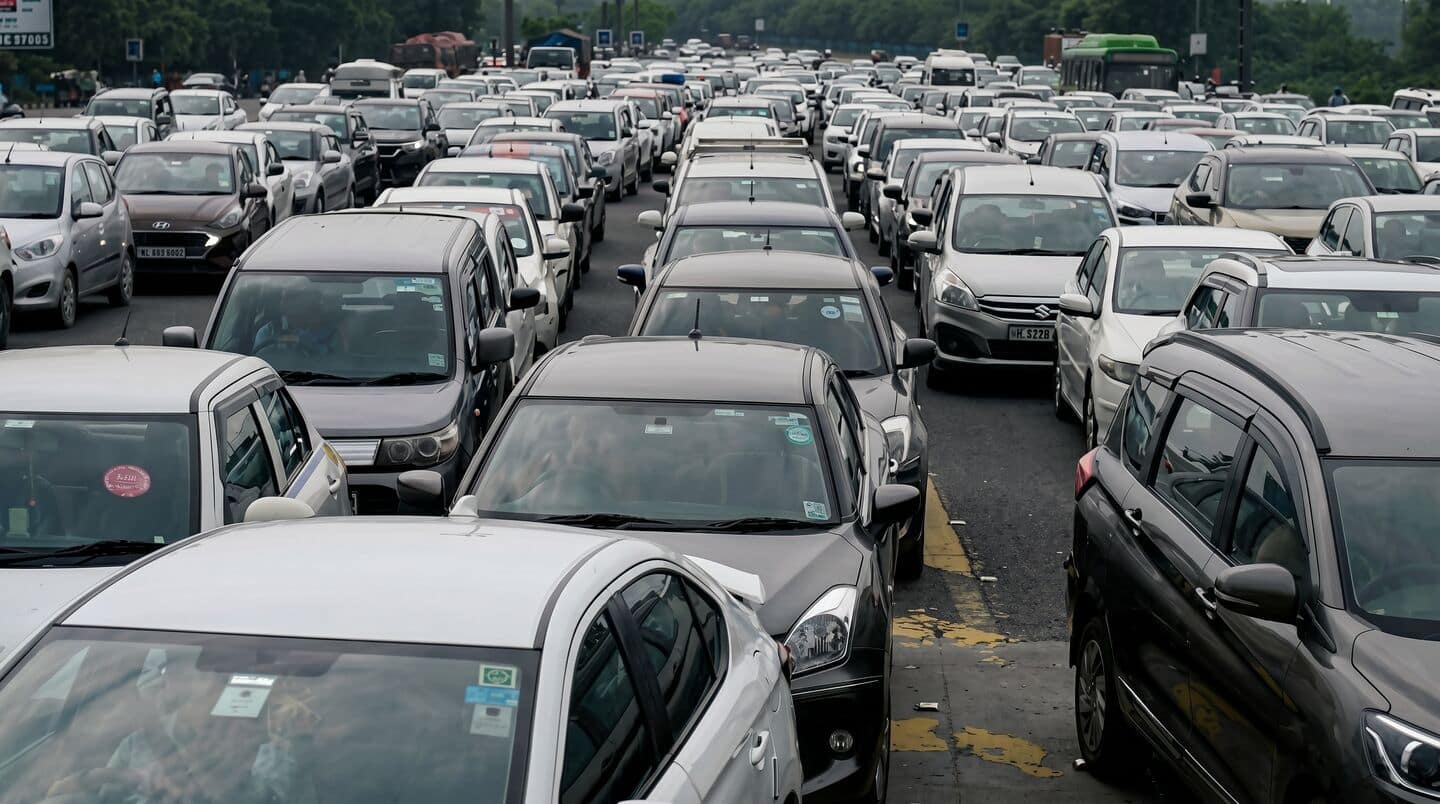
TRAI wants real-time accident alerts on Indian roads
What's the story
India's telecom regulator, the Telecom Regulatory Authority of India (TRAI), has proposed a new technology to enhance road safety and traffic efficiency. The proposal focuses on an automated wireless vehicle communication system capable of alerting drivers about potential crashes or identifying traffic violations. The consultation paper was released on Thursday and marks the beginning of a regulatory process for this innovative technology.
Tech details
Proposed tech for real-time data exchange
The proposed tech, known as vehicle-to-everything (V2X) communication, would allow real-time data exchange between vehicles, traffic signals, and cellular networks. This would be done through on-board wireless communication devices. The system could improve road safety by warning drivers about potential collisions or loss of control by other vehicles. It could also enhance traffic efficiency by optimizing signal timings and enabling dynamic route management to reduce congestion and fuel consumption.
Safety goals
Addressing India's road fatality crisis
The primary motivation behind this proposal is to reduce road fatalities in India. The country witnessed an estimated 173,000 deaths and 463,000 injuries due to road accidents in 2023. TRAI argues that traditional safety features like airbags and seatbelts are no longer enough as nearly 92% of accidents are caused by human recognition and decision-making failures. The paper states that "The first and the foremost reason for adoption of V2X Technology/Intelligent Transport System is to improve road safety."
Global perspective
Global progress on V2X technology
Several countries have already laid the regulatory and industrial groundwork for V2X technology. Automakers are integrating communication hardware into new vehicles, cities are retrofitting intersections with roadside units, and governments are allocating spectrum. China is among the leaders in these efforts, but trials have also been conducted in the US, Japan, South Korea, and the UK.
Network functionality
Understanding the different modes of communication
The consultation paper details how the proposed V2X network would work, with four communication modes. These include vehicle-to-vehicle (V2V), vehicle-to-infrastructure (V2I), vehicle-to-pedestrian (V2P), and vehicle-to-network (V2N) modes. Each mode has distinct functions, such as warning drivers about control loss or braking hard by a car ahead, broadcasting data to approaching cars from smart traffic signals and road signs, and alerting drivers about pedestrians stepping into blind spots.
Implementation strategy
Trials and phased rollout in India
Real-world trials of this technology have already been conducted on Indian roads. A 2022 trial saw traffic infrastructure communicating with emergency vehicles and busses up to 800 meters away, resulting in significant reductions in travel time and waiting time at signals. Given the scale of this project, a task force has suggested a phased rollout, starting with vehicle-to-vehicle features that can be deployed immediately without extensive roadside infrastructure.