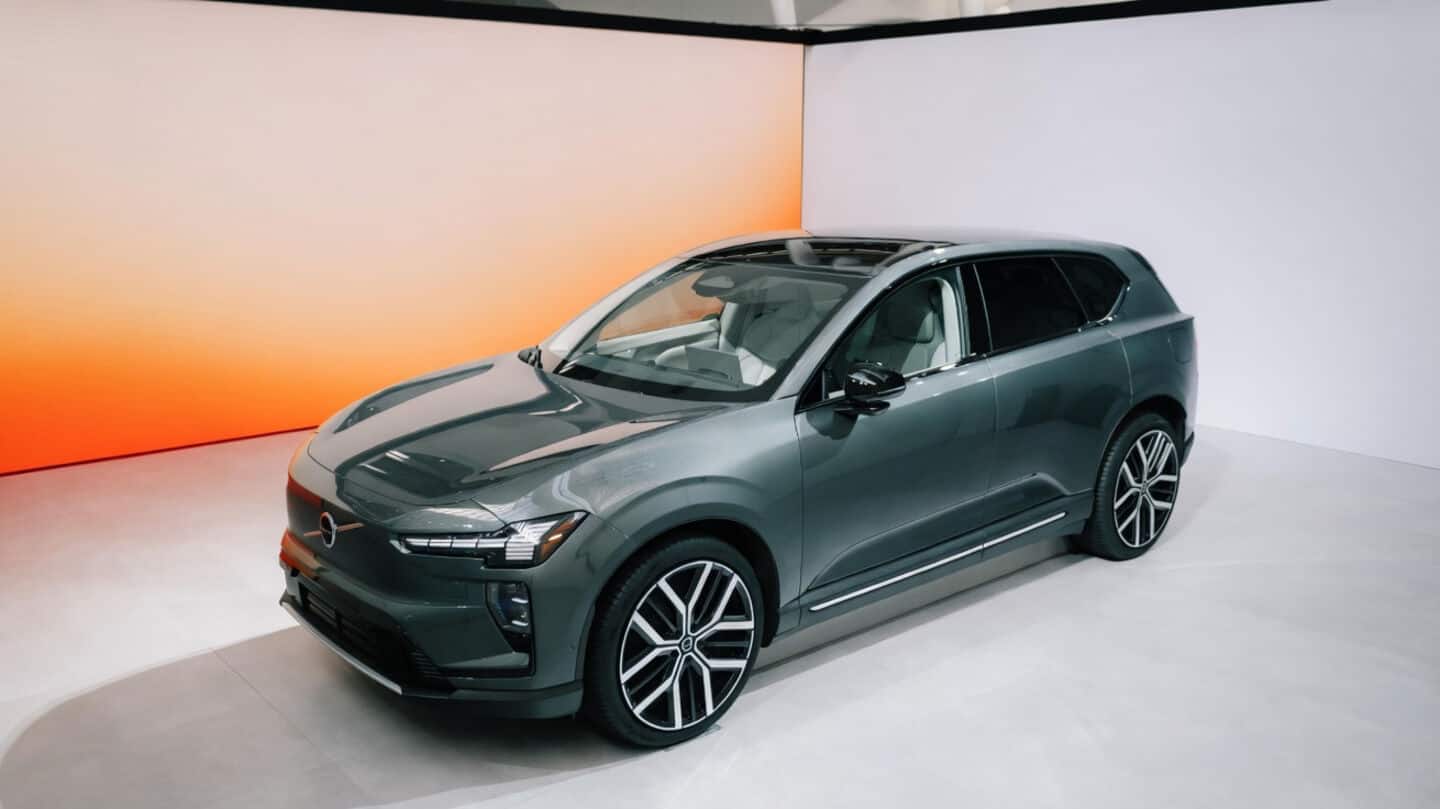
Volvo EVs will warn each other about road hazards
What's the story
Volvo is introducing a new hazard alert system for its electric vehicles (EVs). The innovative feature works by having Volvo cars communicate with each other, rather than relying on crowdsourced information like popular navigation apps such as Google Maps and Waze. The new system will be available in three models: EX90, ES90, and EX60.
Mechanism
How does the new hazard alert system work?
The hazard alert system works by using connected vehicle data from Volvo's fleet of passenger cars.
The sensors and cameras on these cars are calibrated to detect specific dangers on the road, such as animals or vulnerable road users like pedestrians and cyclists.
When one car detects a hazard, it automatically logs the location and sends it to Volvo's servers. This information is then relayed to other Volvo vehicles traveling along that same route.
Coverage
The system covers 4 types of risks
Volvo's new hazard alert system will cover four types of risks: large animals, vulnerable road users (pedestrians or cyclists), roadwork, and accidents.
The company claims to have one million vehicles on the road today with connected safety alert capabilities.
It also shares its alert data with traffic management centers and other vehicle brands, ensuring that not just Volvo-branded vehicles benefit from this technology.
Advanced technology
Volvo has been using connected vehicle technology since 2016
Volvo has been using connected vehicle technology to power some of its hazard warnings since 2016.
The company's cloud-based system, developed with Ericsson, warns drivers about slippery roads ahead based on feedback from steering, braking, and acceleration sensors.
It also alerts nearby vehicles when another car has activated its hazard lights, indicating that another driver may be in a dangerous or unexpected position on the road.