
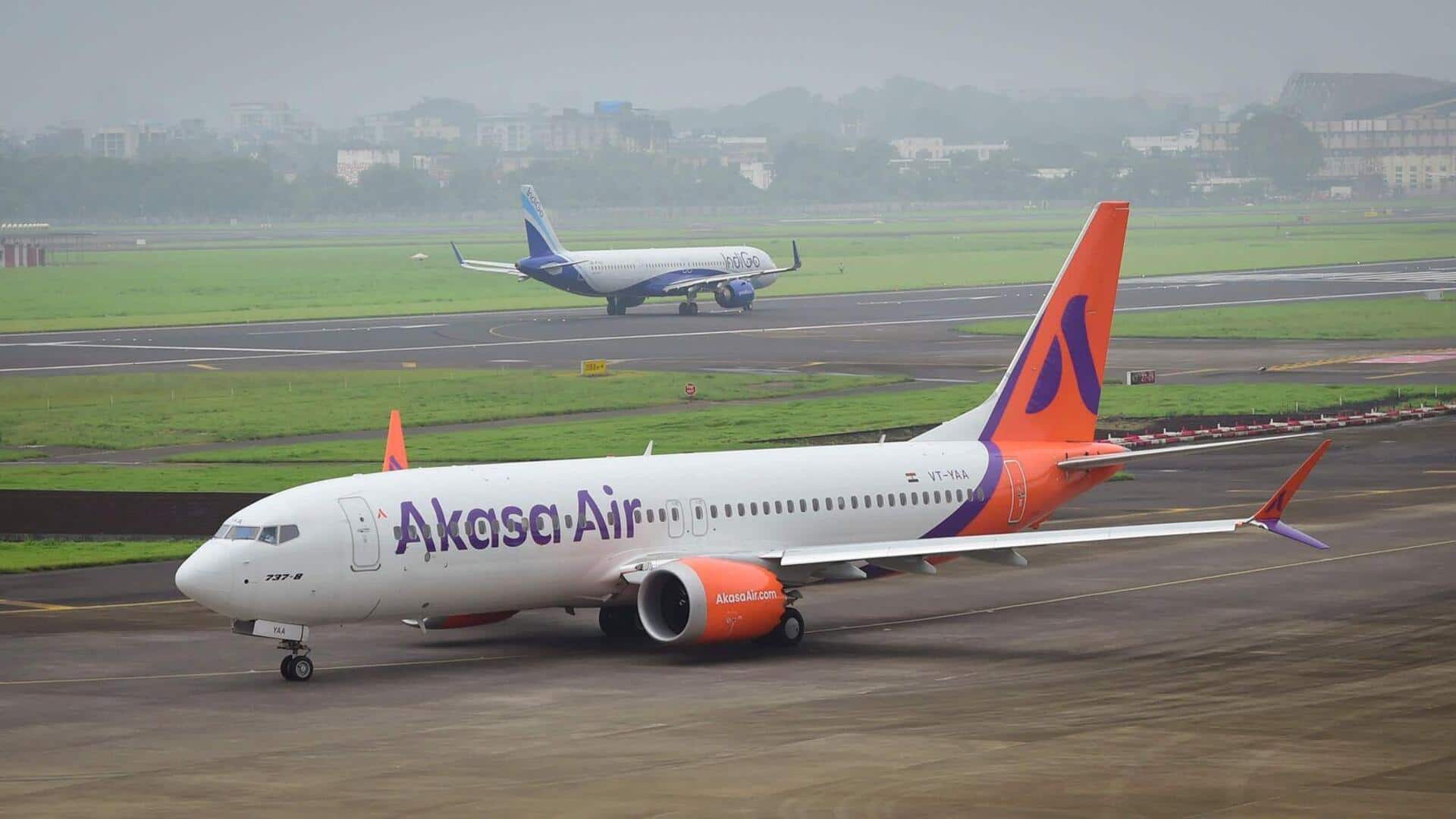
Akasa Air joins international airlines' association, boosting India's aviation presence
What's the story
Akasa Air, India's youngest airline founded in 2020, has joined the International Air Transport Association (IATA). The membership comes after the airline successfully completed the IATA Operational Safety Audit (IOSA), a mandatory requirement for membership. With this achievement, Akasa Air becomes the fifth Indian airline to join IATA's ranks. The others are Tata Group-owned Air India and Air India Express, IndiGo, and SpiceJet.
Opportunities
IATA membership opens doors for Akasa Air
The IATA membership will allow Akasa Air to actively participate in global aviation's future, with a focus on safety, digital transformation, and sustainable practices. The association expects Akasa Air's valuable contribution in shaping the industry's agenda. Sheldon Hee, Regional Vice President for Asia-Pacific at IATA said they are excited to welcome Akasa Air as a member and look forward to their active participation in shaping the airline industry's agenda globally.
Expansion
Akasa Air's journey and future plans
Founded by Vinay Dube, Akasa Air launched its first commercial flight on August 7, 2022. The airline has since connected 26 domestic and six international destinations. It started international operations in March 2024 with Doha (Qatar). The airline plans to operate a fleet of 226 new Boeing 737 MAX aircraft over the next decade, currently operating a fleet of 31 such aircraft.
Financial growth
Financial performance and future goals
In FY25, Akasa Air registered a revenue growth of 49% backed by increased unit profitability. The airline's EBITDA margins for the year improved by 50%. With a focus on cost leadership, Akasa Air achieved industry-leading load factors of over 87%. The airline's capacity in terms of ASKs grew at a rate of 48% compared to FY24, driven by a 13% increase in stage-adjusted RASK.