World's largest miner is not worried about climate change anymore
What's the story
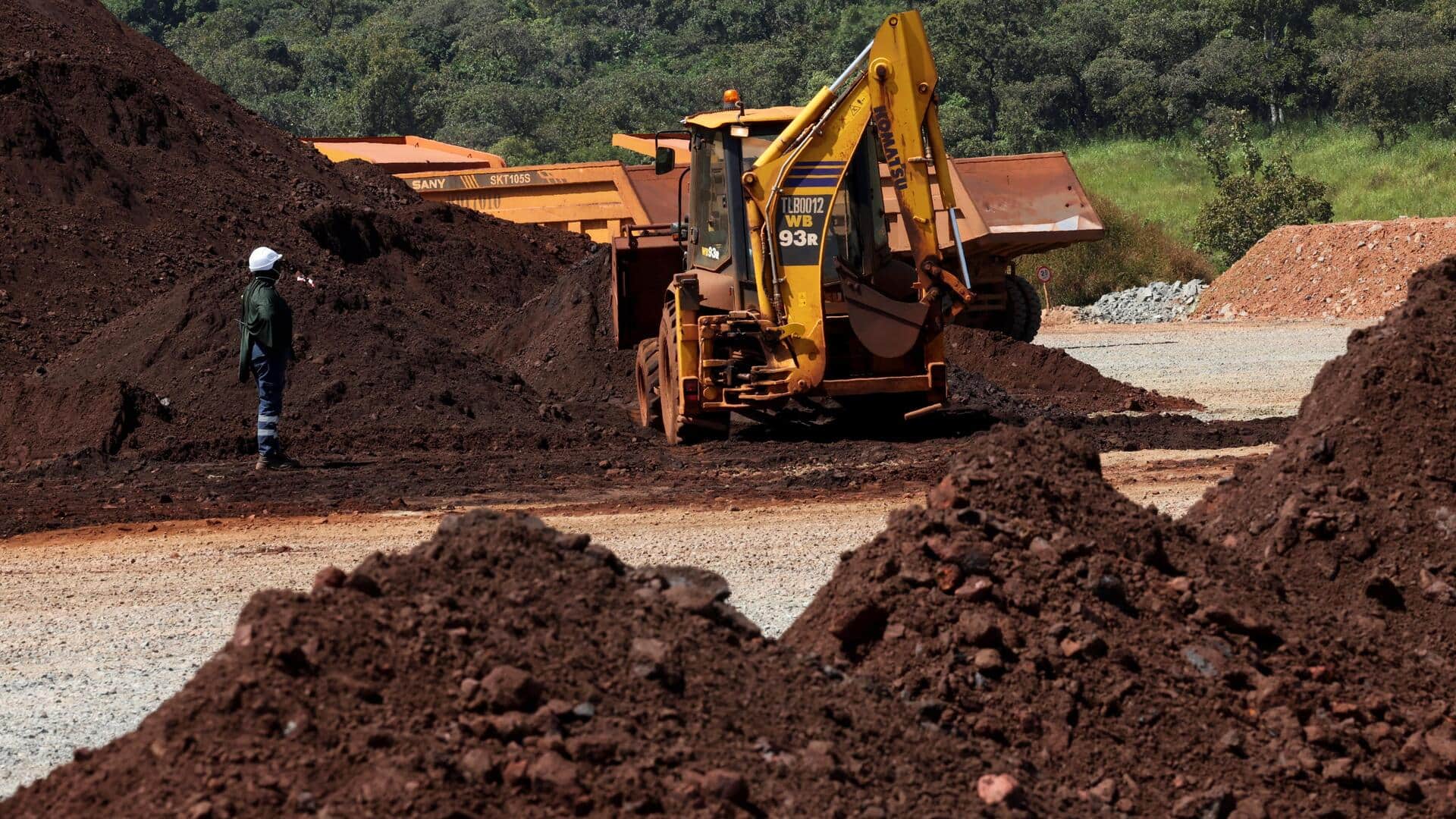
BHP, the world's largest miner and one of Australia's biggest historical emitters, has put its climate action plans on hold. According to a trove of internal documents obtained by The Guardian and ABC's Four Corners, the company has delayed or shelved projects aimed at drastically cutting emissions. The documents reveal that BHP is considering postponing major climate investments in its Western Australian iron ore operations by up to two decades.
Project setbacks
Major projects delayed
BHP's first planned investment in its inland Pilbara decarbonization plan, a 50MW solar farm and 20MW battery at the Jimblebar mine, was shelved soon after board approval.
The move drew internal criticism from staff who questioned the decision to unilaterally close a board-approved project.
Further, a massive system of nearly 500MW solar, wind and battery that could power a small city has also been significantly delayed with no capital funding until 2031 at the earliest.
Project abandonment
BHP has abandoned processing plant to reduce emissions
BHP has quietly abandoned an iron ore processing plant that could have avoided 1.7 million tons of emissions annually. This is equivalent to taking over 350,000 cars off the road.
The firm had initially planned to replace its fleet of diesel trucks with electric ones starting in 2027-28, but has continued to acquire polluting diesel haulage trucks for long-term use.
Emission targets
Still focused on emissions reduction goals
Despite the setbacks, BHP claims it is still focused on its emissions reduction goals.
The company has reduced emissions by 36% from 2020 levels and maintains that many technologies needed for net-zero targets are not yet deployable.
However, experts and environmental groups have warned that BHP's slow decarbonization could jeopardize national climate targets such as a 43% cut below 2005 levels by 2030.
Corporate responsibility
BHP's actions contradict its climate leadership stance
Naomi Hogan, head of engagement at the Australian Centre for Corporate Responsibility, said BHP's actions have an outsized influence on climate action.
The company has spent years trying to position itself as a climate leader and has previously set a target to cut emissions by 30% by 2030.
In 2019, former CEO Andrew Mackenzie warned that fossil fuel dependence posed "existential" risks and tackling climate change would require "the biggest global mobilization since World War II."