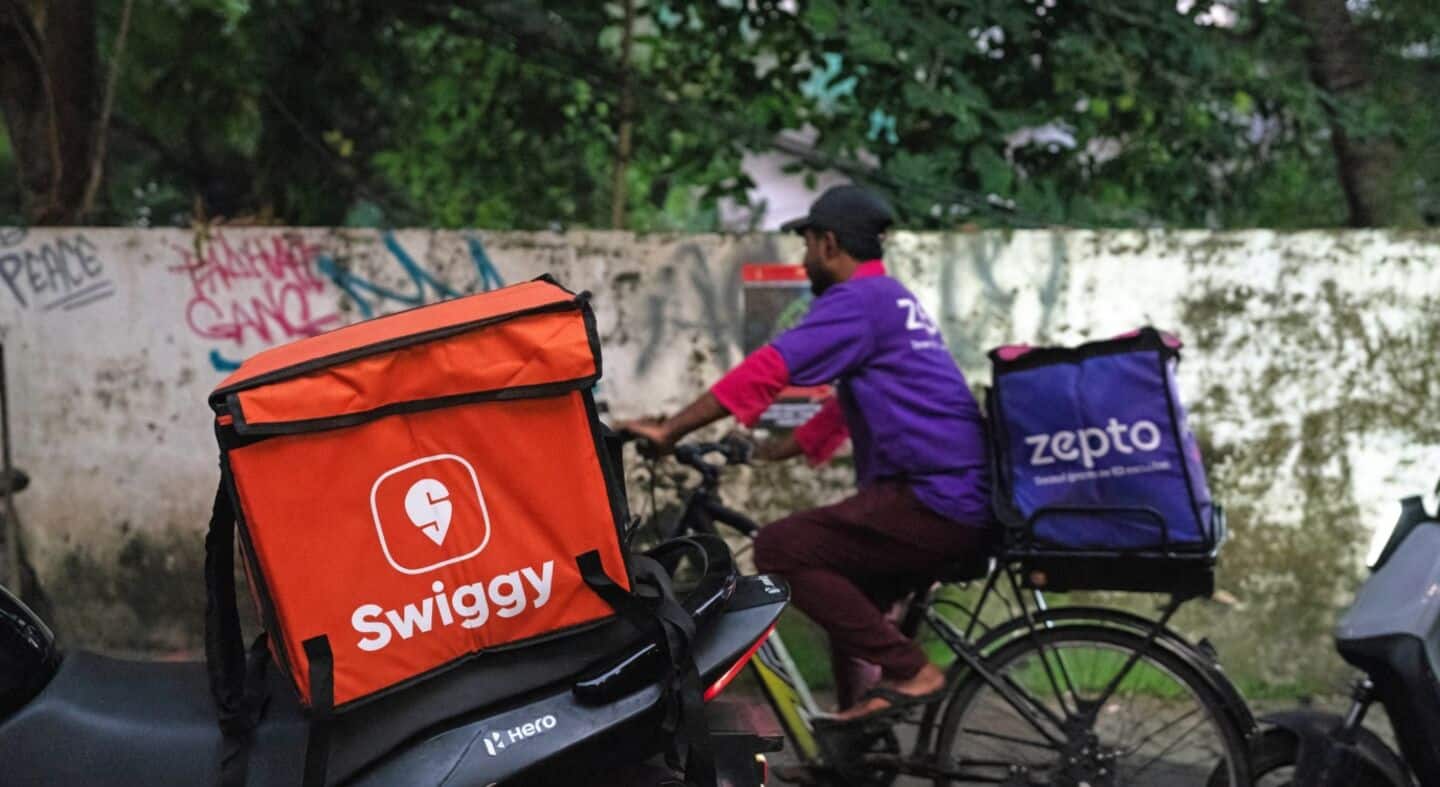
Blinkit, Zepto, Instamart face scrutiny over delivery algorithms
What's the story
The Department-Related Parliamentary Standing Committee on Commerce has recommended strict guidelines to regulate the use of algorithms in quick-commerce. The committee's report, presented to Parliament last week, urges measures to prevent 'algorithmic dispatch systems' from setting unrealistic speed targets that could endanger delivery partners on public roads. This comes months after major quick-commerce platforms dropped explicit '10-minute delivery' claims from their apps and advertising.
Regulatory shift
Recommendations shift focus from customer-facing promises to backend systems
The committee's recommendations don't ban 10-minute deliveries or mandate a minimum delivery time.
Instead, they shift the regulatory debate from customer-facing promises to the systems operating behind the scenes.
The report highlights concerns over 'algorithmic dispatch systems' that could set unrealistic speed targets, potentially compromising safety on public roads.
Business model
No significant changes in payouts or order-assignment systems
Even after the removal of fixed 10-minute claims, platforms like Blinkit, Zepto, and Swiggy's Instamart continue to offer deliveries within minutes.
This is based on factors such as location, traffic conditions, inventory availability, and dark-store capacity.
A Moneycontrol investigation found no significant changes in payouts or order-assignment systems for delivery partners after these branding changes.
Operational design
Quick-commerce order processing system explained
The quick-commerce order processing system assigns orders to nearby dark stores with the required inventory and capacity.
This is done using digitally mapped shelves and system-generated picking routes, which minimize product location time.
Although delivery distances are restricted to a small radius around each dark store, platforms maintain that proximity and operational design, not unsafe riding practices, lead to faster deliveries.
Undefined parameters
What constitutes an 'unrealistic' target remains unclear
The committee's report does not define what constitutes an 'unrealistic' target.
It remains unclear whether future frameworks should consider the delivery estimate shown to customers, time allocated for each journey, rider incentives, acceptance rates, route selection, or number of orders assigned during a shift.
The report also doesn't specify a regulator for dispatch algorithms or recommend penalties for violations.
Broader scrutiny
Committee calls for central registry for delivery workers
The committee's recommendations also include surprise digital and physical inspections of dark stores by state governments.
It wants to ensure workers have adequate ventilation, hydration facilities, and mandatory rest intervals.
The panel has also suggested an Aadhaar-linked central registry for delivery workers to provide them with portable medical and accident insurance across platforms.