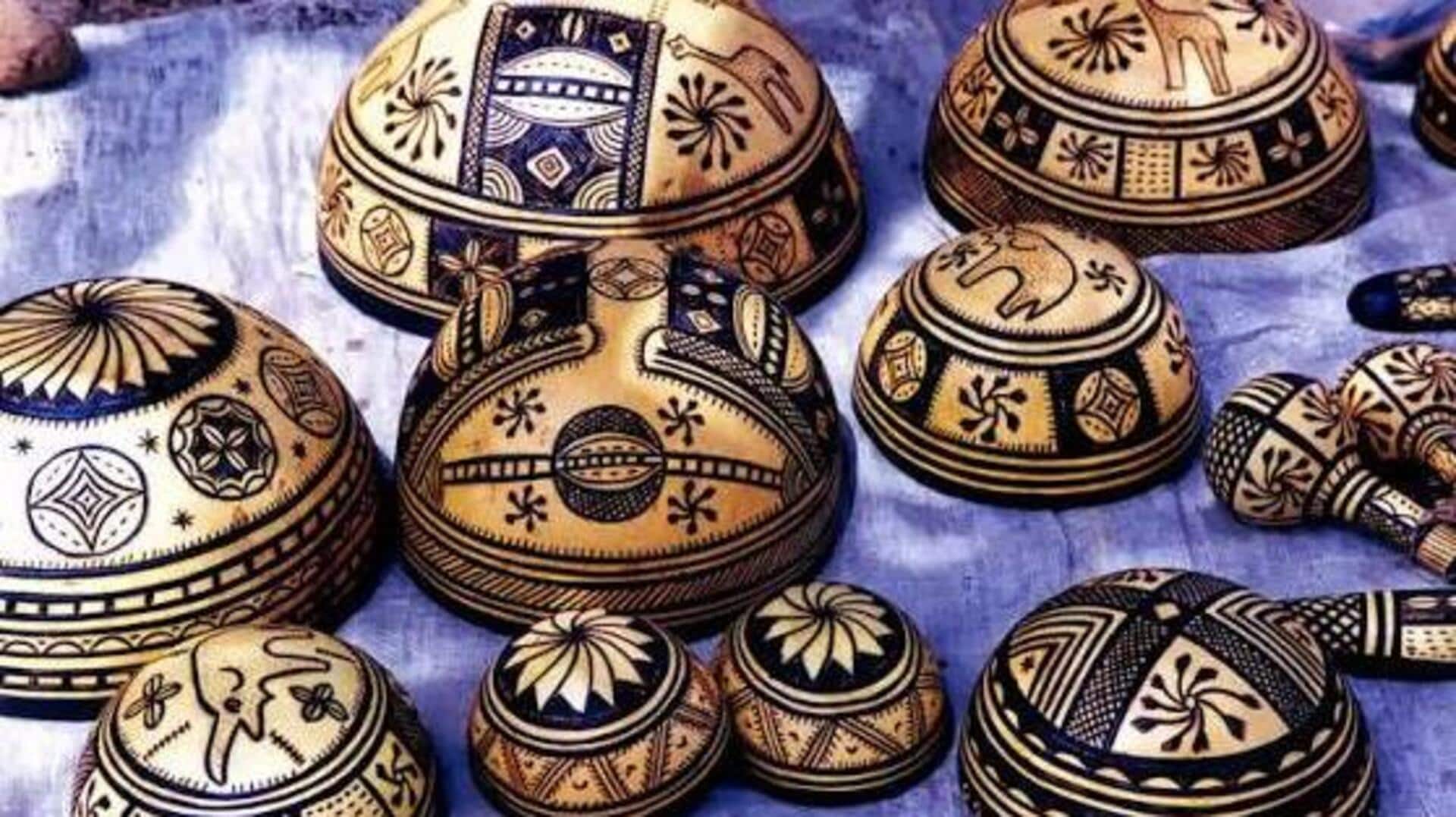
All about African calabash art
What's the story
The African calabash art has transitioned from traditional bowls to contemporary lamps, showcasing its versatility and cultural significance. This transformation highlights how artisans have adapted this natural resource to meet modern aesthetic demands while preserving its historical essence. The journey of calabash art reflects both innovation and tradition, making it a unique study in the evolution of African craftsmanship.
#1
Traditional roots of calabash art
Calabash art has its roots in ancient African cultures where it was used for practical purposes like storage and serving.
Artisans would carve intricate designs on these gourds, reflecting cultural symbols and stories.
These traditional pieces were not just functional, but also held spiritual significance in many communities.
The craftsmanship required was passed down through generations, preserving the techniques and cultural narratives embedded in each piece.
#2
Evolution into contemporary design
Over the years, calabash art has evolved from traditional bowls to modern-day lamps.
This shift has been driven by changing consumer preferences, and a growing appreciation for unique home decor items.
Artisans now create lamps that blend traditional carving techniques with modern design elements. This evolution allows them to cater to a wider audience while keeping their cultural heritage alive.
#3
Economic impact on communities
The transformation of calabash art into contemporary lamps has also had a positive economic impact on local communities.
By diversifying their product offerings, artisans are able to reach new markets, both locally and internationally.
This not only provides a stable income but also encourages the preservation of traditional crafting techniques as they adapt to meet market demands.
#4
Challenges faced by artisans today
Despite the success of calabash art's evolution, artisans face several challenges today.
Competition from mass-produced items often undercuts prices, making it difficult for individual craftsmen to sustain their livelihoods.
Additionally, access to quality materials can be limited, affecting production quality and consistency in designs.