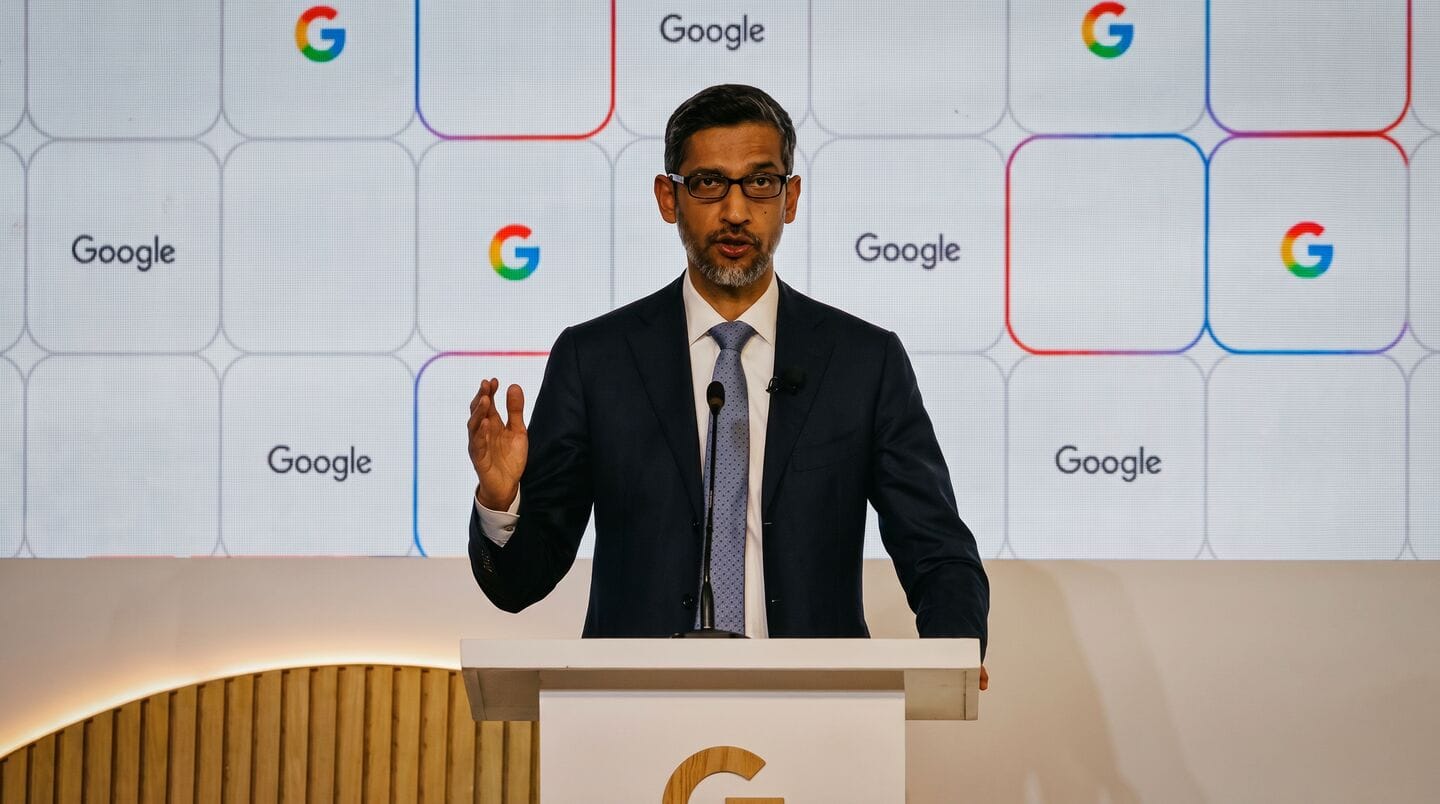
Sundar Pichai addresses 'boo strategy' amid growing AI job fears
What's the story
As artificial intelligence (AI) continues to evolve, it has become a hot-button issue for Silicon Valley leaders. Students are worried about shrinking career prospects and layoffs related to AI, making commencement speeches by tech executives tense public reckonings over the future of work, creativity, and economic security. The rising tension has even been dubbed the "boo strategy" in tech circles.
Rising challenge
Navigating the tension
As graduation season unfolds in American universities, tech executives invited to deliver commencement speeches are finding it hard to navigate student hostility toward artificial intelligence.
This is a new challenge for them, as they have to avoid getting booed off stage.
What was once a ceremonial victory lap for business leaders has now, in some cases, turned into a public referendum on Silicon Valley's AI ambitions.
Public confrontation
The Hard Fork podcast
Students entering an uncertain labor market are increasingly confronting the very executives championing technologies they fear could reshape or eliminate their future careers.
This growing tension was recently highlighted on the popular tech podcast Hard Fork, where hosts asked Sundar Pichai how he planned to avoid backlash during his upcoming commencement speech at Stanford University.
Balancing act
Pichai's response to AI backlash
Responding to the question, Pichai acknowledged that people are "rightfully" anxious about the future AI may create.
He described the technological transformation underway as unprecedented in scale but remained optimistic about the next generation.
"I've always been extraordinarily optimistic about the next generation," he said, adding that AI does not change that belief.
Widespread unease
Growing unease about AI
While Pichai may find a more receptive audience at Stanford, which is located in the center of Silicon Valley and a hub for top-tier AI talent, public unease over AI is growing.
A Pew Research Center study found that nearly half of Americans are more worried than excited about the integration of AI into daily life.
Resistance to the rapid expansion of energy-intensive data centers needed for modern AI systems is also rising across the US.
Job market impact
Anxiety over AI's impact on jobs
The anxiety over AI is not just theoretical. Several major companies have openly linked AI-driven efficiency gains to workforce reductions this year.
Graduates are also facing a tougher hiring environment, with AI tools making recruitment processes longer and more complex.
The unemployment rate for recent graduates hit a four-year high at the start of 2026, further highlighting the impact of these technologies on job prospects.