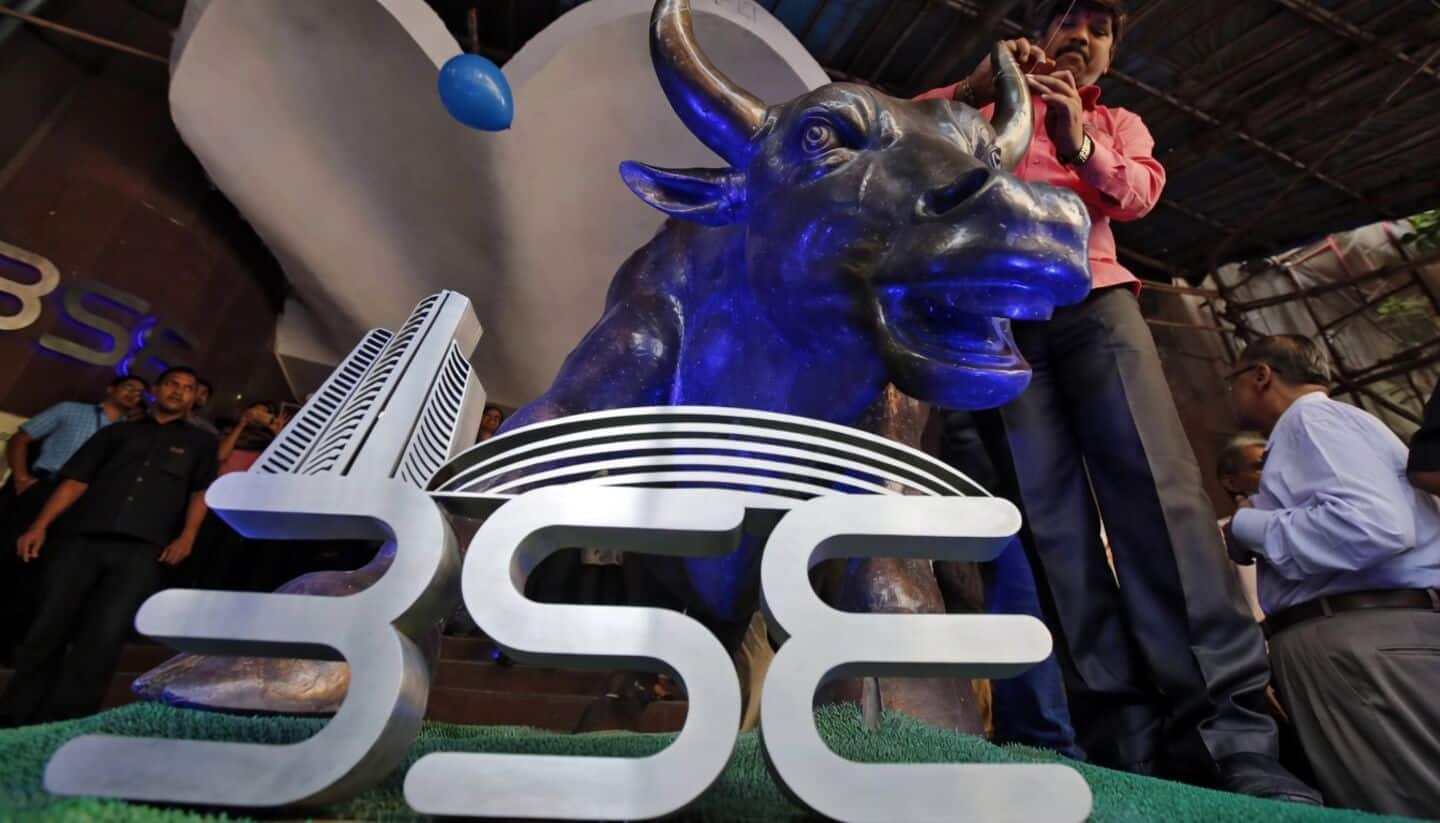
BSE shares jump 4.5% as NSE cannot self-list after IPO
What's the story
BSE's shares surged by 4.5% today, following comments from the exchange's MD and CEO Sundararaman Ramamurthy. Speaking to CNBC-TV18, Ramamurthy said that the National Stock Exchange(NSE) cannot self-list after its mega initial public offering (IPO). He also confirmed that NSE has denied any plans for self-trading with its offer document. At around 1:00 pm, BSE shares were trading 4.5% higher at ₹3,308 apiece.
Historical context
Ramamurthy recalls BSE's unsuccessful attempts in 2017
Ramamurthy also recalled BSE's unsuccessful attempts to get permission for self-trading on its own exchange in 2017.
The comments come amid speculation that NSE could trade on its own exchange via the "permitted to trade" category after listing on BSE.
However, under the current regulatory framework, self-listing is not allowed.
Market adjustments
BSE CEO addresses issues with closing auction session
Ramamurthy also addressed the impact of the recently-introduced Closing Auction Session (CAS) on index option volumes.
He said, "Liquidity is an important requirement of a CAS system. Due to lack of liquidity in CAS, participation has lacked."
The BSE CEO revealed that they have been conducting dealer meetings on CAS and are considering feedback such as delinking F&O expiry from CAS and implementing it gradually.
System effects
CAS has witnessed sharp price divergences and swings
Introduced on August 3, CAS is a short end-of-day auction where buy and sell orders are matched to determine a stock's official closing price.
However, since its launch, the system has witnessed sharp swings and price divergences in benchmark indices.
Liquidity during this process has been thin and mainly dominated by institutions. Data shows CAS trades accounted for less than 1% of daily cash-market turnover and less than a third of volumes seen under the previous system.