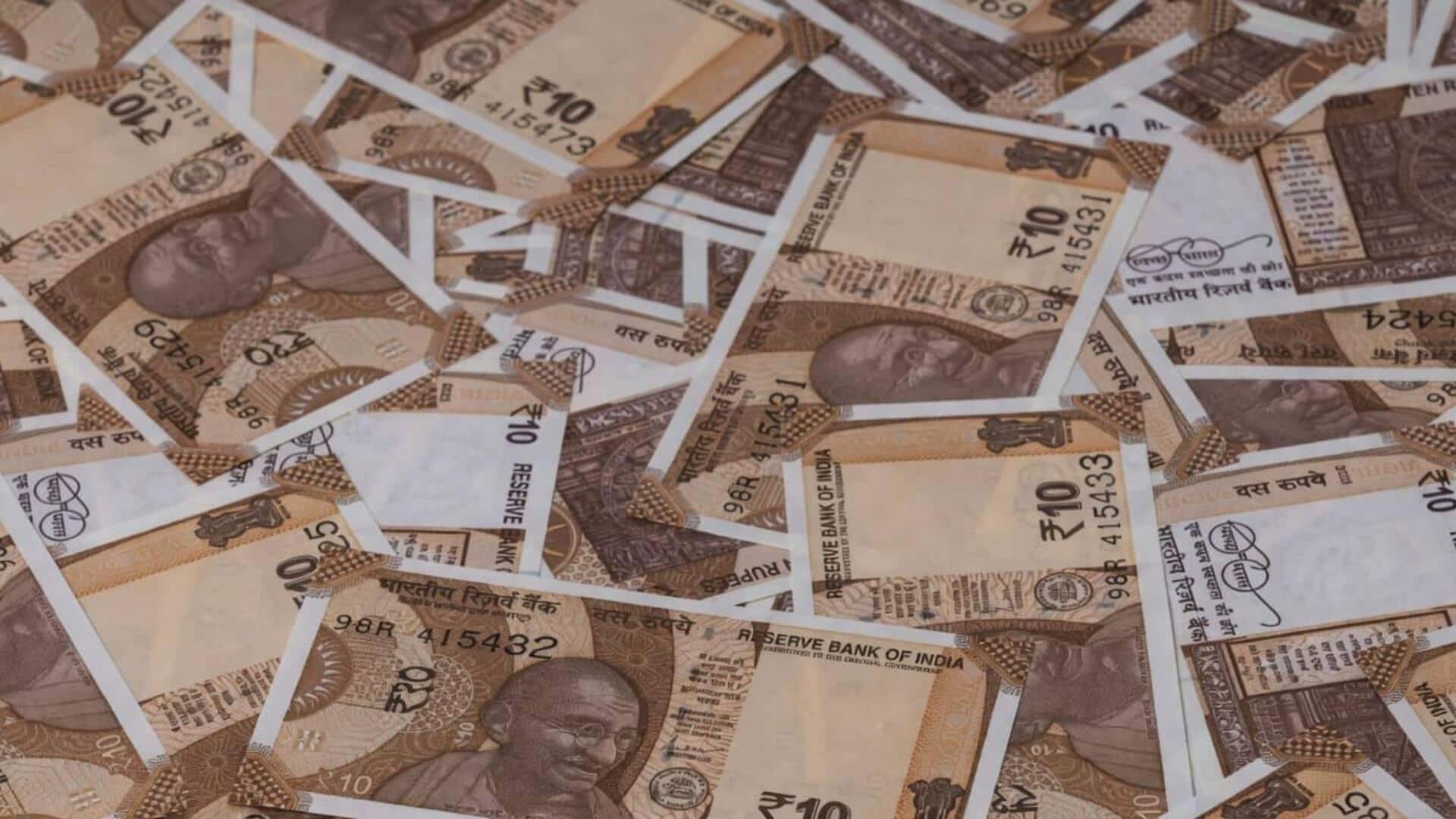
Centre approves trials of ₹10, ₹20 polymer notes
What's the story
The Indian government has approved a proposal to conduct field trials of one billion polymer banknotes each in the denominations of ₹10 and ₹20. The Reserve Bank of India (RBI) had sent the proposal to the government under Section 25 of the RBI Act, 1934. This comes as a major step toward testing an alternative currency presentation for these two lower-value denominations.
Coexistence plan
Polymer notes won't immediately replace paper currency
Finance Minister Nirmala Sitharaman confirmed the government's approval of the proposal, in a written reply to the Rajya Sabha.
However, she clarified that this doesn't mean an immediate phasing out of paper currency in these denominations.
The RBI has proposed that polymer notes will be issued along with existing paper substrate-based banknotes, not replacing them entirely.
This phased approach will help assess how well polymer notes perform in real-world circulation before broader adoption across other denominations.
Global adoption
What are polymer banknotes?
Polymer banknotes are made from a thin, flexible plastic film instead of the cotton-based paper used for traditional currency.
They are more durable, harder to counterfeit, and resistant to dirt and moisture than paper notes.
Many countries such as Australia, the UK, and Singapore have adopted them in their currency systems.
India had tested polymer notes on a limited scale in select cities but never on this scale until now.
Timeline uncertainty
No timeline for introduction of polymer notes
Despite the approval, several details remain undecided. The RBI has said that procurement for the project is still at an early stage.
As a result, the Finance Minister said it isn't possible to give a definitive timeline for when these polymer notes will be introduced or how much it would cost.
This indicates that while the policy decision has been made, practical rollout is still some way off.