Tata Sons's $120B investment strategy at risk after Chandrasekaran's exit
What's the story
The resignation of Natarajan Chandrasekaran as chairman of Tata Sons has raised questions over the conglomerate's $120 billion investment strategy. His exit, effective February 2027, ends a nearly decade-long leadership that had propelled India into advanced technologies. Now, some ongoing and future projects could be delayed or downsized as the group awaits new leadership, sources familiar with the matter said.
Leadership transition
Noel Tata to oversee transition
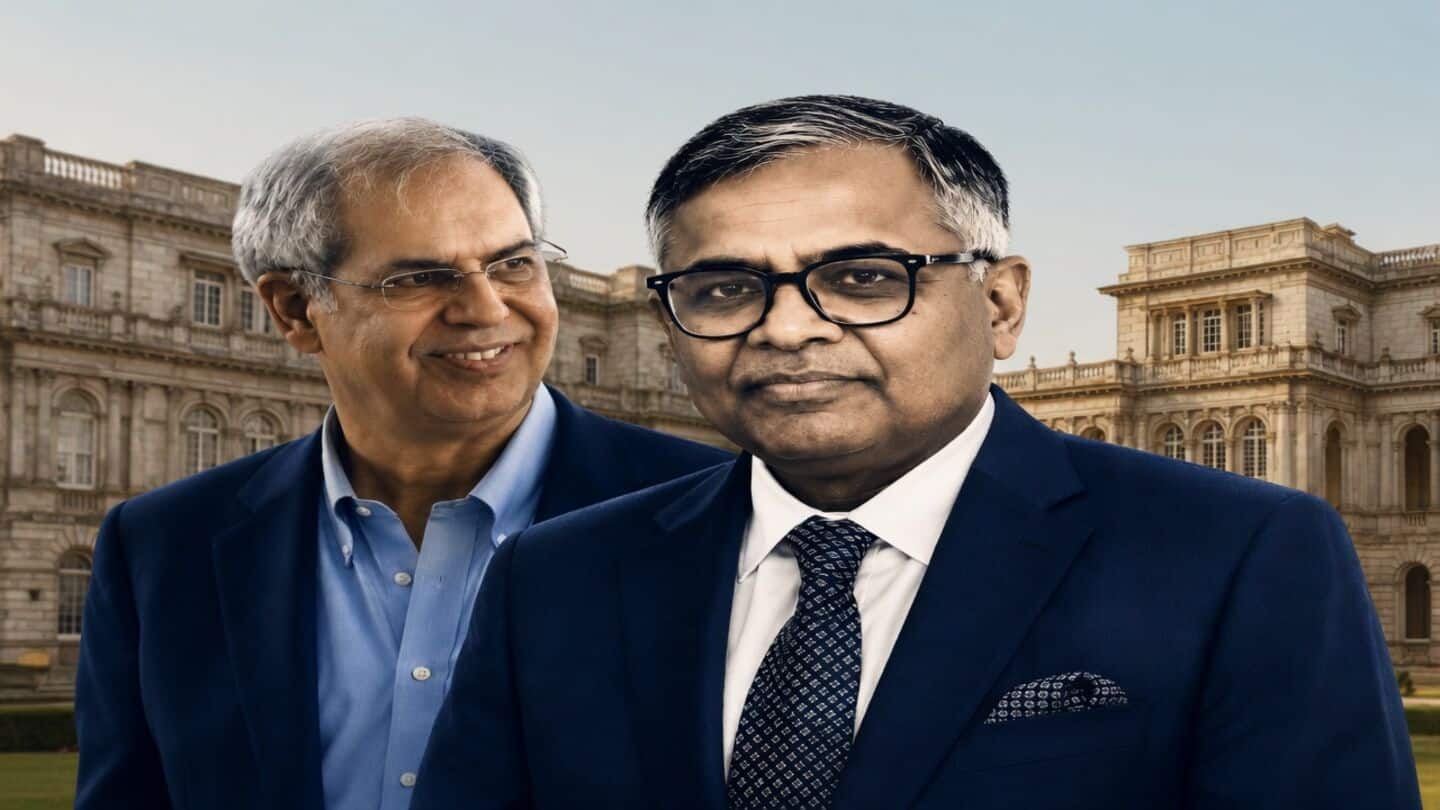
Chandrasekaran's exit leaves Noel Tata, chairman of Tata Trusts, to oversee the transition at the top of the group's holding company.
The two had previously clashed over capital allocation timelines and amounts for a $120 billion spending spree.
Now, with Chandrasekaran's departure, this conflict is resolved but leaves no clear successor for the conglomerate's future direction.
Strategic bets
Concerns over new leadership's willingness to invest aggressively
The Tata Group's portfolio includes everything from Jaguar Land Rover luxury cars and Taj hotels to Air India and Tetley tea.
It has also made strategic investments in semiconductors, electric car batteries, and AI data centers.
However, company executives are now worried that new leadership may not be willing to invest aggressively over long-term periods in sectors like semiconductor chips, aviation, and industrial battery cells.
Project oversight
Semiconductor project under scrutiny
The semiconductor project, a bid to create a local giant similar to Taiwan Semiconductor Manufacturing Co. is under unusual scrutiny.
The team is accountable not just to Tata's leadership but also the Indian government.
However, slow technological progress has hampered this venture. Despite the Assam chip packaging plant's timely opening next year, operational and technology-access-related delays have forced the group to start with less sophisticated technology.
Strategic pivot
Agratas changes approach to battery production
The battery unit Agratas is also changing its approach.
It has ditched plans to rush toward commercial-scale production of battery cells due to a widening cost gap with Chinese manufacturers and failure to secure technology partnerships.
The company is now focused on proving the technology before investing billions more for scaling up, sources told Bloomberg.
Business revamps
Turning around Air India is another major challenge for Tata
Turning around Air India, which suffered record losses due to a plane crash in June 2025 and geopolitical conflicts, is another major challenge for the group.
It has already scaled back its ambitions for the airline acquired four years ago.
Meanwhile, Tata Digital is undergoing a broad restructuring after management sought approval for $1 billion of additional funding to support operations and absorb continuing losses.