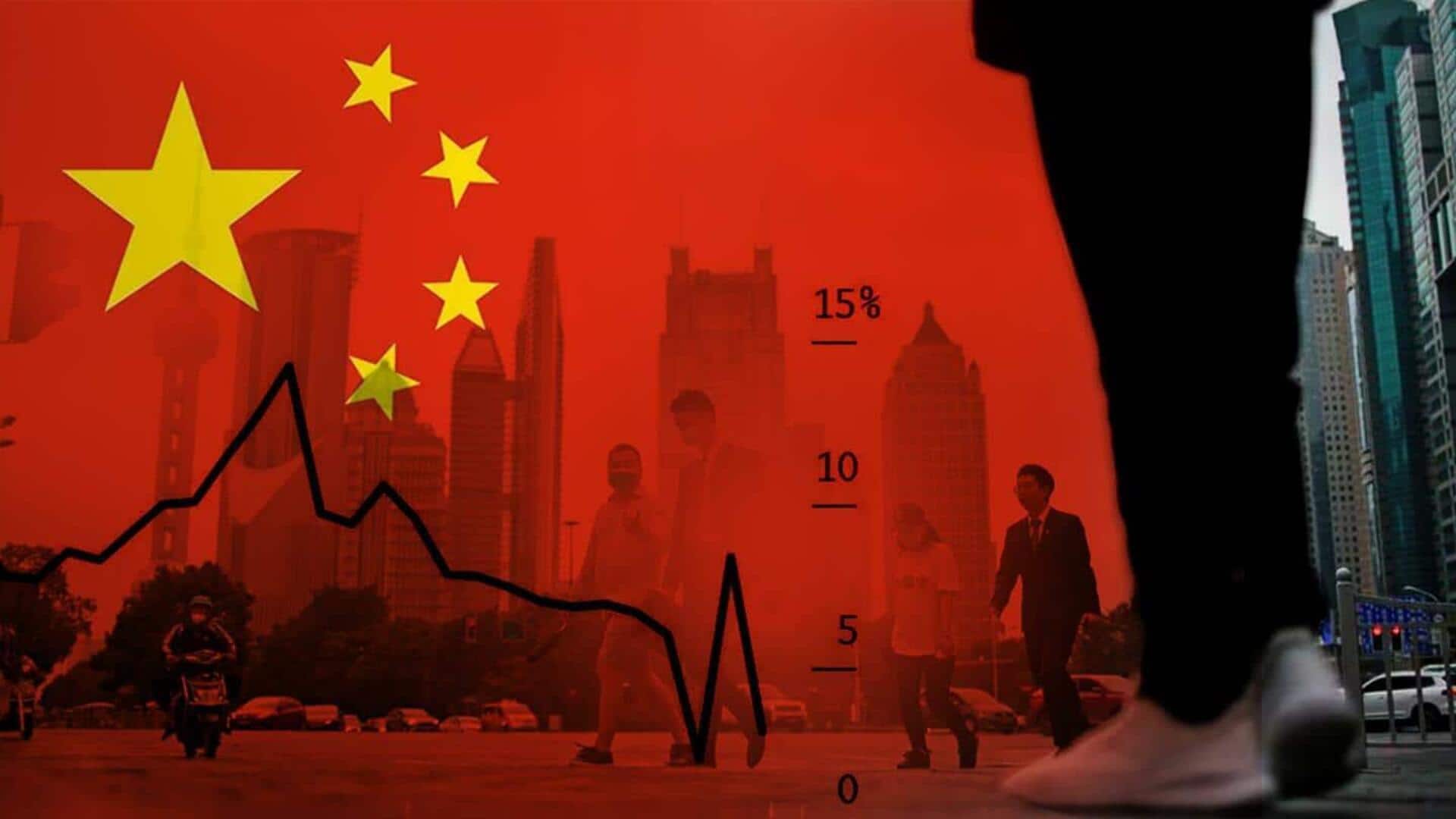
China GDP growth slows to weakest pace since 2022
What's the story
China's economy grew by 4.3% in Q2 2026, the slowest pace since late 2022. The slowdown is attributed to weak domestic demand, a prolonged property slump, and the global oil shock. The growth rate missed analysts' expectations of a 4.5% increase and slowed from the 5% expansion recorded in Q1. On a quarterly basis, GDP expanded by 0.9%, in line with market expectations but lower than the previous quarter's growth of 1.3%.
Growth targets
Weak consumer demand, investment drag growth
The second-quarter growth rate was the weakest since Q4 2022, when China's economy was grappling with COVID-19 disruptions.
The latest data highlights an uneven recovery in China, where strong factory output and exports have not been able to compensate for weak consumer spending and investment.
In June, retail sales rose by 1% year-on-year, recovering from a 0.6% decline in May.
Economic resilience
Manufacturing sector remains resilient, but investment continues to drag
China's manufacturing sector has remained resilient, supported by demand for artificial intelligence-related products and high-tech exports.
Industrial production increased by 5.3% in June from a year ago, accelerating from May's growth of 4.5% and beating market expectations of 4.7%.
However, investment continued to be a major drag on growth with fixed-asset investment declining by 5.7% during the first half of 2026, worse than expectations of a 4.9% fall.
Sector struggles
Struggling real estate sector remains a major challenge
China's struggling real estate sector remains a major challenge for the economy.
Property investment fell by 18% in H1 2026 from a year ago, worsening from a 16.2% decline in the first five months of this year.
New home prices continued to fall in June, although at a slightly moderated pace.
The prolonged property downturn has affected household wealth and consumer confidence while weakening investment by developers and local governments.