Trump reverses 20% Hormuz fee for Gulf investment deals
What's the story
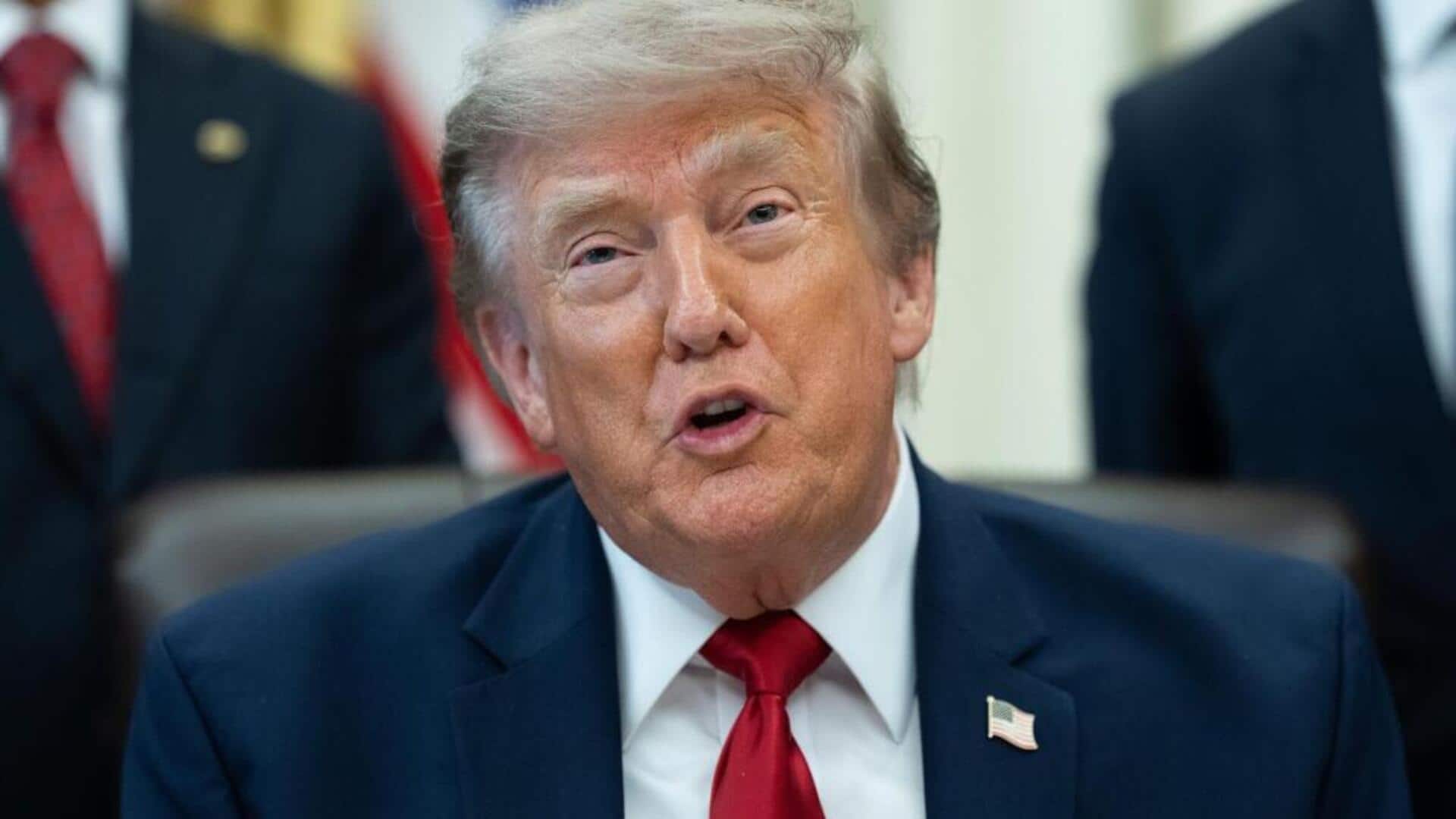
United States President Donald Trump has reversed his decision to impose a 20% fee on cargo passing through the Strait of Hormuz five hours before the toll was set to take effect. Instead, Trump said Gulf countries would make investments and trade deals with America. "Based on highly productive conversations with Middle East leadership, I have decided to replace the 20% United States Reimbursement Fee with Trade and Investment Deals....various Gulf States will be making into the US," he said.
Strait status
US military's naval blockade on Iran continues
"The Gulf States are going to invest a tremendous amount of money into the United States, and that was very satisfactory to me," he said.
Trump also maintained that the Hormuz Strait is open for all ship transit, except for Iran, adding the US military's naval blockade on Iran would continue.
This comes after Tehran claimed to have closed the strategic waterway.
Missile defense
Iran withdraws from peace deal
Iran has since announced that it is withdrawing from the peace memorandum signed with the US on June 17 after fresh airstrikes were launched by the US on Iranian military targets for the fourth straight day and the renewed naval blockade.
Iran's Deputy Foreign Minister Kazem Gharibabadi said the US decision to restart the blockade had "completely dismantled" the MOU.
Trump has threatened to "knock out all their power plants and bridges" if Iran doesn't return to the negotiation table.
Economic impact
Before conflict, 20% of world's oil and gas passed through
Before the conflict in Iran started, roughly 20% of the world's oil and gas passed through the Strait of Hormuz.
If Trump had stuck with his 20% fee on all cargoes passing through this vital strait, it could have raked in an estimated $240 million a day, according to Reuters.