Delhi HC scraps income tax reassessment notices to NDTV founders
What's the story
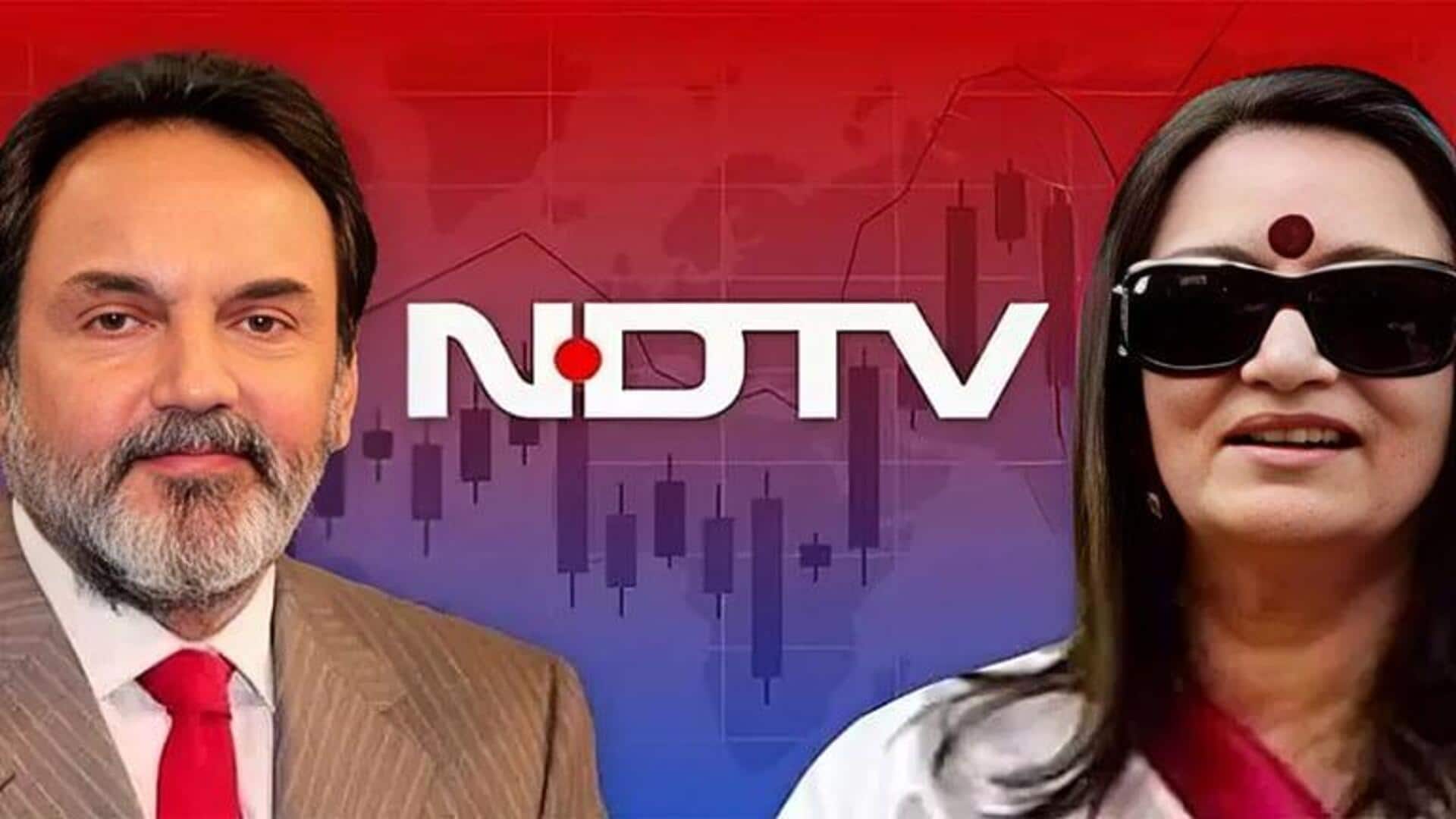
The Delhi High Court has slammed the Income Tax Department for "harassment" of NDTV founders Prannoy Roy and Radhika Roy. The court was hearing a case related to an interest-free loan given by RRPR Holding, the promoter company of NDTV. A Division Bench of Justices Dinesh Mehta and Vinod Kumar observed that reopening tax reassessment proceedings against the Roys led to unpredictability. The HC quashed the reassessment notices and imposed a fine of ₹2 lakh on the IT Department.
Judicial inquiry
Court questions IT Department's actions
The court noted that when the tax reassessment proceedings were first initiated in 2011, RRPR Holding's books of accounts were examined and no additions were made to their income.
The bench said, "Initiation of reassessment proceedings in such circumstances leads to unnecessary harassment of an assessee on one hand and gives rise to unpredictability/uncertainty, if not anarchy on the other."
Legal challenge
IT Department's 2nd notice challenged by Roys
In 2016, fresh notices were issued by the IT Department proposing to tax notional interest on the loan as deemed income.
The Roys had challenged this second reopening as an impermissible change of opinion.
They also cited related proceedings against RRPR, where the reassessment notices were quashed in 2014.
The High Court ruled that reopening these proceedings using an extended limitation period was arbitrary and contrary to the Income Tax Act.
Rights protection
Court upholds fundamental rights
The HC said such proceedings violate the fundamental rights of the Roys.
It added, "In the instant case, subjecting the petitioner to reassessment proceedings second time for the selfsame transaction and practically for the same issue is arbitrary and without jurisdiction."
The court also noted that these actions fall foul to the petitioner's fundamental and constitutional rights guaranteed under Article 14, Article 19(1)(g) and Article 300A of Constitution of India.