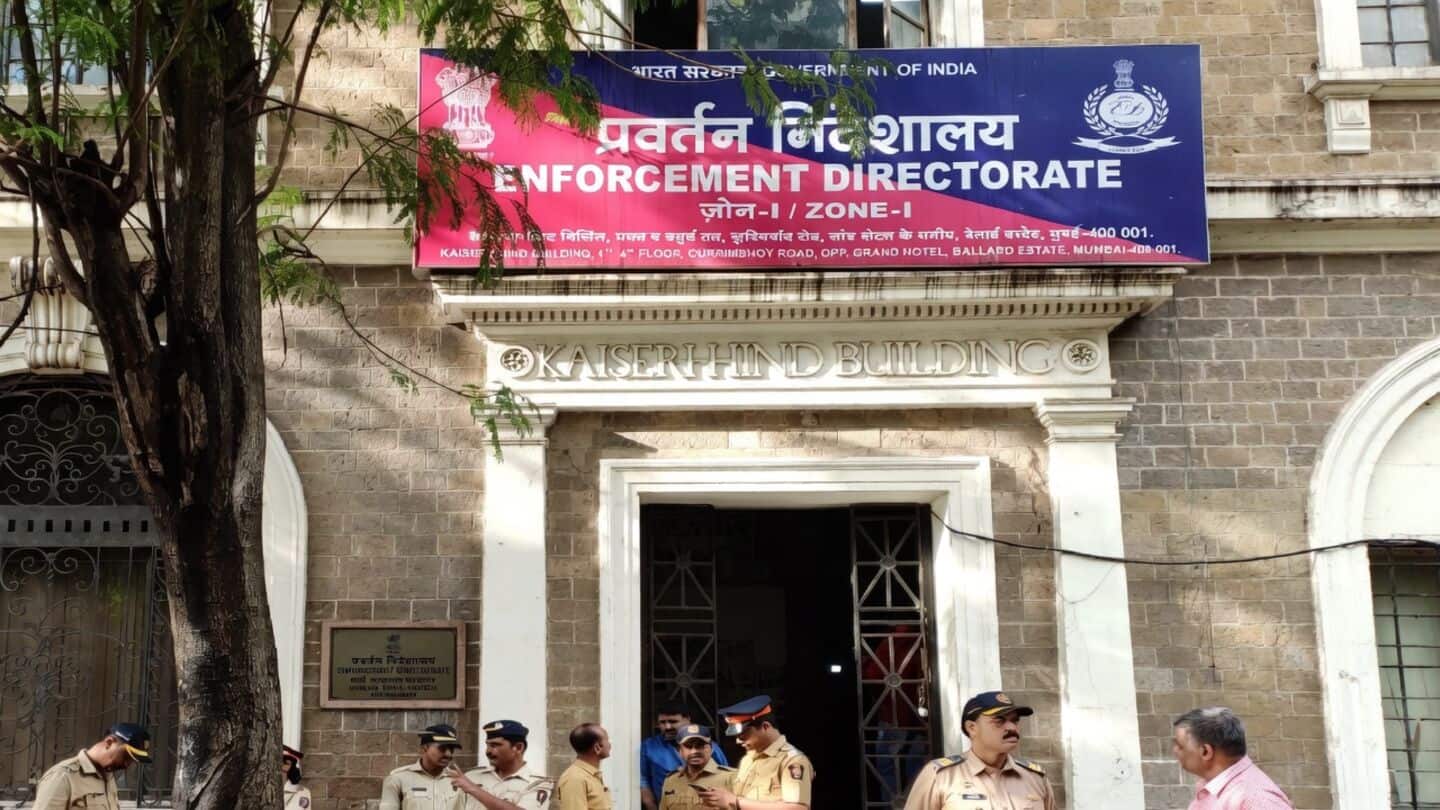
ED chargesheets 3 founders of real-money gaming firms
What's the story
The Enforcement Directorate (ED) has filed a prosecution complaint against Gameskraft Technologies and RummyTime Technologies under the Prevention of Money Laundering Act (PMLA). The complaint was filed on July 25 before the Special Court in Bengaluru. It accuses the companies and their founders and directors, Vikas Taneja, Prithvi Raj Singh, and Deepak Singh Ahlawat, of laundering money obtained by defrauding users of online real-money rummy games.
Investigation details
Investigation was triggered by multiple FIRs
The ED's investigation was triggered by multiple FIRs filed in Telangana under the Bharatiya Nyaya Sanhita, 2023, for cheating. These offenses are classified as scheduled offenses under the PMLA.
The accused companies ran online rummy platforms under various brand names such as RummyCulture and RummyPrime, charging a platform fee of 10-15% on total stakes.
Unfair practices
Companies accused of using bots to play against users
The ED's investigation found that the RummyCulture platform used bots to play against unsuspecting users.
The companies are also accused of using bonus credits, deposit bonuses, referral incentives, and phased reward releases to boost user engagement and wagering.
They allegedly promoted their platforms through push notifications, SMSes, tele-calling, and celebrity endorsements which gave an impression of easy money wins for users.
Addictive practices
Withdrawal charges imposed in some cases
The ED also alleged that the companies imposed withdrawal charges of 5-10% in some cases.
Users were encouraged to convert their withdrawable balance into game credits instead of cashing out.
Inactive users who had lost money were lured back with "instant cash" rewards linked to their revenue contribution.
These practices allegedly led to addictive gaming behavior, causing significant financial losses and mental distress among users.
Financial impact
Proceeds of crime concealed through investments in various assets
The ED has estimated the proceeds of crime generated through commissions between FY18 and August 22, 2025, at around ₹19,984 crore.
Investigators allege these proceeds were layered and integrated through dividend payments and share buybacks.
They were concealed through investments in mutual funds, bonds, convertible notes, equity shares, movable assets, and high-value immovable properties, including holdings through family trusts and associated entities.