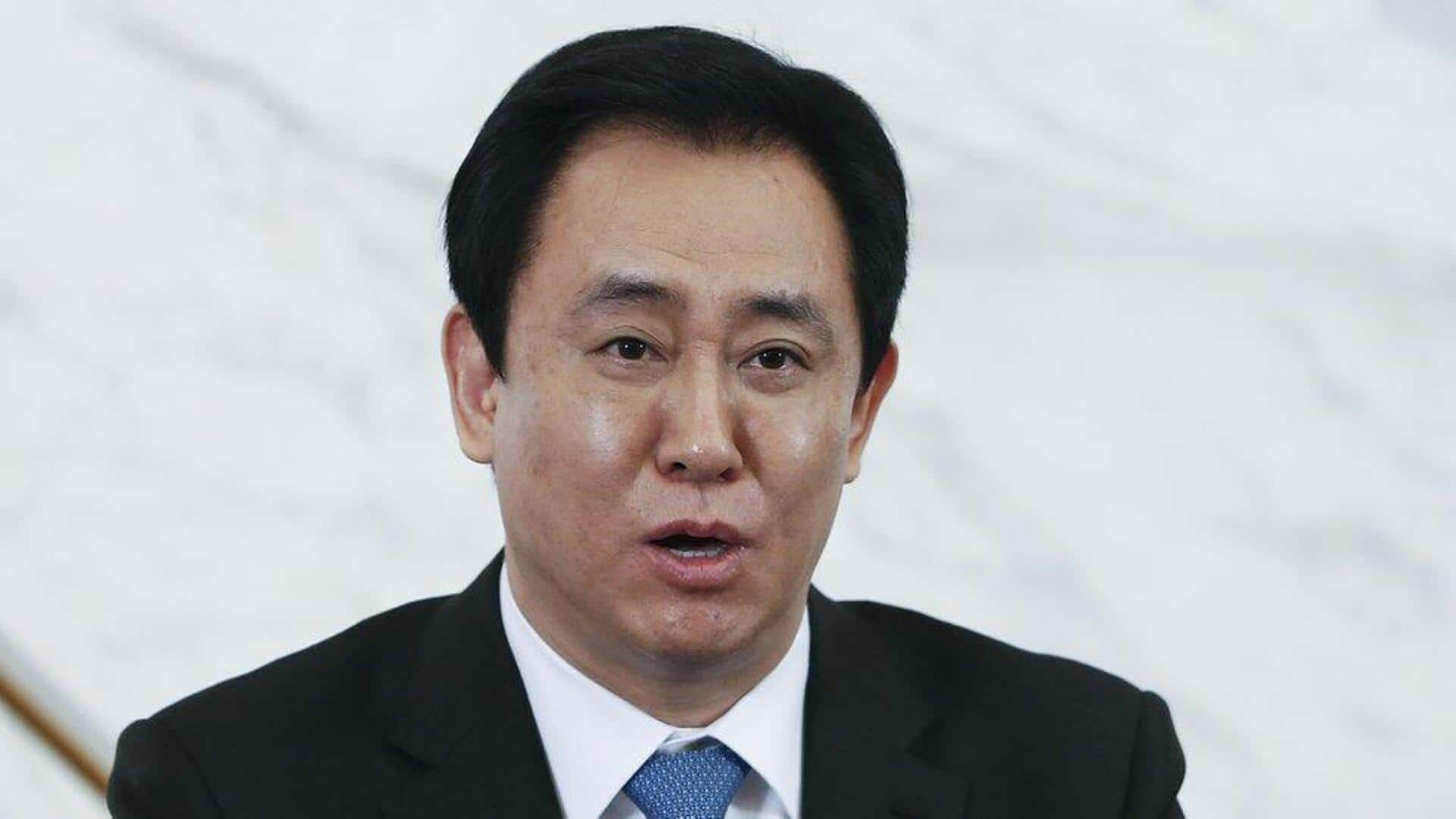
Billionaire Evergrande boss Hui Ka Yan pleads guilty to fraud
What's the story
Hui Ka Yan, the billionaire founder of Evergrande Group and one of China's richest men, has pleaded guilty to fraud charges in a Chinese court. The charges include fundraising fraud and bribery. Hui's trial was held over two days after he was placed under police control on suspicion of criminal activity three years ago. The plea marks a significant chapter in the aftermath of world's most indebted property developer's collapse.
Market repercussions
Hui charged with multiple counts
Evergrande's downfall, with liabilities exceeding $300 billion at its peak, has been a major catalyst for a protracted downturn in China's property market. The sector started to decline in 2021.
Hui has been accused of bribery, embezzlement, illegal loan issuance, fraudulent securities issuance, and unlawful disclosure of material information.
The company itself was also charged with fraudulent securities issuance.
Rise to power
Who is Hui Ka Yan?
Born in 1958 in Henan province, Hui was raised in poverty by his grandmother.
He left his job at a steel company in 1992 and started developing properties in Guangzhou, Guangdong.
In 1996, he founded Evergrande and rode the wave of China's real estate boom.
The company became the largest dollar-debt borrower among its peers and for a time China's biggest developer by sales.
Business growth
Desperate attempts to save Evergrande
Under Hui's leadership, Evergrande expanded into bottled water, professional soccer, and electric vehicles.
The company avoided liquidity scares by getting tycoons in China and Hong Kong to buy its stock and bonds.
However, Beijing's crackdown on the property sector since 2020 limited its borrowing capacity.
This effectively cut Hui off from credit markets, leading to Evergrande defaulting on its debt in late 2021.
Legal consequences
End of the road for Hui and Evergrande
After failed restructuring attempts, a Hong Kong court issued a winding up order against Evergrande in 2024.
A mainland Chinese court also accepted a liquidation application against one of its major onshore units that year.
In 2024, Chinese regulators had accused Evergrande's main onshore unit of inflating over $82 billion in revenue by recognizing sales in advance.
Hui was fined and banned from capital markets activities for life.