Gold now world's top reserve asset, surpassing US Treasuries
What's the story
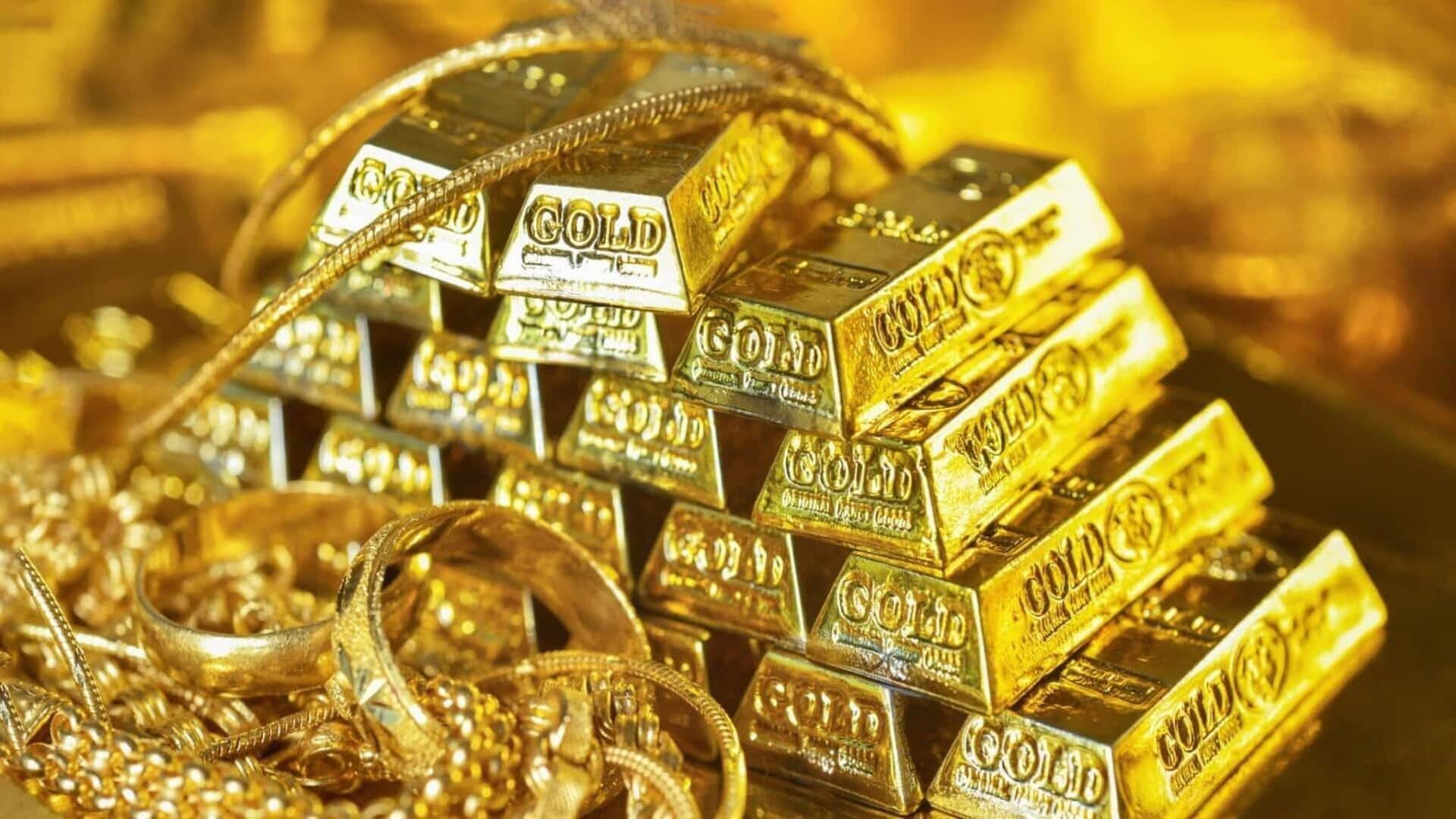
Gold has surpassed US Treasuries to become the world's top reserve asset, a European Central Bank (ECB) report has revealed. The shift highlights a major change in the global financial landscape as central banks continue to increase their gold reserves amid geopolitical uncertainty. By the end of 2025, gold accounted for 27% of official reserves, surpassing US Treasuries at 22% and euros at 15%.
Market dynamics
Gold's rise mainly due to valuation effects
The ECB report noted that gold's rise was mainly due to valuation effects, with bullion prices surging sharply over the past two years.
In 2025 alone, gold prices jumped nearly 60% after a nearly 30% rise in 2024.
This spike has automatically increased the value of existing gold holdings and pushed central banks to stock up on the precious metal.
Purchase trends
Central bank purchases slowed in 2025
Despite the spike in gold prices, central bank purchases remained high but slowed down in 2025.
The ECB said official sector purchases were around 850 tons last year, down from over 1,000 tons annually between 2022 and 2024.
However, this figure is still well above historical levels and indicates a continued interest in gold as a reserve asset amid geopolitical risks.
Geopolitical influence
Geopolitical risks driving gold accumulation by central banks
The ECB report also highlighted that the continued accumulation of gold is a strategy by many central banks to bolster their balance sheets and safeguard reserves against rising geopolitical risks.
Since Russia's full-scale invasion of Ukraine in 2022, China has bought over 350 tons of gold, followed by Poland with 320 tons, Turkey with 220 tons, and India with some 130 tons.
Purchase leaders
Poland was largest official sector buyer in 2025
In 2025, Poland emerged as the largest official sector buyer by adding nearly 100 tons of gold to its reserves.
It was followed by Kazakhstan, Brazil, China and Turkey.
The report comes at a time when geopolitical tensions and concerns over financial fragmentation have prompted several economies to rethink their dependence on traditional reserve assets like US Treasuries.
Asset limitations
Gold's limitations as reserve asset
Despite its rising importance, the ECB warned that gold has its limitations as a reserve asset.
It doesn't generate interest income, is volatile, incurs storage costs if held physically and can't be ramped up quickly to meet global liquidity needs.
The report also noted that despite gold's growing importance, the US dollar continues to dominate the international monetary system with around 57% of global foreign exchange reserves in 2025.