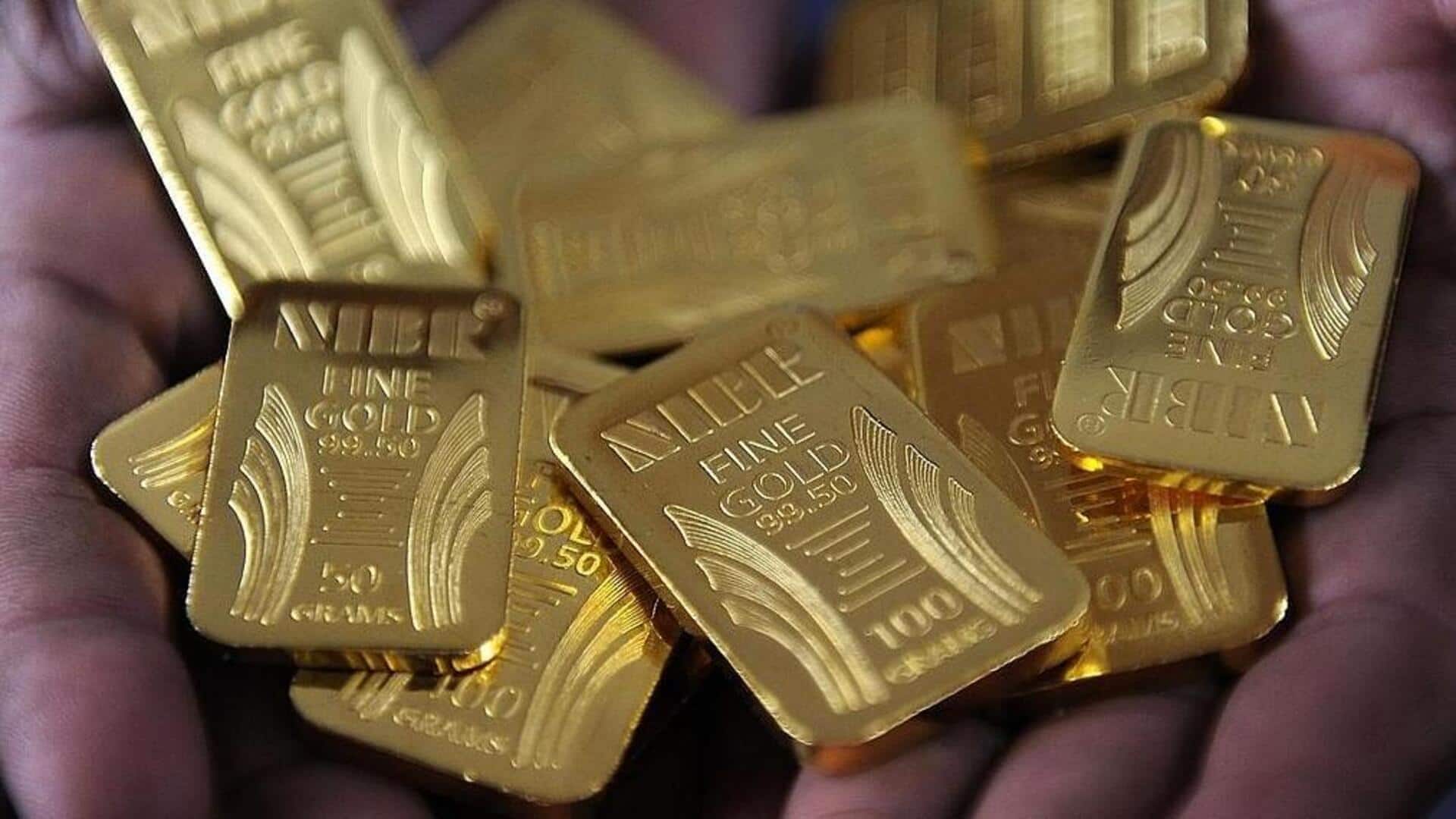
Gold eyeing highest weekly loss since 1983: What's the reason?
What's the story
Gold is headed for its biggest weekly loss since 1983, as the Middle East conflict has increased energy prices and lowered expectations for interest rate cuts. The precious metal has fallen every week since the US and Israel attacked Iran last month. The decline was accelerated by a Wall Street Journal report that the Pentagon is deploying three warships and thousands of Marines to the region.
Market response
Gold declines as conflict raises inflation fears
The precious metal slipped as much as 2.1% amid a rally in the dollar and bond yields.
Traders have raised their bets on a rate hike to 50% by October, fearing that a prolonged conflict could trigger global inflation.
This is bad news for gold, which doesn't pay interest like other assets do when rates rise.
Historical parallels
Similar to gold's decline in 2022
Gold's performance since the Iran war started is similar to its decline in 2022, when Russia invaded Ukraine and triggered an energy shock across global markets.
That year, bullion suffered a seven-month losing streak through October, the longest on record.
The current situation has also seen Treasury yields and the US dollar gain ground while investors have sold bullion to cover losses elsewhere.
ETF trends
Bullion-backed ETFs see 3rd week of outflows
Bullion-backed exchange-traded funds (ETFs) are also witnessing a third week of outflows, with holdings falling by over 60 tons during this period, data compiled by Bloomberg shows.
Robert Gottlieb, a former precious-metals trader at JPMorgan Chase & Co, advises against buying the dip due to excessive volatility.
He warns that until volatility eases and prices stabilize, further selling may occur.
Market outlook
Gold still up about 5% this year
Despite the recent pullback, gold is still about 5% up this year.
Prices hit a record just below $5,600 an ounce in late January amid investor enthusiasm, central-bank buying, and concerns over US President Donald Trump's threats to Fed independence.
Yuxuan Tang of JPMorgan Private Bank notes that "if the war grinds on," market focus could shift from inflation concerns to recession risks, an environment where gold's safe-haven properties could shine again.