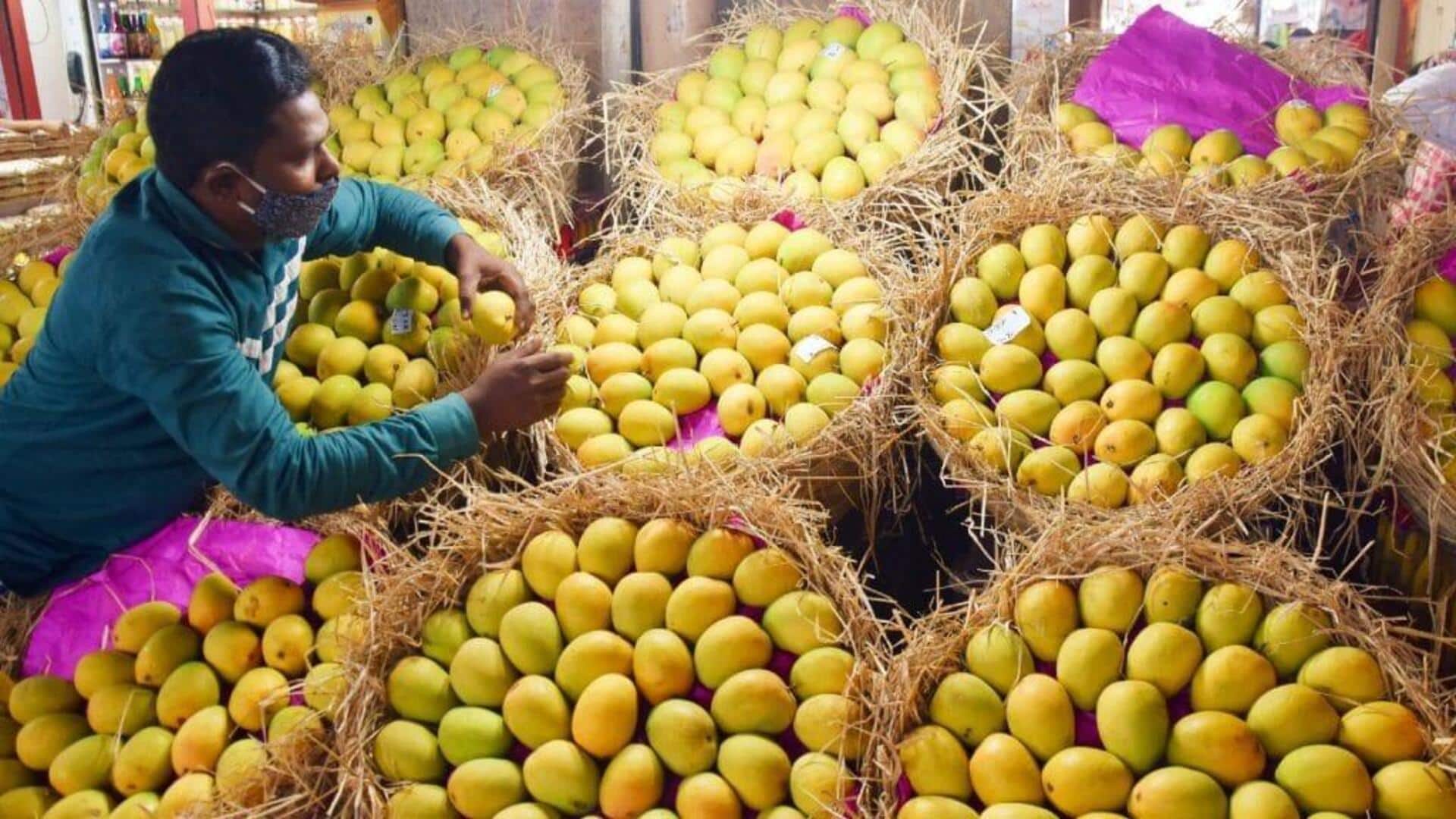
How fly led to Japan banning Indian mangoes after 20yrs
What's the story
Japan has suspended fresh mango imports from India for the 2026 season over pest treatment concerns at an Indian facility. The suspension affects premium varieties such as Alphonso, Kesar, Langra, and Banganapalli. This decision comes as a major blow to exporters who are already grappling with crop damage due to heatwaves and high freight costs. The trade route had remained open for nearly two decades before this disruption.
Pest issues
What are the real reasons behind the suspension?
The suspension is mainly due to concerns over the fruit fly, a notorious agricultural pest. These pests lay eggs inside fruits, damaging them from within as larvae hatch.
Countries like Japan, with strict agricultural quarantine systems, consider this pest a serious threat due to its potential for rapid spread across orchards.
But the current issue isn't about confirmed infestations but whether India's pest-control systems were properly followed.
Inspection findings
Japanese officials inspected a VHT facility in March
Before each export season, Japan sends quarantine officials to inspect Vapour Heat Treatment (VHT) facilities in India.
VHT is a mandatory non-chemical process that exposes mangoes to controlled hot and humid air to eliminate pests before shipment.
Per ET, this March, Japanese authorities inspected a VHT facility in Rehmanpur, Uttar Pradesh, and found deficiencies in fumigation and disinfection procedures.
Import suspension
The Yokohama Plant Protection Association issued a notice
Following the inspection, the Yokohama Plant Protection Association issued a notice stating that mango consignments with certificates issued by India on or after March 25, 2026, would not be accepted.
Imports will remain suspended until Japan is satisfied with improved operational standards.
This isn't the first time fruit fly fears have disrupted India's mango trade with Japan; a similar situation occurred in 1986 when Japanese authorities banned Indian mango imports over fruit fly infestation concerns.
Trade agreement
India regained access to the Japanese market in 2006
After years of inspections and quarantine improvements, India regained access to the Japanese market in 2006.
Under an agreement, only six Indian mango varieties were approved for export to Japan: Alphonso, Kesar, Banganapalli, Langra, Chausa, and Malika.
These mangoes had to come from approved facilities across five Indian states: Andhra Pradesh, Maharashtra, Gujarat, Uttar Pradesh and West Bengal.
Production statistics
India is the world's largest mango producer
India is the world's largest mango producer, with nearly 24 million metric tons harvested annually.
While most of the fruit is consumed domestically, exports go to markets such as the UAE, US, UK, Kuwait, Qatar and Japan.
In FY2024-25 alone, India exported around 29,938 metric tons of fresh mangoes worth $56.5 million globally.
Exports to Japan were valued at $1.54 million in FY2025-26 with Gujarat's Kesar mangoes being a major contributor.
Challenges
Japanese market not that big but still very relevant
Although Japan is not among the most "important" buyers, exporters are unhappy with the situation due to challenges such as heatwave-related crop damage in Maharashtra's Konkan region and rising shipping costs linked to West Asia conflict.
Speaking to ThePrint, Akram Baig, who exported around 2.5 tonnes of mangoes to Japan last year, said that although the "Japanese market is not that big," it is still very relevant, given how the domestic market is facing "trouble and we are losing money."