How US Supreme Court's tariff ruling could affect Indian markets
What's the story
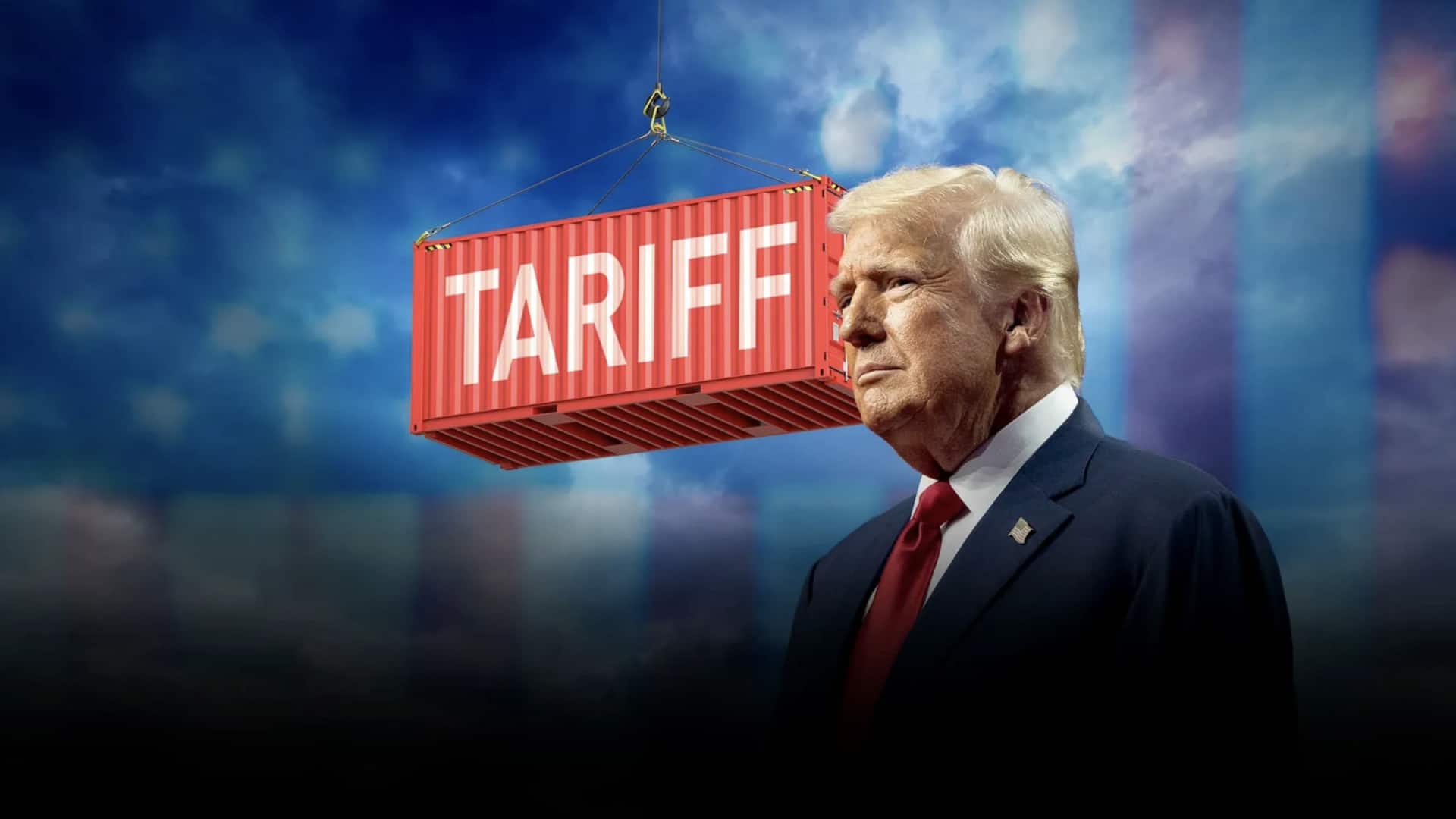
The US Supreme Court is set to deliver a landmark ruling on the tariffs imposed by President Donald Trump. The decision, scheduled for January 9, will be the first time the court has weighed in on Trump's sweeping tariffs. These were introduced last year with rates ranging from 10% to as high as 50%.
Legal challenges
Lower courts challenge Trump's tariffs
The tariffs have faced legal challenges in lower federal courts, which have ruled that many of them exceed presidential authority under existing laws.
These courts argue that the statute invoked by the Trump administration doesn't explicitly authorize a president to impose broad import duties—an authority traditionally reserved for Congress under US Constitution.
Verdict implications
Supreme Court's decision on tariff powers
The US Supreme Court will now decide whether Trump can invoke the International Emergency Economic Powers Act (IEEPA) to impose tariffs without Congress's approval.
During arguments on November 5, a 6-3 majority of justices expressed "deep concerns" over the use of federal law by the Trump administration to impose tariffs.
The ruling could have major implications for US fiscal health and trade policies.
Market response
Potential impact on Indian stock market
Experts predict that a ruling against Trump could positively affect the Indian stock market as India has been the worst affected, facing 50% tariffs.
VK Vijayakumar, Chief Investment Strategist at Geojit Investments, said if the court rules the tariffs illegal, it would be a major blow to Trump and highly favorable for markets like India.
He added that the market reaction would depend on details such as whether it would be a partial or complete striking down of tariffs.
Precious metals
Tariff ruling's potential impact on gold and silver
The uncertainty surrounding the tariff ruling is expected to benefit gold and silver.
However, experts predict that these precious metals will remain volatile in the near term due to geopolitical developments, dollar fluctuations, and bond market movements.