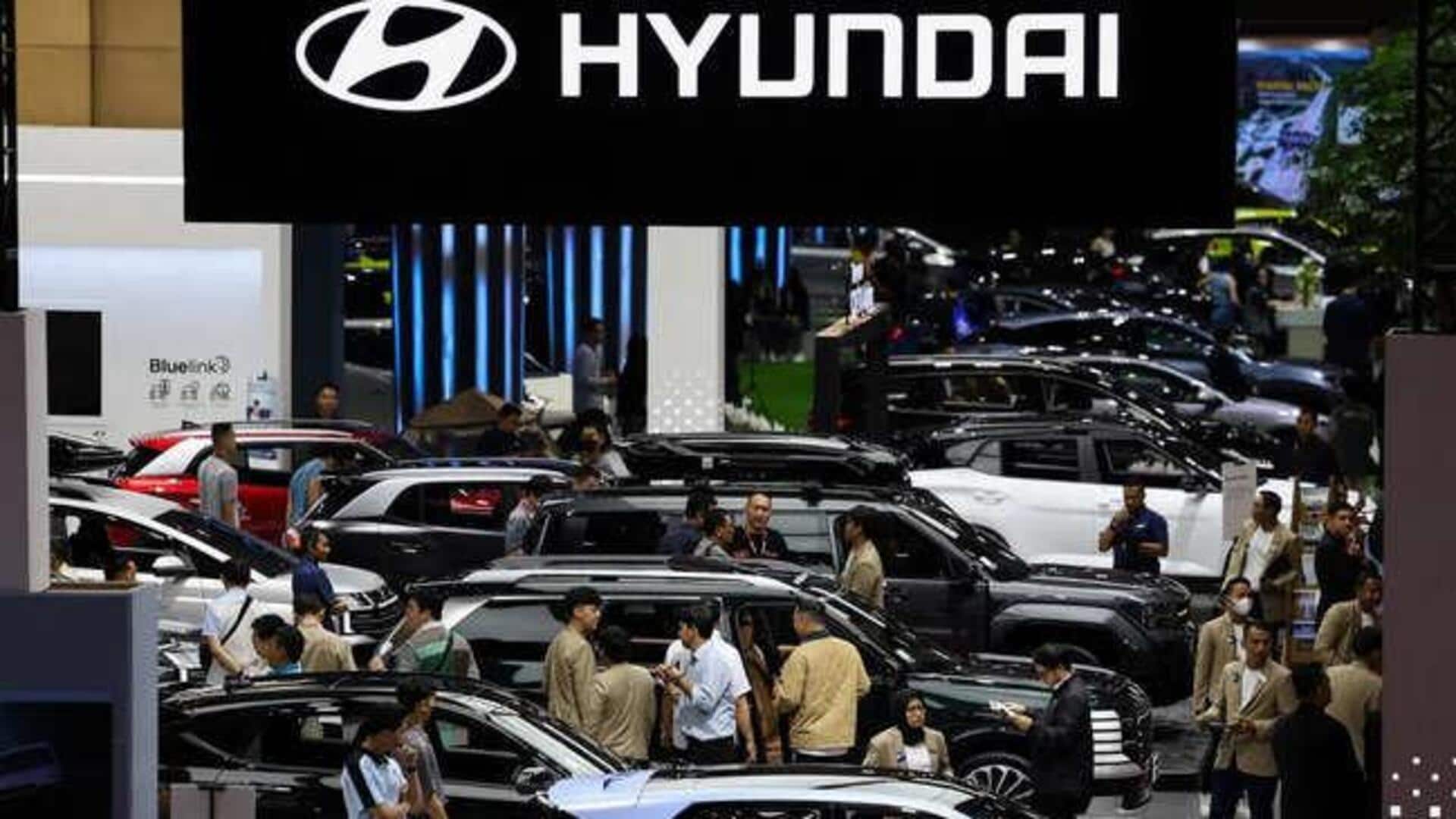
Hyundai's union stages 1st full strike in a decade
What's the story
Hyundai Motor's South Korean union has staged its first full strike in a decade. The move comes after wage talks between the two sides stalled. The union is demanding a higher retirement age and job protections against artificial intelligence (AI) and automation. The strike comes as part of a larger trend of labor unrest in South Korea, following the election of pro-labor liberal President Lee Jae Myung last year.
Economic impact
Strike disrupts output of 55,200 vehicles worth over $1.67 billion
The strike has already impacted production, with partial walkouts since late July disrupting the output of 55,200 vehicles worth over $1.67 billion.
Hyundai had previously said it expected to miss its global sales target this year due to rising Chinese competition in Europe and declining domestic sales.
The union's demands include raising the mandatory retirement age from 60 years to align with President Lee's promise of gradually increasing it in one of the world's fastest-ageing countries.
Wage negotiations
Union demands job protection as Hyundai embraces AI, automation
The union also wants bonuses to be raised to 800% of monthly base salary from 750%. It has also sought guarantees for job protection as Hyundai embraces AI and automation.
Despite the company's plans to deploy humanoid robots at its US plant in Georgia from 2028, negotiations over these issues remain unresolved.
A union spokesperson said they are open to resuming wage talks but will discuss strike plans if management fails to present "forward-looking proposals."
Company response
Hyundai committed to finding solutions through dialogue
In light of the strike, Hyundai Motor has said it is committed to finding solutions through dialogue.
The company acknowledged that "Strike action can impact our customers, partners and operations," and stressed that both sides must work together to successfully navigate the global transition to future mobility.
This statement comes as a response to the ongoing labor dispute and its potential implications for production and sales.
Broader issues
Workers demand reinstatement of dismissed union members
The strike isn't just about wages. Workers are also demanding a 50% increase in bonuses, an extension of the mandatory retirement age, and reinstatement of dismissed union members.
Job protection against AI and automation has become a key issue as carmakers increasingly automate manufacturing and adopt AI-driven technologies.
The union argues that Hyundai has the financial strength to meet its demands, citing the company's large internal reserves.