India invited to G7 meeting on critical minerals in US
What's the story
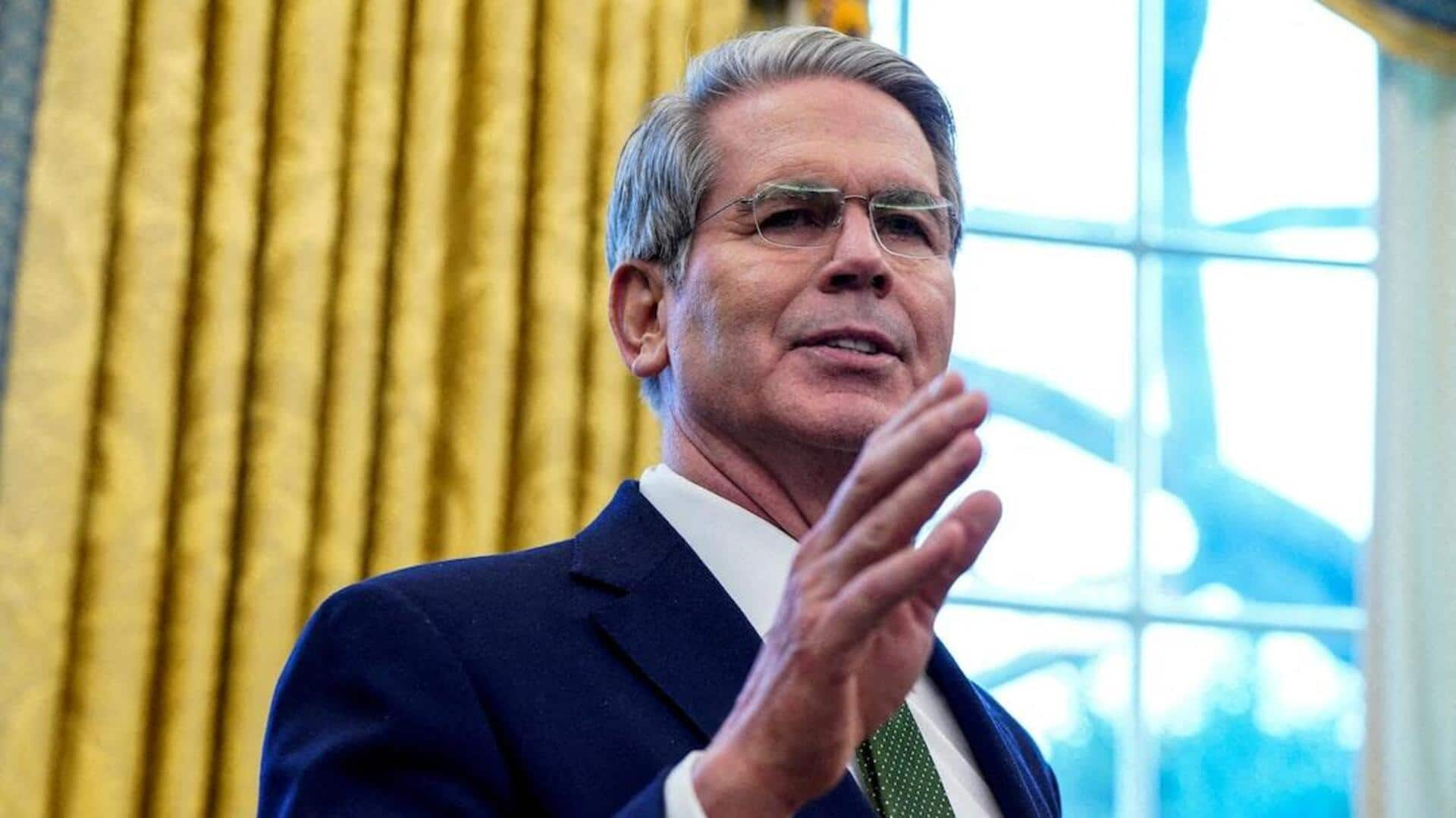
India has been invited to a special finance ministers' meeting of the Group of Seven (G7) economies, US Treasury Secretary Scott Bessent said. The meeting will be held in Washington on Monday and will also see the participation of Australia and other non-G7 nations. The main agenda is to discuss critical minerals, which are essential for defense technologies, semiconductors, renewable energy equipment, and batteries.
Coordination focus
Meeting aims to strengthen coordination
Bessent revealed that he has been advocating for a dedicated meeting on critical minerals since last summer's G7 leaders' summit.
While finance ministers had already discussed this topic virtually in December, the Washington meeting is aimed at strengthening coordination as supply chain risks grow.
The G7 nations include the US, UK, Japan, France, Germany, Italy and Canada along with the European Union.
Supply chain concerns
G7's dependence on China for critical minerals
The urgency surrounding critical minerals stems from the G7's heavy reliance on China for materials like rare earths, lithium, cobalt, graphite and copper. In June last year, G7 leaders had agreed to an action plan to secure mineral supply chains and bolster economic resilience.
Strategic partnership
Australia's role in countering China's dominance
Australia's participation is expected to be crucial in the discussions.
In October, Canberra signed a pact with Washington to counter China's dominance in critical minerals.
The agreement created an $8.5 billion project pipeline and leveraged Australia's proposed strategic reserve, which is meant to supply vulnerable metals during disruptions.
The initiative has since drawn interest from Europe, Japan, South Korea and Singapore.
Market control
China dominates critical minerals supply chain
China controls the critical minerals supply chain, refining around 47% and 87% of the copper, lithium, cobalt, graphite, as well as rare earths.
Western countries have sought to lower their dependence on China's critical minerals in recent years due to the strict export controls imposed by Beijing on rare earths.