Installing rooftop solar panels will cost you more now
What's the story
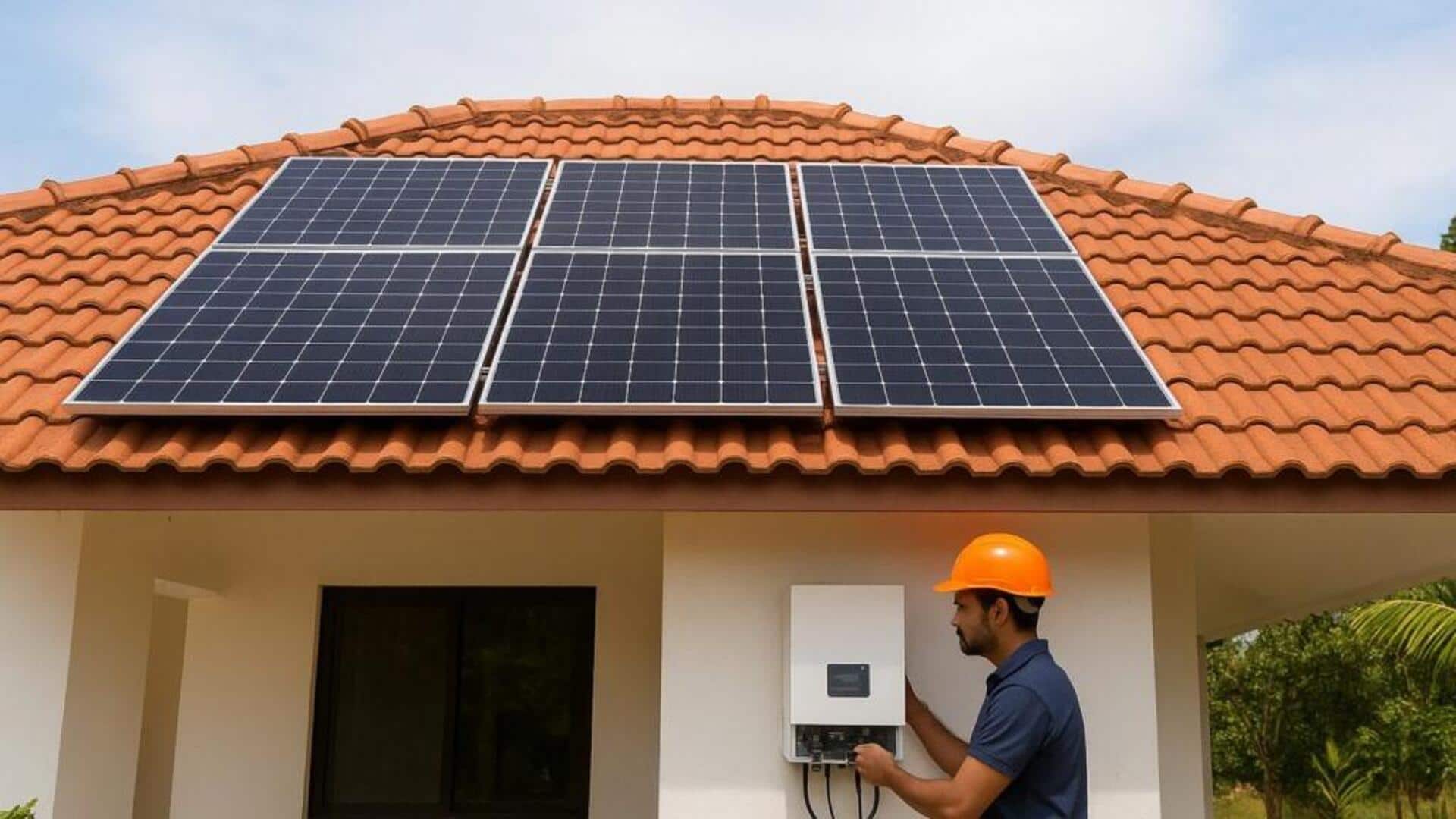
Starting today, India has implemented a major change in its solar sector. The new rule mandates that all solar projects under net-metering and open-access arrangements must use only domestically manufactured solar cells. The government says this move will strengthen the country's solar manufacturing ecosystem and reduce its dependence on imports, especially from China. However, the transition could lead to higher installation costs and increased pressure on companies relying on imported solar cells.
Rule explained
Key highlights of the new rule
The new rule builds on an existing requirement for developers to use domestically manufactured solar modules. Now, it extends to the cells inside these panels as well.
These cells must be sourced from government-approved Indian makers under the Approved List of Models and Manufacturers (ALMM) List-II framework.
The rule applies to rooftop solar projects under net-metering arrangements and open-access projects utilized by commercial and industrial consumers.
Goal clarification
Reducing dependence on imports
The primary aim of this new rule is to create a self-sufficient domestic solar manufacturing supply chain, reducing India's reliance on imports.
Currently, India boasts a huge solar module manufacturing capacity of nearly 200GW per year but only around 30GW for solar cells.
This gap has resulted in a heavy dependence on imported cells, mostly from China.
The government hopes that this mandate will spur investments in domestic cell manufacturing and bolster India's clean-energy ambitions.
Cost implications
Increased installation costs
The new rule is likely to increase the cost of rooftop solar installations by around ₹3,000 per kilowatt.
This is because domestically manufactured cells are much more expensive than their imported counterparts.
For a typical 5kW rooftop system, this could mean an additional expense of some ₹15,000.
However, consumers opting for government subsidies under PM Surya Ghar scheme will continue receiving financial support despite stricter compliance requirements and documentation checks.
Supply issues
Potential supply crunch
The new rule has raised concerns in the solar industry as India's demand for solar cells far exceeds its current production capacity.
Domestic cell manufacturing capacity is estimated at roughly 25-30GW, while annual demand is close to 50GW.
Over 90% of India's solar cell requirements have traditionally been met through imports, creating a potential supply crunch under the new mandate.
Smaller module manufacturers who don't manufacture cells themselves are particularly worried about this change.
Market impact
Concerns over pricing power
Industry executives have expressed concerns that domestic cell makers currently enjoy strong pricing power due to limited supplies.
As the demand rises under the new mandate, those margins could become even stronger.
More than 125 module manufacturers and hundreds of ancillary businesses may face pressure if cell supplies remain constrained.
Manufacturers say modules built using domestic cells are substantially costlier than those using imported ones, further complicating the economics of this transition.