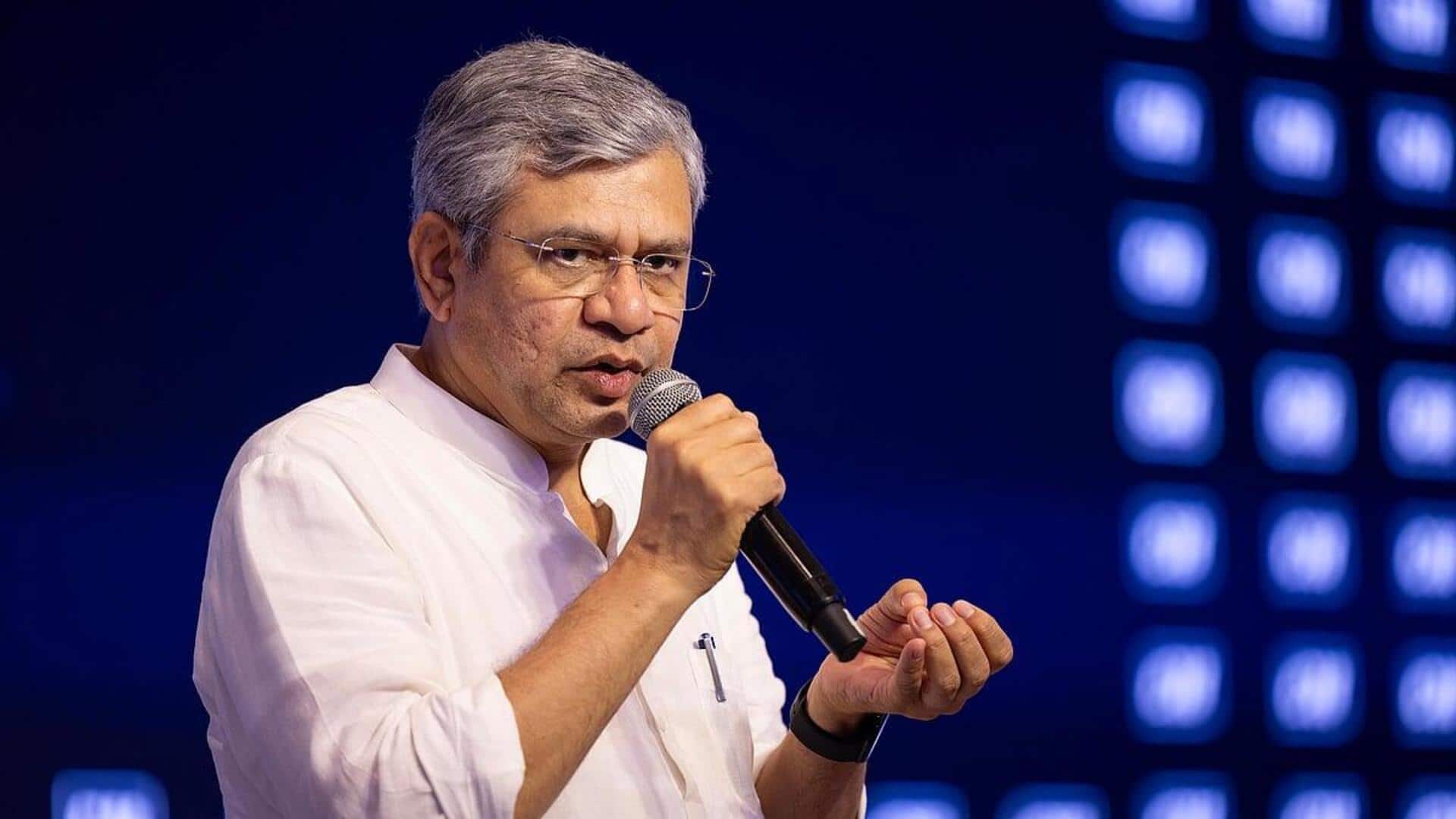
India to manufacture 3nm chips by 2032: Ashwini Vaishnaw
What's the story
India is gearing up to become a global technology powerhouse, with a particular focus on semiconductors and artificial intelligence (AI). In an email interview with Business Standard, Union Minister for Electronics and Information Technology Ashwini Vaishnaw has confirmed that the country will start manufacturing 3nm chips by 2032. The ambitious plan comes as part of India's broader strategy to establish itself as a major player in the semiconductor industry.
Industry expansion
Semiconductor sector's rapid growth and India's early initiatives
Vaishnaw highlighted the rapid expansion of the semiconductor sector, fueled by demand from AI, electric vehicles (EVs), and consumer electronics.
He also noted that India has taken an early lead with approvals for 10 semiconductor-related units.
Four of these plants, CG Semi, Kaynes Technology, Micron Technology and Tata Electronics' Assam facility, are likely to begin commercial production by 2026.
Ecosystem development
India's semiconductor ecosystem strengthening through design and talent
Vaishnaw also emphasized that the progress in design and talent development in India.
He said that 23 start-ups are currently working on design initiatives, while skill development programs have been expanded across 313 universities.
Equipment manufacturers are also setting up plants in India, further strengthening the domestic ecosystem for semiconductors.
Future plans
Mission to become major semiconductor hub by 2032
Vaishnaw said that all these efforts will make India a key player in the semiconductor space by 2028.
He said the post-2028 period will be a defining moment as industry growth hits a tipping point.
With manufacturing, design, and talent ecosystems in place, India hopes to become one of the major semiconductor hubs by 2032.
AI focus
AI's strategic importance and India's sovereign capability
Vaishnaw stressed the strategic importance of artificial intelligence, calling it the fifth industrial revolution.
He said that building sovereign capability in AI is a national priority for India.
Responding to concerns over domestic OSAT and fabrication capacity, he said new industries face market-acceptance challenges but success will depend on Indian plants' ability to deliver high-quality products at competitive prices.
AI development
IndiaAI mission and investment in AI infrastructure
On the criticism that India's AI growth is mainly driven by global tech firms, Vaishnaw reiterated that sovereign AI remains a national goal.
He said Indian engineers are working on all five layers of the AI stack - applications, models, chipsets, infrastructure, and energy.
Under the IndiaAI Mission, 12 teams are developing foundational models with an investment of around $70 billion in infrastructure backed by clean energy initiatives.