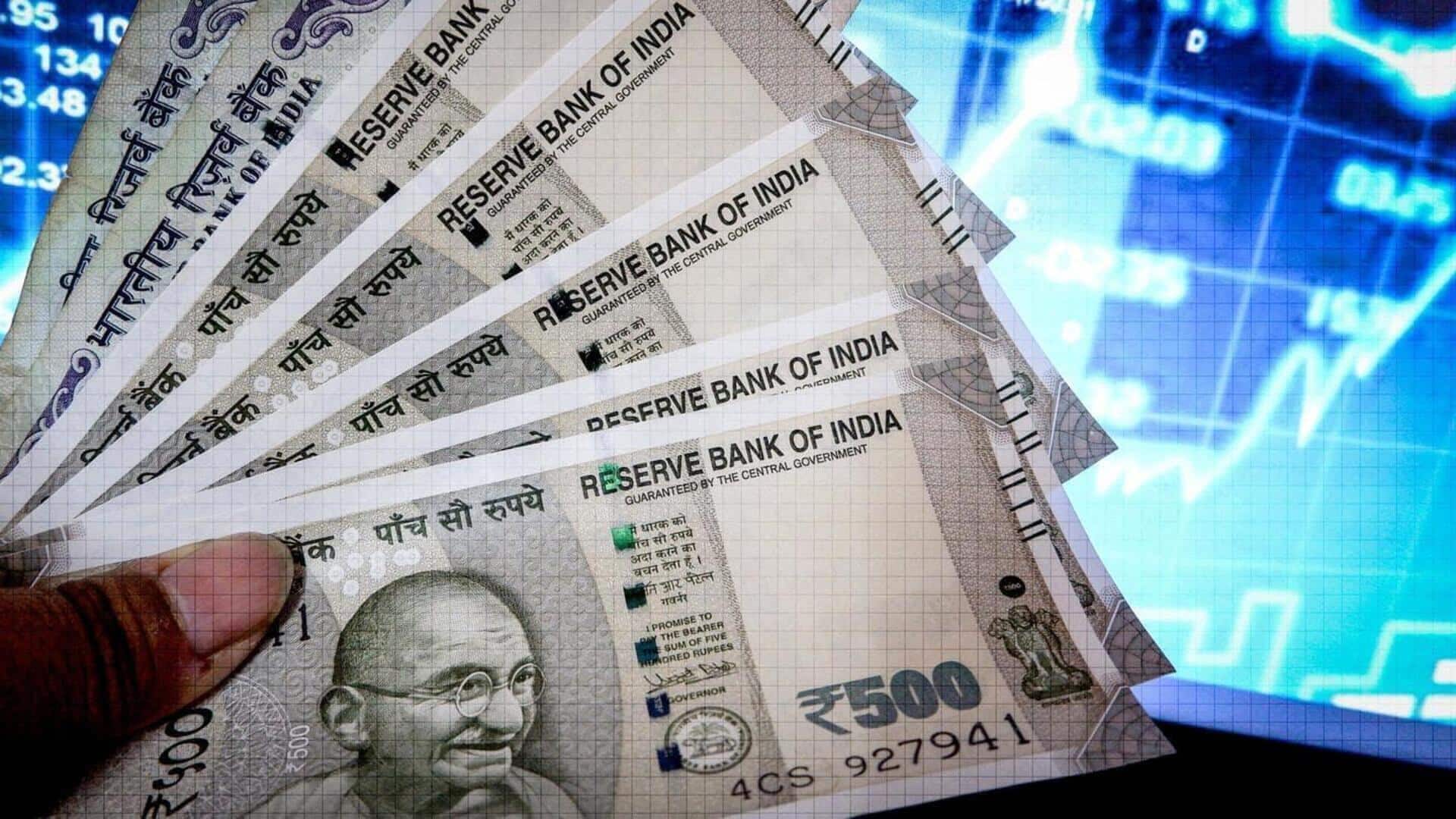
Indian rupee hits 1-month high as RBI steps support currency
What's the story
The Indian rupee has hit its highest level in over a month, thanks to a series of measures taken by the Reserve Bank of India (RBI) and comments from RBI Governor Sanjay Malhotra. The domestic currency rose by 0.4% to 94.9125 against the US dollar, making it Asia's best-performing currency for the day. This week alone, the rupee has gained some 2%, recovering from last week's lows amid central bank efforts to ease pressure on it.
Central bank actions
RBI measures boost rupee's value
The recent surge in the rupee's value comes after a series of measures introduced by the RBI.
These include directing oil marketing companies to fulfill their dollar requirements through a special facility, tightening compliance requirements for currency hedges, and imposing cash reserve requirements on certain forex derivative transactions.
Governor Malhotra has also indicated that further action could be taken if needed to curb speculation and ensure orderly movement in the foreign exchange market.
Market regulation
Measures target dollar demand and speculation
The RBI's measures, announced on October 10, target two main sources of pressure: dollar demand from oil companies in the spot market and speculative positions in the derivatives market.
A special window was opened on October 12 to meet the daily dollar requirements of three state-run oil marketing companies.
The central bank also tightened forex derivative rules, reducing the limit for transactions without an underlying exposure from $100 million to $5 million.
Rate perspective
No capital controls, says Malhotra
Malhotra has clarified that the central bank does not target a particular exchange-rate level and that the rupee's value is determined by demand and supply.
He also ruled out capital controls, saying the latest steps shouldn't be seen as restrictions on capital flows.