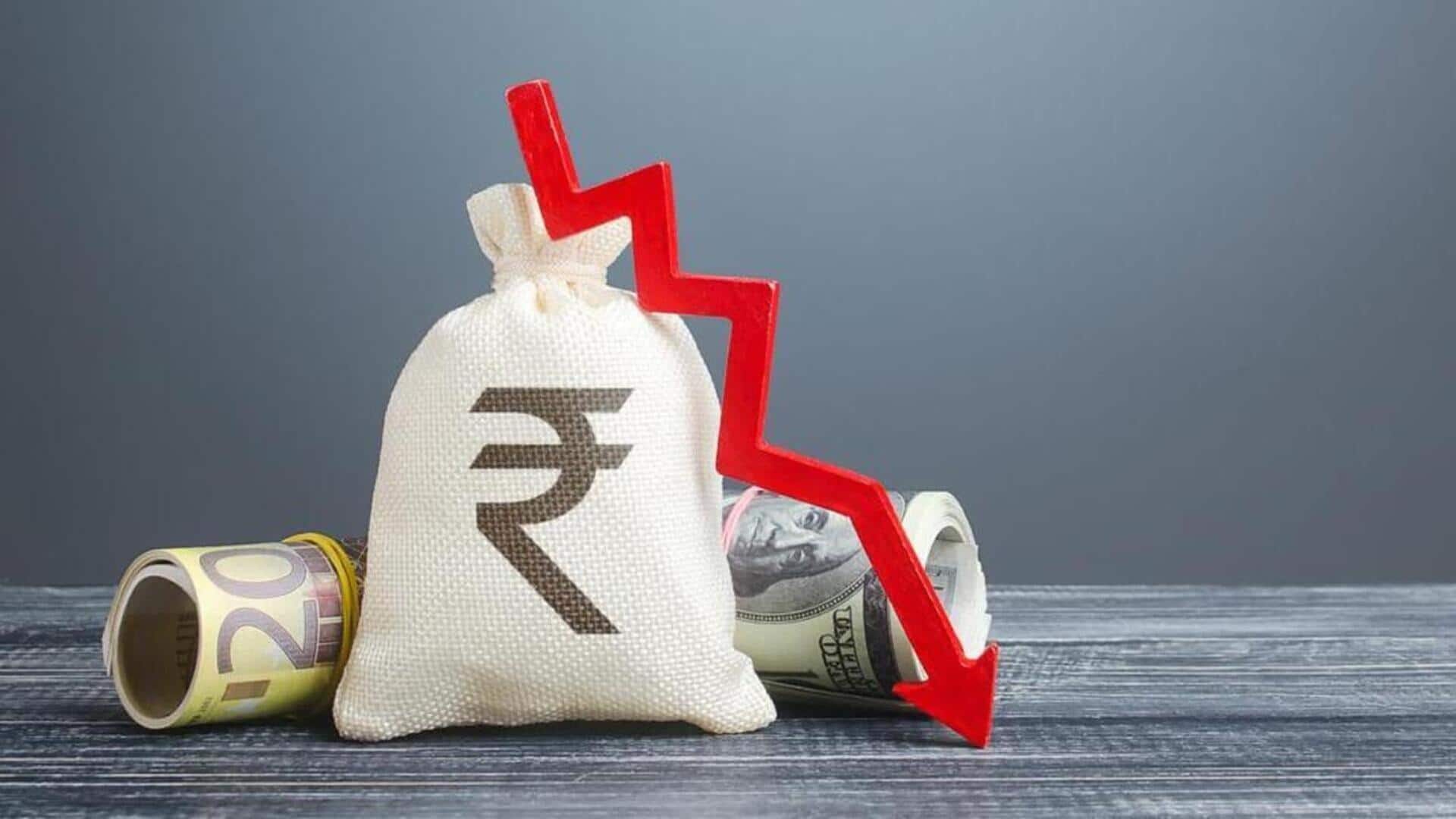
Indian rupee hits all-time low of ₹96.91 against US dollar
What's the story
The Indian rupee has hit an all-time low of ₹96.91 against the US dollar, owing to rising US Treasury yields, high crude oil prices, and geopolitical tensions in West Asia. The domestic currency has been on a downward trend for seven straight sessions, hitting new lows in six of those trading days. It has already fallen by 0.6% this week after a 1.6% decline last week.
Market factors
US Treasury yields rise on Fed rate hike concerns
The rupee's fall has been exacerbated by rising US bond yields amid expectations that the Federal Reserve may keep rates higher for longer or even hike them again this year.
The benchmark 10-year US Treasury yield has risen over 20 basis points in the last four sessions, while the 30-year yield hit its highest since 2007.
Meanwhile, Brent crude hovered near $111 per barrel on Wednesday due to concerns over Iran conflict and supply disruptions.
Economic implications
Rising oil prices and current account deficit concerns weigh
The rising oil prices are particularly important for India, which imports a large share of its crude.
Higher crude costs usually increase dollar demand from oil marketing companies and widen the country's current account deficit, further pressuring the rupee.
A currency trader at a bank said, "The rupee, having largely adjusted to the prospect of persistently high oil prices, now faces a repricing due to the sizeable shift in US rates."
Historical context
Rupee one of Asia's underperformers
Abhishek Bisen, Head of Fixed Income at Kotak Mahindra Asset Management Company, said the rupee has depreciated by about 5% since the Iran conflict began and nearly 11% in the last year.
He added that high crude oil prices and ongoing geopolitical tensions have increased dollar demand and weakened investor sentiment, making the rupee one of Asia's underperformers.