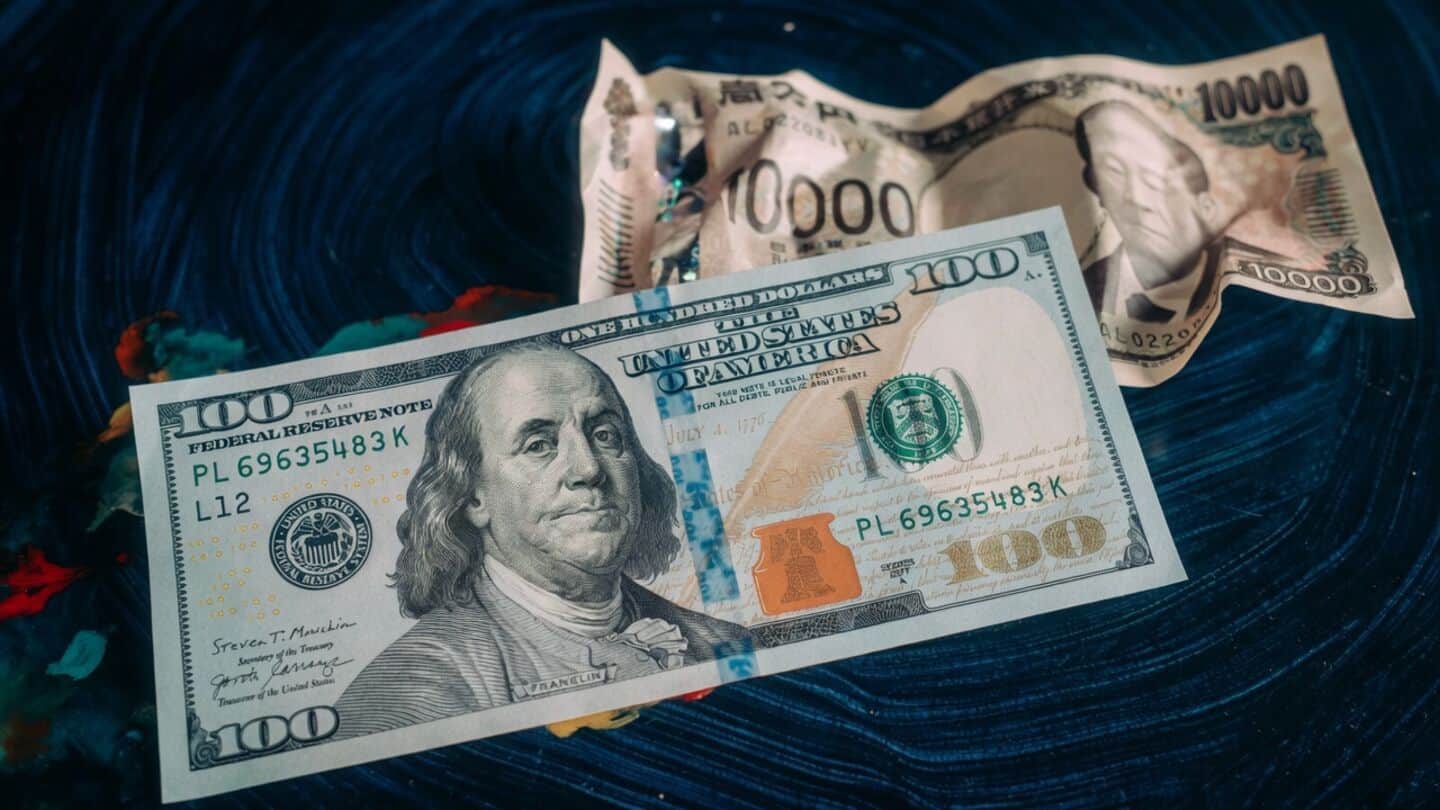
Japanese yen at 40-year low over ¥160 per US dollar
The Japanese yen just dropped to its lowest point in 40 years, now trading at over 160 per US dollar, a level not seen since 1986.
This big fall is mostly because interest rates in the US are much higher than Japan's, and Japan has to pay more for energy imports priced in US dollars.
Even after the Bank of Japan bumped its key rate up to 1% (its highest level since the 1990s), it hasn't been enough to stop the slide.
Trade deficit pressures Bank of Japan
Japan's growing trade deficit, thanks to pricier energy and a weaker yen, is making things tougher.
The Bank of Japan can't easily raise rates further because it already holds massive amounts of debt (the Bank of Japan's total assets had reached 102.2% of GDP), and government debt is also sky-high.
With an aging population and weak growth and deflation, everyday life is getting more expensive, and attempts by officials to boost the yen have only worked for a short while.