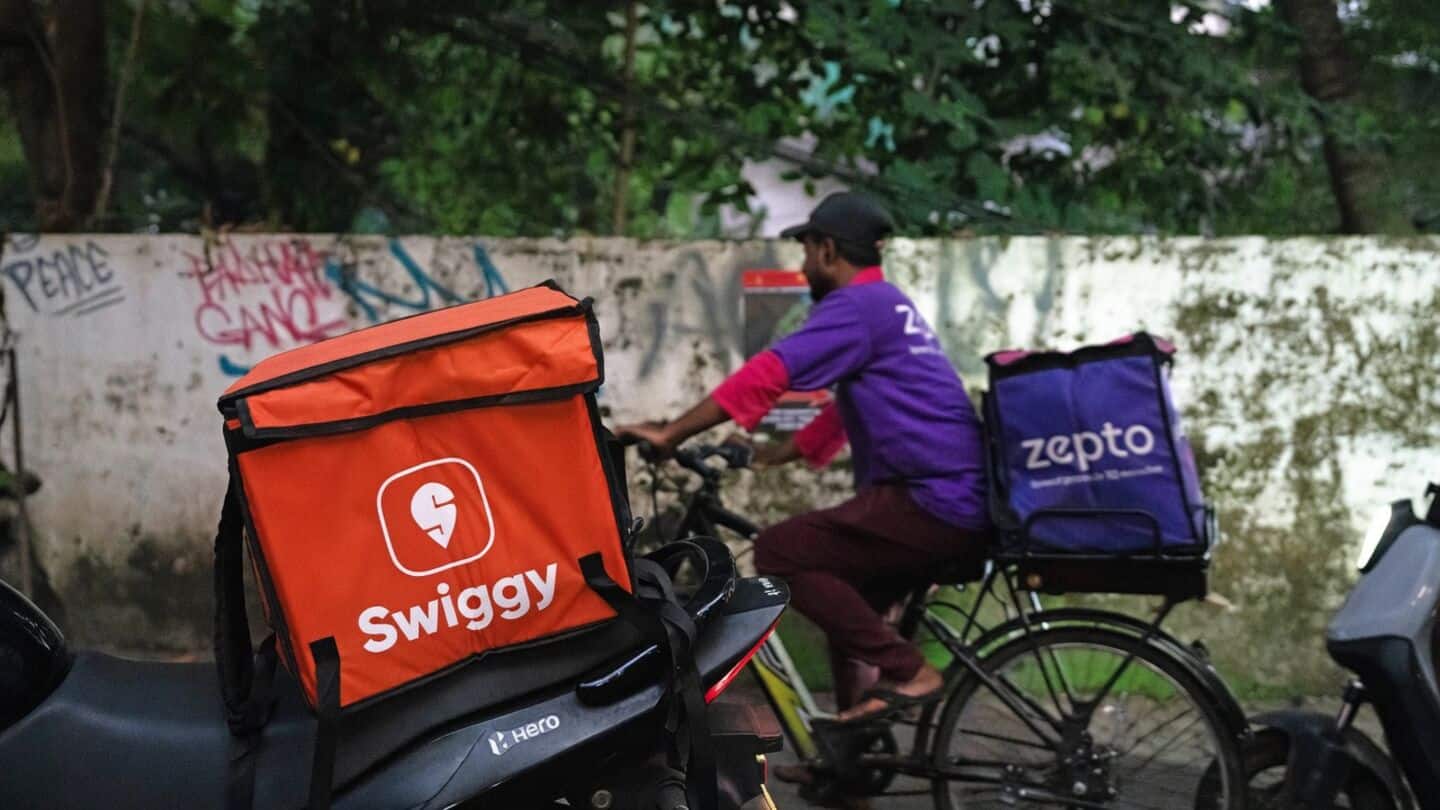
Karnataka HC refuses to stay gig workers' welfare act
What's the story
The Karnataka High Court has refused to stay the implementation of the Karnataka Platform-Based Gig Workers (Social Security and Welfare) Act, 2025. The order came during a hearing on petitions by the Internet and Mobile Association of India (IAMAI) and several platform aggregators challenging the constitutional validity of this Act and its Rules. Justice M Nagaprasanna presided over Friday's proceedings.
Fee payment
Platforms directed to deposit welfare fee with court registry
The court has directed food delivery and e-commerce platforms such as Zomato, Blinkit, Zepto, and Swiggy to deposit the welfare fee for Q2 with the court registry within three weeks.
This is instead of paying it directly to the government.
The decision was taken in a bid to balance the interests of all parties involved: platforms, state government, and gig workers.
Court schedule
Next hearing scheduled for July 31
The Karnataka High Court has asked the state government to file its objections by July 30. The next hearing on this matter is scheduled for July 31.
Justice Nagaprasanna clarified that no coercive action would be taken against petitioners if they comply with the interim directions given by the court.
Guarantee request
Court rejected platforms' request for bank guarantee
The court rejected the platforms' request to provide an unconditional bank guarantee instead of depositing the welfare fee.
During the hearing, Justice Nagaprasanna observed that while the Central government's social security legislation appears comprehensive, it will consider if additional welfare benefits can be provided through a harmonious interpretation of both laws.
The state government had argued that this welfare fee is only for gig workers' benefit.
Legal challenges
Petitioners also challenge formation of welfare board
The petitioners have also challenged the formation of the Karnataka Platform-Based Gig Workers Welfare Board on January 27, 2026, and operationalization of the welfare fee mechanism on February 13.
They also contested a notice issued on May 21 directing platforms to form Internal Dispute Resolution Committees.
The court has now posted this matter for further hearing on July 31.