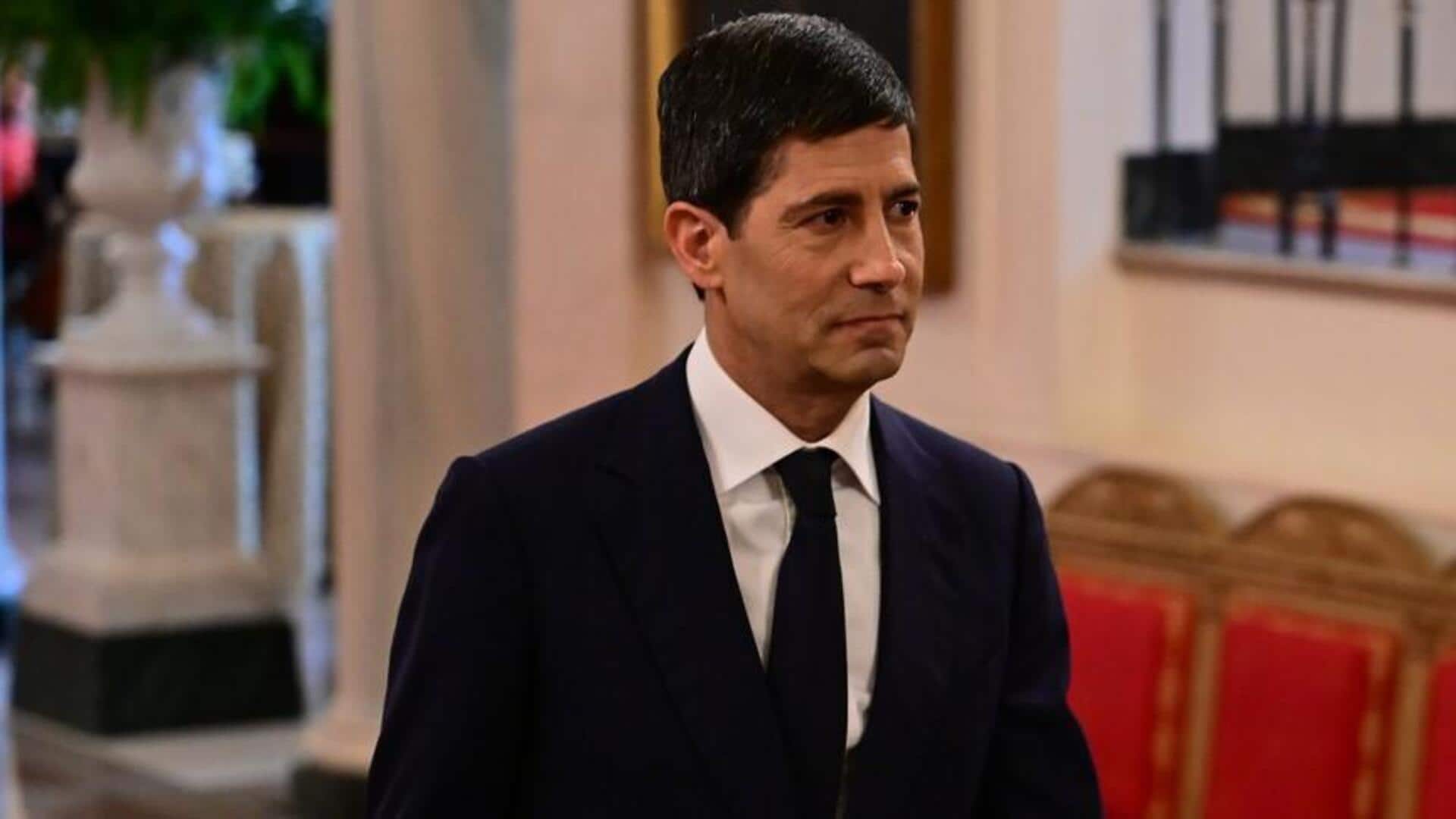
Kevin Warsh sworn in as new Fed chair
What's the story
Kevin Warsh has officially taken the oath of office as the new chairman of the US Federal Reserve. His swearing-in ceremony took place at the White House on Friday, marking a major transition in monetary policy and its impact on the American economy. Warsh succeeds Jerome Powell in this pivotal role, which comes with high expectations amid current economic challenges.
Leadership vision
Warsh's oath of office
In his oath of office, Warsh said he has "accepted a high and solemn responsibility." He promised to lead a "reform-oriented" Federal Reserve.
The new chair emphasized that if central bankers pursue their goals with wisdom and clarity, independence and resolve, "inflation can be lower, growth stronger," real take-home pay higher, and America can be more prosperous.
This statement highlights his commitment to economic stability and growth.
Presidential pressure
Trump's support for Warsh
President Donald Trump, who nominated Warsh for the role, has been pushing the Fed to cut interest rates and criticized Powell.
However, at Warsh's swearing-in ceremony, Trump said, "I want Kevin to be totally independent. I want him to be independent and just do a great job."
The president also stressed that while they want to curb inflation, they don't want to hinder economic growth.
Policy stance
Challenges ahead for Warsh
Warsh takes charge at a time when price pressures have reaccelerated, mainly due to the US-Iran war's impact on energy supplies.
Investors now expect an interest-rate hike by December. This comes as consumer expectations for long-term inflation hit a seven-month high in the latest data released on Friday.
Despite these challenges, Warsh is determined to lead a "reform-oriented" Federal Reserve and tackle inflation while promoting economic growth.
Future prospects
Warsh's hawkish stance and AI beliefs
Warsh, who served on the Fed board from 2006 to 2011, is known for his hawkish stance.
But in recent years, he has advocated lower rates and believes artificial intelligence (AI) will help reduce inflation while boosting productivity.
He plans to implement a regime change at the central bank by reducing its $6.7 trillion balance sheet, establishing a new framework for analyzing inflation, and changing communication strategies with the public.