India to cut tariff on these US food products
What's the story
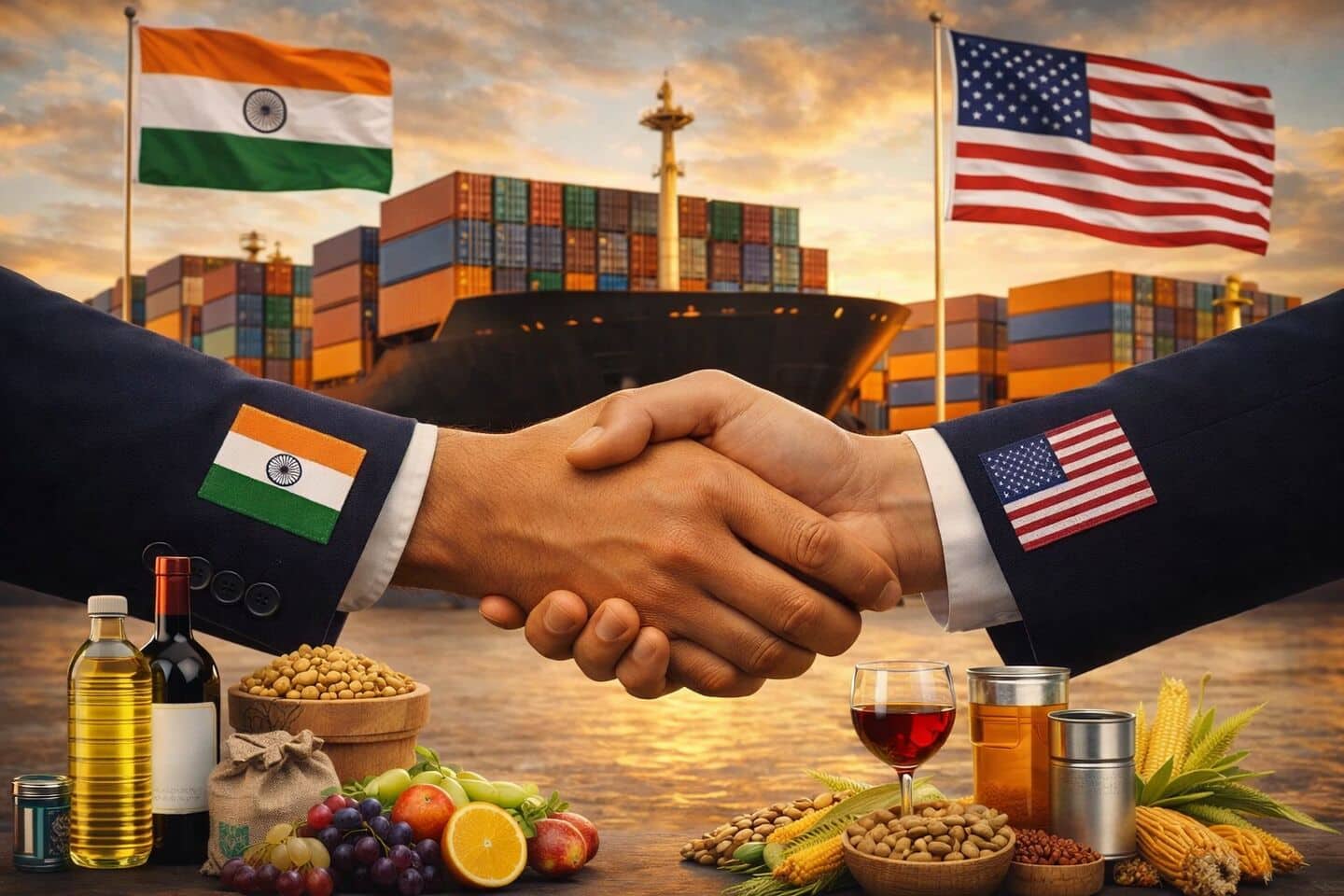
India has announced plans to cut or eliminate tariffs on a range of US food and agricultural products. The move is expected to make several American imports more affordable for Indian consumers. The products include dried distillers' grains (DDGs), red sorghum for animal feed, tree nuts, fresh and processed fruit, soybean oil, wine and spirits.
Tariff reduction
US to reduce tariffs on Indian goods
Under the interim agreement, the US has agreed to cut tariffs on Indian goods from a hefty 50% to a more reasonable 18%.
The higher duties were imposed after trade talks stalled, with 25% of the tariffs introduced in August when Washington accused New Delhi of supporting Russia's war efforts against Ukraine through oil purchases.
Trade barriers
India to address non-tariff barriers affecting US exports
As part of the agreement, India has agreed to tackle long-standing non-tariff barriers affecting US exports.
These include medical devices, information and communication technology goods, and food and agricultural products.
The two countries also plan to establish rules of origin so that trade benefits primarily accrue to India and the US.
Export benefits
Reciprocal tariff rate on Indian-origin goods
On its part, the US has agreed to impose a reciprocal tariff rate of 18% on Indian-origin goods.
This includes textiles, apparel, leather and footwear, plastics, chemicals, home decor items and certain machinery.
If the interim agreement is successfully concluded, Washington will also lift reciprocal tariffs on a broader range of Indian exports such as generic pharmaceuticals, gems and diamonds as well as aircraft parts.
Purchase commitment
India to purchase $500 billion worth of US goods
India has also committed to buying $500 billion worth of US goods over five years.
This includes energy supplies, aircrafts and aircraft parts, precious metals, technology products such as GPUs for data centers, and coking coal.
The two countries have said they will work toward quickly implementing the framework and finalizing the interim agreement with a long-term goal of concluding a mutually beneficial bilateral trade agreement.