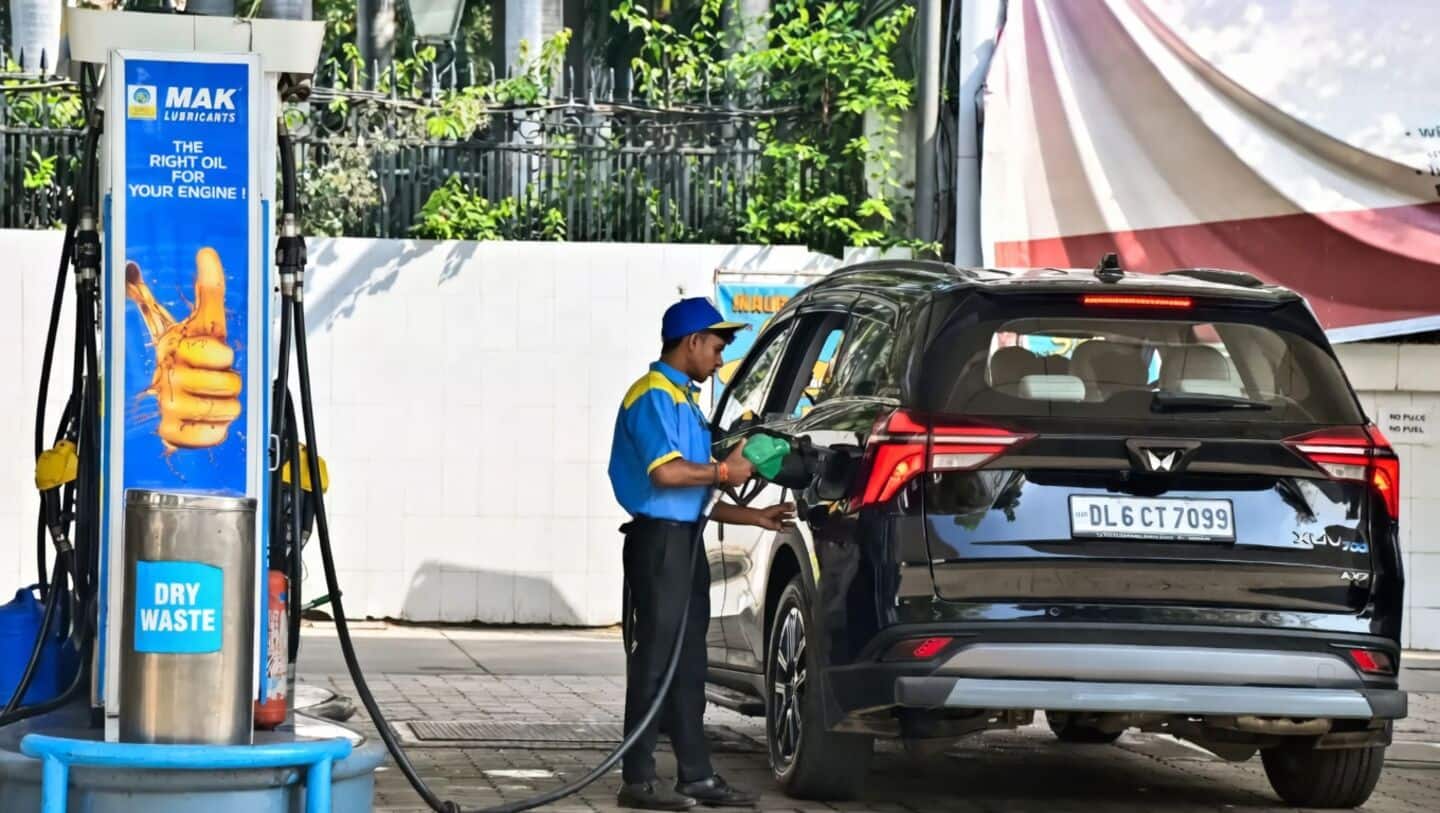
Petrol, diesel may jump ₹25-28/liter after elections: Report
What's the story
Petrol and diesel prices in India could see a major spike after the ongoing Assembly elections end on April 29. According to a report by Kotak Institutional Equities, the current crude oil price of around $120 per barrel has widened the gap between global oil costs and domestic retail prices. This has made it difficult for refiners and the government to keep prices stable for much longer.
Price prediction
Phased price hikes expected
Kotak's estimate of a ₹25-28 per liter increase is based on the assumption that crude oil prices will remain close to $120 per barrel.
At this level, the cost of refining and selling fuel far exceeds current retail prices.
The report also suggests that any price hike is unlikely to be implemented in one go but would instead be phased over weeks or months as policymakers balance inflation concerns with reducing losses.
Economic repercussions
Impact on consumers and economy
The projected price hike would have a major impact on consumers. Petrol prices in major cities currently range between ₹94-96 per liter.
A hike of ₹25-28 could push prices close to ₹120 per liter, an unprecedented level for India.
The rise would not just affect fuel stations but also raise transportation costs, delivery charges, and impact demand in sectors like automobiles and rural markets.
Pricing imbalance
Refiners' mounting losses raise concerns
The report highlights a growing mismatch between India's payment for crude oil and what consumers pay at fuel stations.
This gap has reached a level where state-run refiners are absorbing heavy losses every month.
Kotak estimates that oil marketing companies are currently losing nearly ₹270 billion every month due to this pricing imbalance, raising concerns over how long such losses can continue without a price correction.
Relief measures
Government attempts to mitigate impact
The government has tried to ease the situation by slashing excise duty by ₹10 per liter and reintroducing windfall export taxes.
However, Kotak points out that these steps only provide limited relief and do not address the underlying pricing imbalance.
The rise in global crude oil prices is largely due to tensions in West Asia, which have disrupted key supply routes such as the Strait of Hormuz.