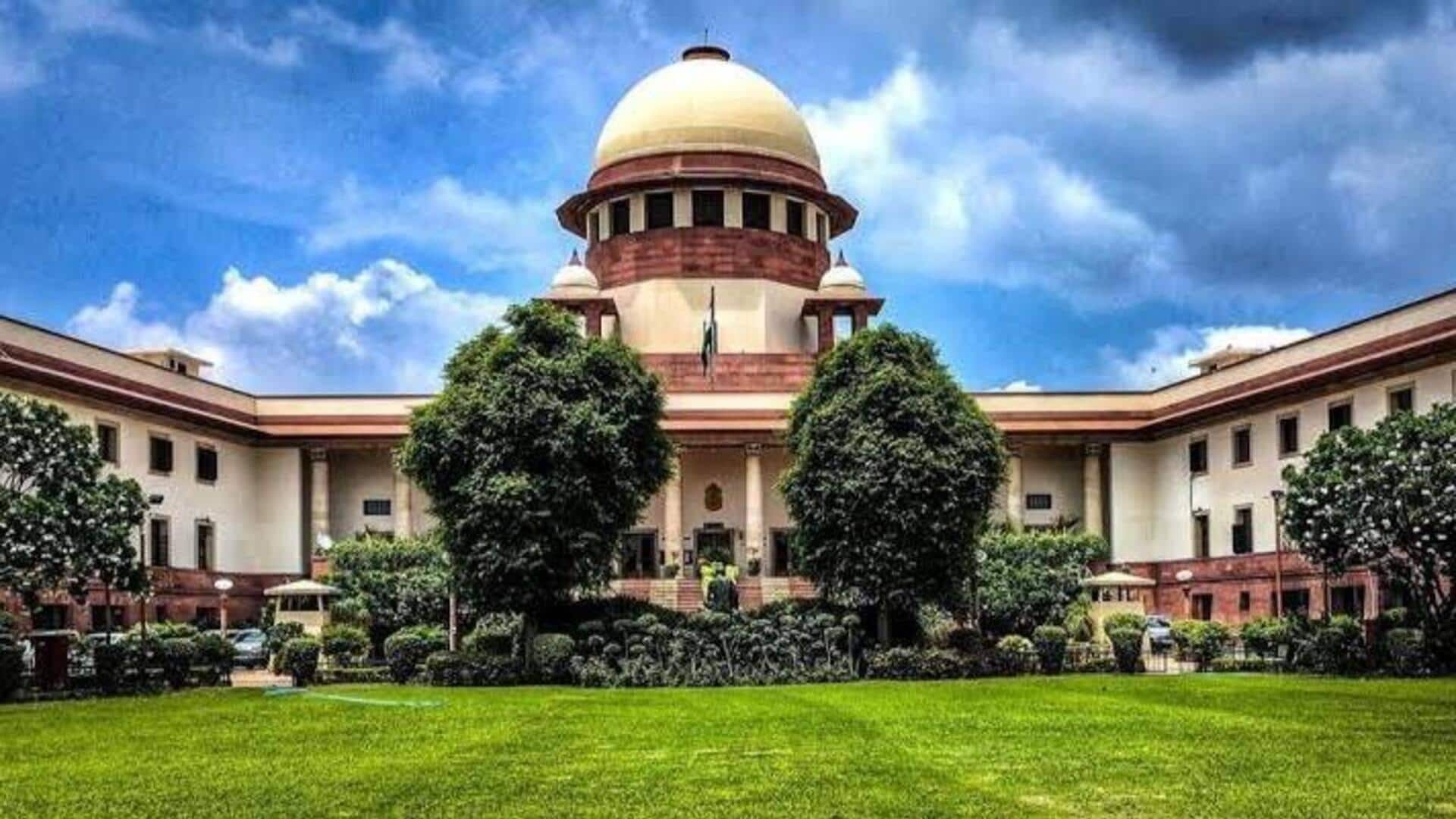
Tiger Global must pay tax on Flipkart stake sale: SC
What's the story
The Supreme Court of India has ruled that Tiger Global's $1.6 billion stake sale in Indian e-commerce firm Flipkart is taxable. The case relates to Tiger Global's 2018 Flipkart stake sale, executed as part of Walmart's $16 billion acquisition, which drew scrutiny from Indian tax authorities. The ruling could have far-reaching implications for future cross-border transactions and how India applies tax principles in such cases.
Legal dispute
Tiger Global's tax exemption claims challenged
The legal battle between Tiger Global and Indian tax authorities centered on the latter's claim that the former had misused the India-Mauritius tax treaty to avoid paying taxes.
The investment firm had claimed that its Mauritius-based units were exempt from taxation under this treaty for profits made from selling their stake in Flipkart.
However, Indian tax authorities contended these units were merely a conduit for the US parent company and had wrongly used the treaty to dodge taxes.
Judgment details
Supreme Court's ruling on tax avoidance
Justice R. Mahadevan of the Supreme Court ruled that Tiger Global's transaction was an "impermissible tax avoidance arrangement." He said it cannot claim an exemption from paying tax on profits from the stake sale.
This ruling comes as a major shift in how Double Taxation Avoidance Agreement (DTAA) benefits have been claimed so far, with the court stating that General Anti-Avoidance Rule (GAAR) can override treaty grandfathering.
Impact analysis
Implications for private equity funds and hedge funds
The ruling is likely to have major implications for private equity funds, hedge funds, and foreign portfolio investors (FPIs) using Mauritius and Singapore-based structures.
Amit Baid, Head of Tax at BTG Advaya, said the ruling significantly strengthens the tax department's position in reassessment proceedings.
He added that while it doesn't automatically reopen closed cases, it does give more power to the tax department in such matters.