
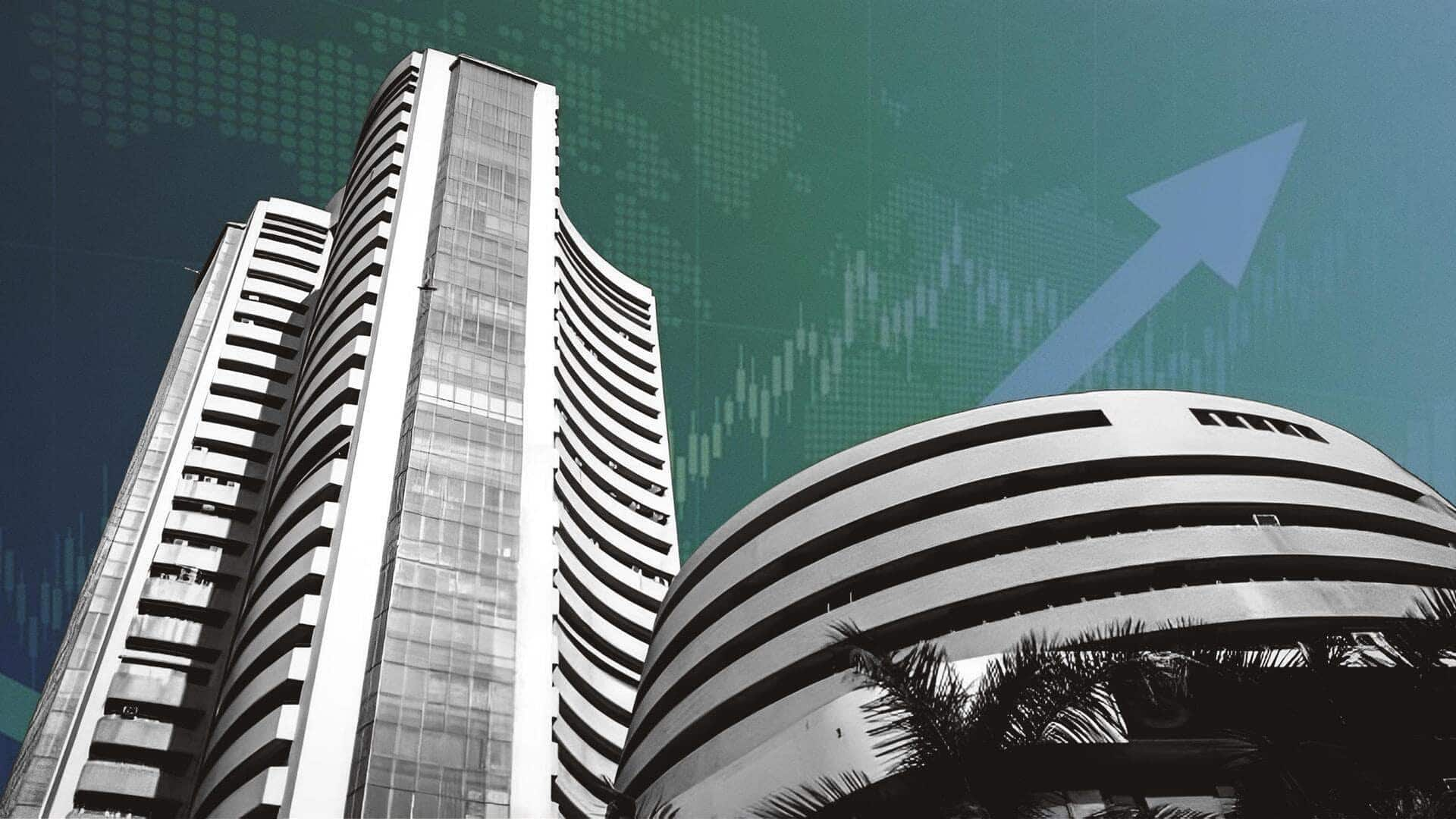
Sensex turns 40: Tracing its journey from 549 to 86,000
What's the story
The Bombay Stock Exchange (BSE) Sensex has delivered an incredible wealth creation story over the last four decades. The index has grown from a mere 549 points at its inception in January 1986 to a record high of 86,159 this month. This is an astonishing return of nearly 15,594%. An investment of ₹1 lakh in the index on January 1, 1986 would now be worth ₹1.57 crore.
Economic reflection
Sensex's growth mirrors India's economic transformation
The 13.4% annualized growth of the Sensex over 40 years closely matches India's nominal GDP growth of 12.97%. This has established the index as a reliable indicator of the world's fourth-largest economy, now worth $4.13 trillion. BSE MD and CEO Sundararaman Ramamurthy said, "If you ask someone how is the market today? He'll say it's up 400-500 points." He emphasized that people relate to Sensex as a reflection of themselves and their understanding of the economy.
Market maturity
Sensex's resilience through economic challenges
Since its inception in 1986, Sensex has witnessed India's transformation from an agrarian economy to a global growth engine. The index has weathered several crises including the Asian crisis, the IT boom, and the 2008 global financial crisis. In fact, it has given positive returns in 75% of all years over the last four decades. The Total Return Index (including dividends and reinvestment) was positive in 79% of years during this period.
Performance analysis
Sensex's performance during major economic events
The five best performing years for Sensex were 1988, 1991, 1999, 2003, and 2009. These years coincided with major economic reforms or recovery periods. On the other hand, the five worst years were 1995, 1998, 2000, 2008, and 2011. These were marked by global crises and domestic adjustments. The most extreme volatility was seen during watershed moments like the COVID-19 crash in 2020 and Manmohan Singh's historic budget in '91-92.
Index evolution
Sensex's index composition reflects India's structural transformation
The composition of the Sensex index has changed over time, reflecting India's structural transformation. The weightage of financial services has nearly doubled from 22.25% in 2005 to 39.5% in 2025, while that of IT sector has decreased from 19.9% to 12.95%. Consumer discretionary stocks have surged from 4.93% to 12.95%, while commodities have shrunk from their earlier share of nearly 9% to just under 3% today.